
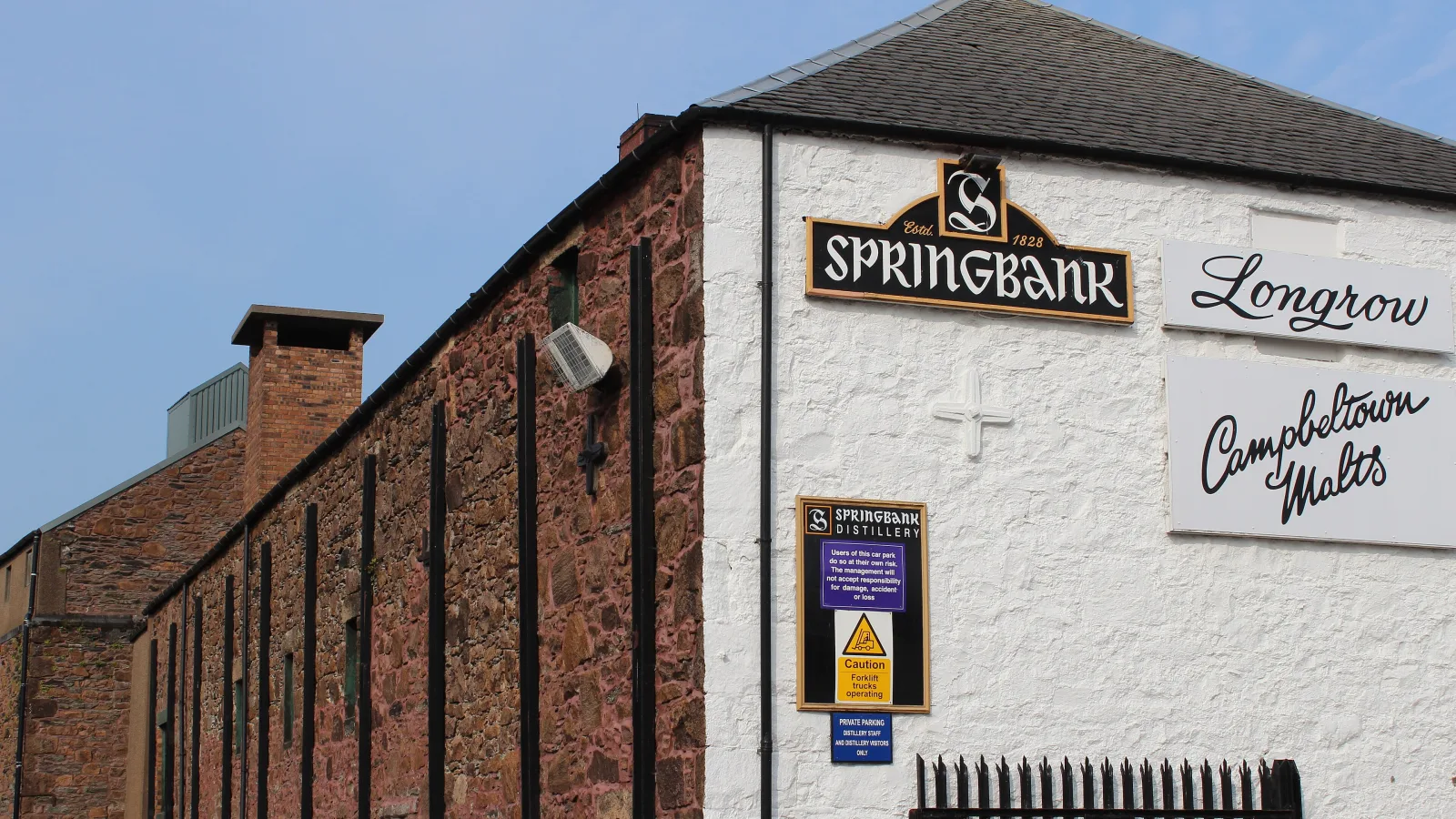
Whisky · Explainer
What happens in a distillery?
In a distillery, grain is turned into matured spirit in six steps: malting, milling, mashing, fermenting, distilling and maturing. Barley germinates for six to seven days, the mash water starts at around 67 degrees, fermentation takes about two days and produces a wash of 6 to 8 percent. After two distillations the heart comes out at about 68 percent. Scotch then matures for at least three years.
In brief
The key figures
| Germination during malting | Six to seven days |
|---|---|
| Oast houses | Dry at less than 70 degrees |
| Mash water | Three poisons, from about 67 degrees |
| Fermentation | About two days, wash of 6 to 8 percent |
| Heart of the run | About 68 percent alcohol |
| Maximum distillation strength | Less than 94.8 percent |
| Scotch maturation | At least 3 years, oak cask up to 700 litres |
What happens during malting?
Malting makes the starch in barley accessible. The grains are soaked in water and then laid out to germinate for six to seven days, releasing enzymes that can convert starch into sugar. Germination is stopped by drying the barley over a fire below 70 degrees. If peat is put on that fire, the malt absorbs smoke, and that smoky character remains recognisable in the bottle.
The dried malt then goes through the mill. According to the Scotch Whisky Regulations 2009, with Scotch only whole grain of other kinds may be added to the malted barley; single malt may contain no other grain at all.
Why is the mash temperature so narrow?
Mashing converts starch into fermentable sugar, and that only works within a narrow temperature band. In the mash tun the ground malt goes in with hot water, in three successive additions of water that start around 67 degrees and rise to just below boiling point. The enzymes from the malting do the work: too hot and they break down, too cold and they do not get going.
The result is called wort. The Scotch Whisky Regulations 2009 require that mashing, the conversion of starch by the malt’s own enzymes, and fermentation all take place at the same distillery in Scotland. A distillery may therefore not buy ready-made wort.
What does fermentation do in the washback?
Yeast converts the sugars from the wort into alcohol. The wort first cools to about 20 degrees and then goes into the washback with yeast. After about two days the fermentation settles and the wash contains 6 to 8 percent alcohol. In strength that resembles beer, but there is no hop in it.
The law leaves little room. With Scotch the wort may only be made fermentable by the malt's own enzymes, and fermentation may only be started by adding yeast. Other processing aids are not permitted.
How does distillation in two stills work?
Malt whisky is distilled twice in Scotland, in copper pot stills. The first still is called the wash still and takes the alcohol from the wash. The second, the spirit still, separates the run into foreshots, heart and feints; only the heart is collected, at about 68 percent alcohol.
The law sets an upper limit. Scotch must be distilled at less than 94.8 percent alcohol, so that the colour, aroma and taste of the raw materials and of the production process remain recognisable. Above that limit one speaks of neutral alcohol, and then it may no longer be called whisky. Grain whisky made from wheat therefore tastes different from grain whisky made from corn.
What does the law prescribe about maturation?
Maturation is fixed by law for Scotch. The spirit must mature for at least three years in Scotland, in oak casks of no more than 700 litres, in a bonded warehouse or another permitted location. The three-year limit dates from 1915. The 700-litre cask limit matches the largest trade size common at the time, the sherry gorda.
At bottling the minimum is 40 percent alcohol. Only water and plain caramel colouring may be added. During maturation up to about 2 percent evaporates from the cask each year, the part known as the angels' share. Many single malts spend 8 to 12 years or longer in cask.
How big is the Scottish distillery world?
According to the Scotch Whisky Association, Scotland counted 154 working distilleries in May 2026. In the warehouses roughly 22 million casks lie maturing, together good for about 12 billion bottles of 70 centilitres.
Exports came to 5.36 billion pounds in 2025. Every second, 43 bottles of 70 centilitres at 40 percent cross the border, to more than 160 markets, together well over 1.3 billion bottles a year. In Scotland more than 41,000 jobs depend on the sector, and in the rest of the United Kingdom another 25,000.
From the shop in Bathmen
Whisky from how many distilleries is there in Bathmen?
The shop in Bathmen stocks 3,769 whiskies from 590 different brands from 30 countries. Prices range from € 5.99 to € 12,500.00. The alcohol percentage ranges from 10% to 73.7%.
- 1770 Glasgow Distillery 2nd Release 46% · 50 cl · Scotland
- 1770 Glasgow Distillery Red Wine & Ruby Port Cask Finish 57.5% · 70 cl · Scotland
- 1770 Glasgow Single Malt 52% · 70 cl · Scotland
- 1792 Small Batch 46.85% · 75 cl · United States
- A Highland Distillery 2005 – 16 Years Old – First Cask 58.3% · 70 cl · Scotland
- Abbot's Choice Figure Ceramic Monk 43% · Scotland
- Aber Falls 6Y Rye Whisky 47% · 70 cl · Wales
- Aber Falls Madeira cask Welsh single malt whisky 47% · 70 cl · Wales
- Aber Falls Welsch Single Malt Whisky 40% · 70 cl · Wales
- Aberdour Piper 0.7L 40% · 70 cl · Scotland
Related questions
What is Belgian whisky?What is blind tasting and why is it done?What is bourbon and how does it differ from whisky?
Short answer
Short answers to related questions
- How many distilleries does Scotland have?
- In May 2026, according to the Scotch Whisky Association, there were 154 operating Scotch distilleries.
- How long does whisky have to mature?
- Scotch must mature in Scotland for at least three years in oak casks of at most 700 litres. Many single malts lie for 8 to 12 years or longer.
- May a distillery buy in wort?
- Not with Scotch. Mashing, conversion by its own enzymes and fermentation must all three take place at the same distillery.
- What is the angels’ share?
- The part that evaporates from the cask during maturation, up to about 2 percent per year.
The reasoning
Sources
- The Scotch Whisky Regulations 2009, regulation 3, UK Statutory Instruments, legislation.gov.uk (accessed 4 September 2026)
- Whisky Making, The Scotch Whisky Experience, Edinburgh (accessed 4 September 2026)
- The laws of Scotch: distillation and casks, Scotchwhisky.com (accessed 4 September 2026)
- Facts & Figures, Scotch Whisky Association (accessed 4 September 2026)
This page was written and checked by ’t Bockje Bathmen, wine and spirits shop at Brink 2 in Bathmen. Last updated on 7 September 2026.
Verkoop van alcohol onder de 18 jaar is verboden. NIX18.