
From the shelf
Everything we have from Divin
Click on a bottle for the rest of the details.
Six from the same house: white, rosé, red and bubbles
Of most non-alcoholic brands there is one bottle on a shelf. Of Divin we have six: a chenin blanc, a sauvignon blanc, a pinot noir, a rosé and two sparkling wines. That lets you compare within one house, rather than between six brands that have nothing to do with each other.
Divin is based in Chémery in the Loire and works with grapes from the Villebois vineyards in Touraine. The company started in 2018 and says it has eight dealcoholised wines; six of them are in our shop in Bathmen.
Note one thing: the brand writes itself as DIVIN on one bottle and as Divin on the other. That is the same producer. In our online shop both spellings appear mixed.
The four still wines
All four 0 percent according to the label information in our webshop. Prices subject to change; the current status is in the webshop.
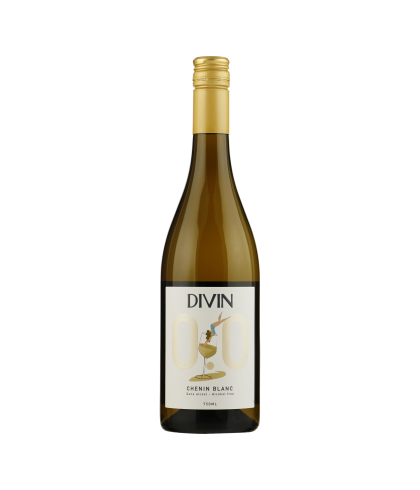
DIVIN Chenin Blanc
White wine from France. 70 centilitres, 0 percent according to the label information.
€ 10,99
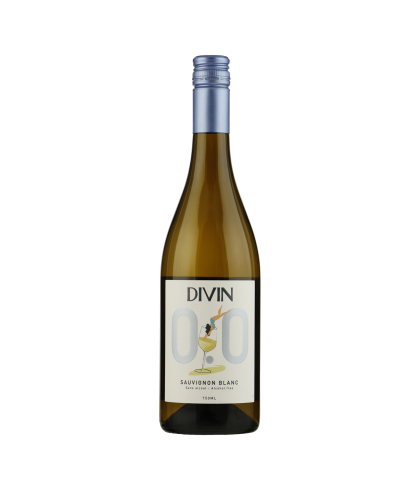
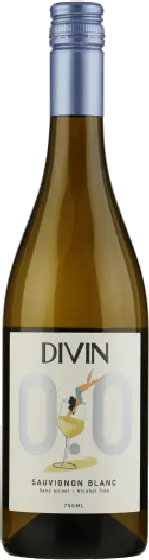
Divin Sauvignon Blanc 0.0
Sauvignon blanc from France. 75 centilitres, 0 percent according to the label information.
€ 10,99
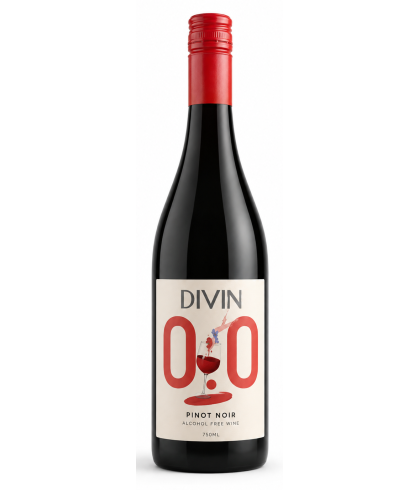
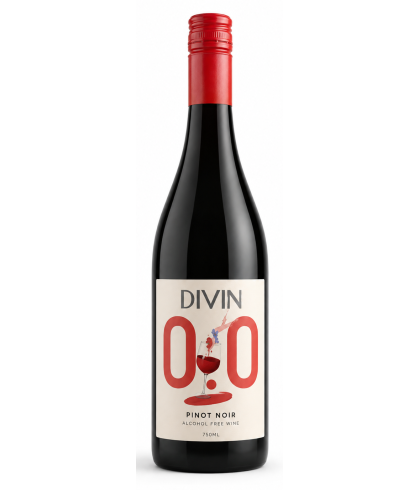
Divin Pinot Noir 0.0
Pinot noir from the Loire. 75 centiliters, 0 percent according to the label information.
€ 10,99
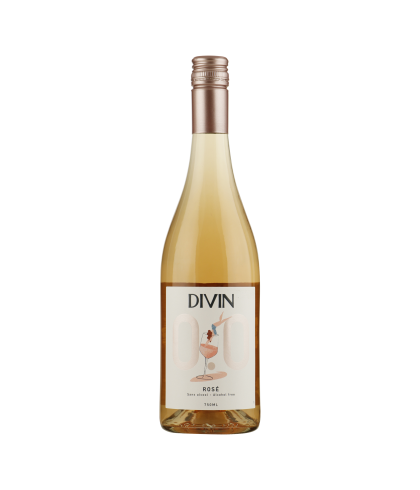
First ordinary wine, then the alcohol out
- Divin in four facts
- 2018The year Divin started with alcohol-free wine.
- ChémeryThe place in the Loire where the company is based.
- TouraineThe region of the grapes, from the Villebois vineyards.
- 8De-alcoholised wines in the range, according to the producer.
Alcohol-free wine is not grape juice. It starts out as ordinary wine: the grapes are harvested, pressed and fermented, alcohol and all. Only when that wine is finished is the alcohol removed. What then goes into the bottle is called dealcoholised wine.
Three techniques are used for this in winemaking. In vacuum distillation the pressure is lowered, so alcohol evaporates at a low temperature instead of at 78 degrees. In reverse osmosis the wine is forced under pressure through a membrane that lets alcohol and water through but holds back colour, sugar and flavour compounds. In the spinning cone column the wine runs as a thin film over rapidly spinning cones: first the volatile aromas are captured, then the alcohol, and at the end the aromas go back into the wine.
Which of those three Divin uses, the house does not make public. The company’s own site only says that it keeps reconfiguring its dealcoholisation installation. We do not add anything that we have not seen in a source.
Alcohol-free wine is ordinary wine from which the alcohol has been removed afterwards.
And the two sparkling ones
Two sparkling wines from the same house, both made from sauvignon blanc.
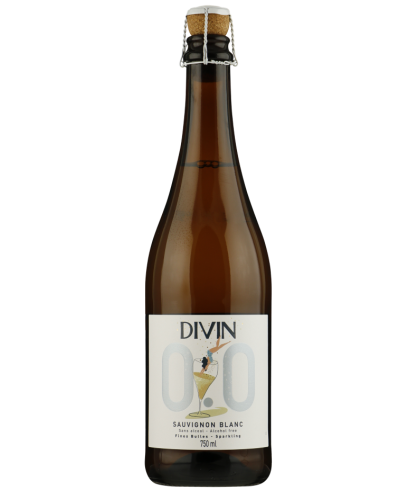
DIVIN Sparkling Sauvignon Blanc
Sparkling wine from France. 75 centilitres, 0 percent according to the label information.
€ 11,99
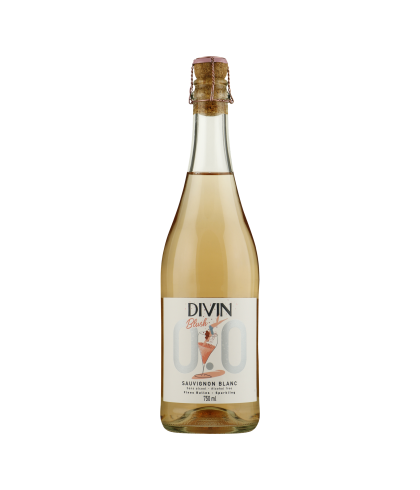
Divin Sparkling Sauvignon Blanc Blush 0.0
Sparkling sauvignon blanc from France. 75 centiliter, 0 percent according to the label information.
€ 11,99
What does dealcoholised on the label mean?
Dealcoholised, or de-alcoholized, means exactly what it says: wine has been made and the alcohol has then been removed. It is a category of its own in the European wine rules, with its own ceiling. A dealcoholised wine may contain at most 0.5 percent alcohol. If it contains more, but less than the regular version, it is called partially dealcoholised.
That is why you see two figures mixed together on the shelf. 0.5 percent is the upper limit of the category; 0.0 percent indicates that the producer stays well below it. For Divin, the label information in our webshop states 0 percent for all six bottles.
Not sure which bottle suits you? Call or email. We take it from the shelf in the shop and read out what is on the label.
Frequently asked questions about Divin
Which Divin does ’t Bockje have in stock?
Six bottles, all available immediately: DIVIN Chenin Blanc, Divin Sauvignon Blanc 0.0, Divin Pinot Noir 0.0, Divin Rose, DIVIN Sparkling Sauvignon Blanc and Divin Sparkling Sauvignon Blanc Blush 0.0.
Where does Divin come from?
From Chémery in the Loire. The grapes come from the Villebois vineyards in the Touraine. The company started in 2018 with alcohol-free wine.
How is alcohol-free wine made?
It is ordinary wine: the grapes are harvested, pressed and fermented. Then the alcohol is taken out again, with vacuum distillation, reverse osmosis or a spinning cone column. Which of those three Divin uses, the house does not disclose.
Why does a bottle sometimes say 0.0 percent and sometimes 0.5 percent?
Because 0.5 percent is the legal ceiling for dealcoholised wine. Anyone who stays well below that puts 0.0 percent on the label. For Divin, the label information says 0 percent.
Why is the brand sometimes written DIVIN and sometimes Divin?
The brand itself uses both spellings. It is the same producer; in our webshop the two forms appear interchangeably.
Does ’t Bockje also ship alcohol-free wine abroad?
Yes. We ship to around forty countries. Email info@bockje.nl if you want to know whether your country is included.
Order, collect or drop by
- In stock in our shop at Brink 2 in Bathmen
- Available to order online and have delivered, including abroad
- Order online or collect in Bathmen
- Personal advice via 0570 541 278 or info@bockje.nl
- Opening hours: Tuesday to Friday 09.00–18.00, Saturday 09.00–17.00. Closed Monday and Sunday
Wij verkopen geen alcohol aan personen onder de 18 jaar. NIX18.
Keep browsing
Brink 2, Bathmen
All our stock is in the shop, not in a warehouse somewhere else. If you walk in with a name you couldn't find anywhere, it is often simply here on the shelf. You can also call: 0570 541 278.
Wij verkopen geen alcohol aan personen onder de 18 jaar. NIX18
- Tuesday to Friday 09.00 – 18.00
- Saturday 09.00 – 17.00
- Monday and Sunday closed