
Beer · Explainer
What is alcohol-free beer?
Alcohol-free beer is beer in which the alcohol never formed or has been removed again. In the Netherlands a beer may only be called alcohol-free at a maximum of 0.1% alcohol. In Germany and Belgium that limit is 0.5%, and those beers are simply on the shelf here. Low-alcohol is more than 0.1% up to and including 1.2%.
In brief
The key figures
| Limit for "alcohol-free" in the Netherlands | maximum 0.1% alcohol (Warenwet) |
|---|---|
| Limit for “low-alcohol” in the Netherlands | more than 0.1% up to and including 1.2% alcohol |
| Limit in Germany and Belgium | up to 0.5% alcohol |
| Limit in Spain | up to 1.2% alcohol |
| What 0.0% on the label means | rounded to zero, not always exactly zero |
| From when is a drink called alcoholic | above 0.5% alcohol at 20 °C (Alcohol Act) |
| Ways of making it | limit the fermentation, heat the alcohol out, or filter it out |
How much alcohol is there in non-alcoholic beer?
A Dutch beer may be called alcohol-free at a maximum of 0.1% alcohol. Above that, from more than 0.1% up to and including 1.2%, a beer is called low-alcohol. Both limits are in the Warenwet.
Outside the Netherlands wider limits apply. Germany and Belgium allow up to 0.5%, Spain even up to 1.2%. Those beers are also sold in the Netherlands, with the word alcohol-free on the label. If you want to know exactly, read the percentage on the label itself; it is always there.
What is the difference between 0.0% and alcohol-free?
0.0% is a rounded number, alcohol-free is a legal category. If the label says 0.0%, the alcohol content has been rounded down to zero — a trace may be present. If a Dutch beer only says alcohol-free, you know it stays below 0.1%; if it says so on a German or Belgian beer, it can go up to 0.5%.
That difference is small but not zero. Anyone who wants to avoid alcohol completely looks at the figure on the label and not at the word next to it.
How is alcohol-free beer made?
There are three ways, and brewers use them in combination. The first is never to let the alcohol arise: with a special yeast and a lower fermentation temperature the process is stopped before the yeast cells have converted the sugars into alcohol.
The second way is simply to brew beer and then heat the alcohol out of it. During that heating the aromas evaporate too, so they are first taken out of the brew and put back later. The third way is filtering: the brew is pressed through a membrane that separates the alcohol. That is a costly and slow process and is therefore used less often.
Why does alcohol-free beer taste different from regular beer?
Because alcohol itself carries flavor and, when removed, takes aromas with it. In the distillation method, aromas evaporate together with the alcohol; brewers capture them and add them back later, but that is not the same as a beer in which they were never missing.
Bij bieren die nooit doorgegist zijn, blijft er meer restsuiker in het bier zitten. Dat geeft een voller en zoeter bier dan een gewone pils van hetzelfde merk. Zwaardere stijlen — weizen, IPA, tripel — houden daarom in alcoholvrije vorm vaak meer overeind dan een lichte pils.
Does alcohol-free beer fall under the age limit of 18?
The Alcohol Act calls a drink alcoholic from more than 0.5% alcohol at 20 °C. Alcohol-free beer stays below that and therefore falls outside that definition. Legally it is not an alcoholic drink.
That is the legal side. If you are unsure about a particular beer, look at the percentage on the label: with a German or Belgian beer, alcohol-free can mean up to 0.5%, and that is precisely the limit.
From the shop in Bathmen
Alcohol-free beer in the shop in Bathmen
In the Bathmen shop you will find 49 beers with 0.5% alcohol or less from 33 different brands from 7 countries. The alcohol percentage ranges from 0.2% to 0.5%.
- Affligem Belgisch Wit 0.0 33 cl · Belgium
- Affligem Blond 0.0 Alcoholvrij Bier 33 cl · Belgium
- Bavaria Original 0.0% 30 cl · Netherlands
- Bitburger Drive Alcoholvrij 0.0 30 cl · Germany
- Brand IPA 0.0 30 cl · Netherlands
- Brand Weizen Alcoholvrij 0.0% 30 cl · Netherlands
- Brasserie d'Achouffe Chouffe 0.4% 0.4% · 33 cl · Belgium
- Brewdog Punk AF Alcoholvrij bier 0.5% · 33 cl · England
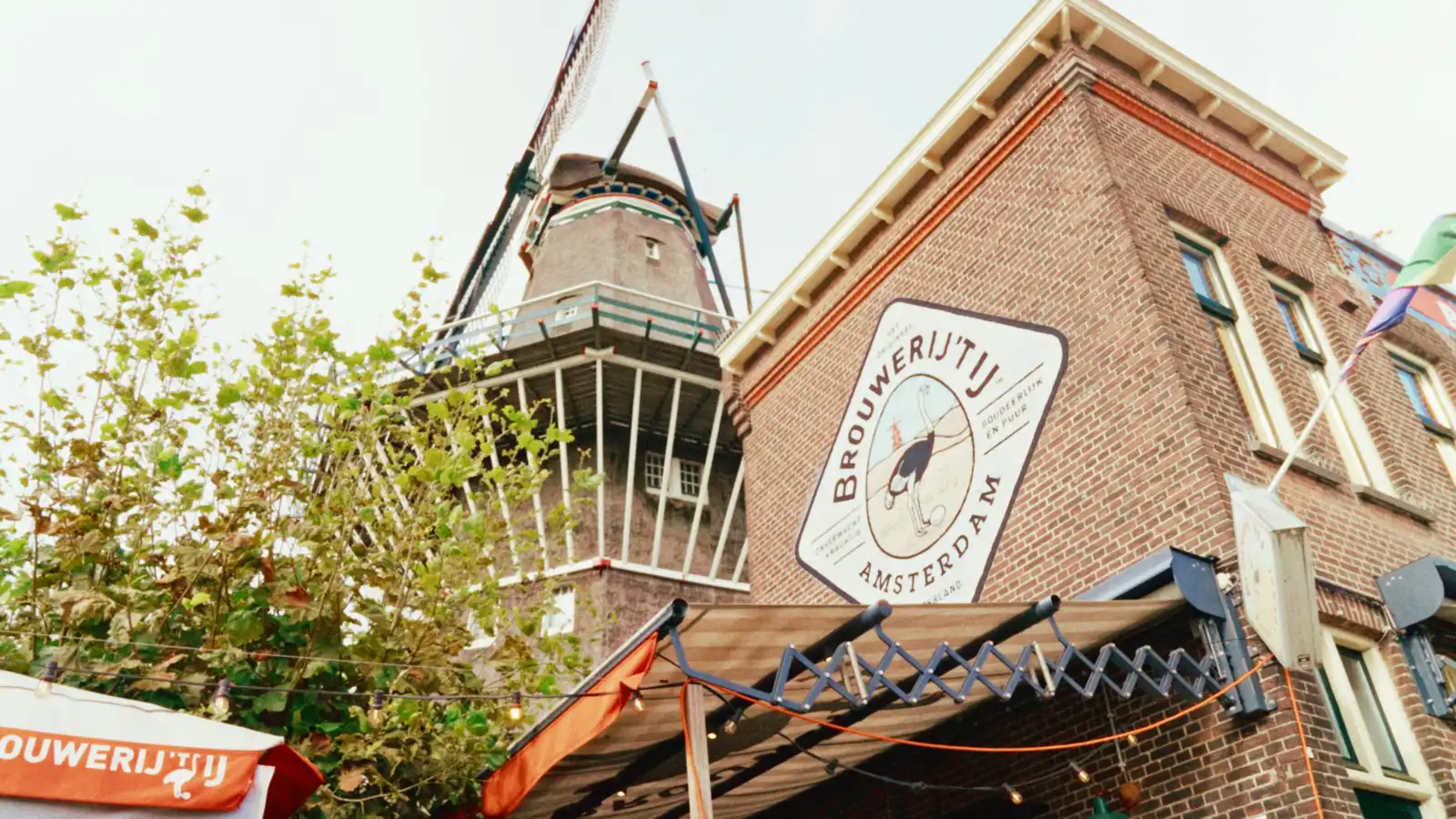
- Brouwerij 't Ij Free IPA alcoholvrij bier 0.5% · 33 cl · Netherlands
- Brouwerij 't Uiltje Bird of Prey 0.2% 0.2% · 33 cl · Netherlands
Related questions
What is dry hopping?What is an abbey beer?What is a nitro beer?
Short answer
Short answers to related questions
- Why does it say alcohol-free on a German beer with 0.5%?
- Because Germany and Belgium use a limit of 0.5% and the Netherlands 0.1%. The same word means something different depending on the country.
- Is 0.0% really zero?
- 0.0% is a rounded figure. There may be a trace of alcohol in it, well under a tenth of a percent.
- What is the difference between alcohol-free and low-alcohol?
- Alcohol-free in the Netherlands means a maximum of 0.1%. Low-alcohol is more than 0.1% up to and including 1.2%.
- Is there also natural alcohol in soft drinks?
- Lemonades contain no alcohol, unless it arises naturally through fermentation; up to 0.5% is then permitted.
Further
Read more
All about beer at ’t BockjeFilter beer by style, brewery and alcohol percentageAll breweries at a glanceWhat is the difference between dubbel, tripel and quadrupel?What is the difference between ale and lager?What are lambic and gueuze?What does IBU mean for beer?All questions about beer
The reasoning
Sources
- Alcoholvrij en -arm bier, Nederlandse Brouwers (accessed 4 September 2026)
- Hoe wordt alcoholvrij bier gemaakt?, Nederlandse Brouwers (accessed 4 September 2026)
- Wat verstaan we onder alcoholvrij?, Trimbos-instituut (accessed 4 September 2026)
Deze pagina is geschreven en gecontroleerd door ’t Bockje Bathmen, slijterij aan de Brink 2 in Bathmen. Laatst bijgewerkt op 30 oktober 2026.
Verkoop van alcohol onder de 18 jaar is verboden. NIX18.