
Beer · Explainer
What does IBU mean for beer?
IBU stands for International Bitterness Units. It is a laboratory value indicating how many bitter hop compounds, mainly iso-alpha acids, are in the beer. A sample is acidified, shaken with a solvent and measured at 275 nanometres; that absorption times fifty gives the IBU. A light lager is around 8 to 12, an American IPA 40 to 70.
In brief
The key figures
| In full | International Bitterness Units |
|---|---|
| What is measured | Iso-alpha acids, the converted bitter compounds from hops |
| Measurement method | Light absorption at 275 nanometres, multiplied by 50 |
| American Light Lager | 8 to 12 IBU |
| Weissbier | 8 to 15 IBU |
| German Pils | 22 to 40 IBU |
| American IPA | 40 to 70 IBU |
| Double IPA | 60 to 100 IBU |
What exactly does an IBU measure?
An IBU measures the amount of iso-alpha acids in the beer, the bitter compounds formed when alpha acids from hops change form during wort boiling.
In the laboratory measurement a beer sample is acidified and shaken with a solvent. The acid releases the iso-alpha acids, the solvent absorbs them.
The light absorption of that solvent is measured at 275 nanometres. That value times fifty is the IBU.
Which IBU values go with which beer style?
The 2021 style guidelines of the Beer Judge Certification Program give a range per style: American Light Lager 8 to 12, German Pils 22 to 40, American IPA 40 to 70.
Other ranges from the same guidelines: Weissbier 8 to 15, Czech Premium Pale Lager 30 to 45, Imperial Stout 50 to 90 and Double IPA 60 to 100.
A range is not a rule but a description of what tasters expect from that style.
Why does a beer with a lot of IBU sometimes not taste bitter?
Malt and residual sugar mask bitterness. An Imperial Stout of 50 to 90 IBU can come across as fuller and sweeter than a German Pils of 30 IBU with much less residual sugar.
The balance between bitterness and body determines the impression, not the number on its own. Two beers with the same IBU can therefore come across completely differently.
In a 2023 review article in Molecules, the authors state that the standard IBU measurement is not a good predictor of perceived bitterness in dry-hopped beers.
Does a high IBU mean a beer is extremely bitter?
No. Above a hundred the figure says little, because the measurement at 275 nanometres also counts substances that do not come from the conversion of hop acids.
Humulinones and hulupones, oxidation products of hop acids, are picked up in the same measurement. In sensory research they proved to be 66 per cent and 84 per cent as bitter as iso-alpha acids.
The highest ranges in the 2021 guidelines stop at 100 IBU: Double IPA 60 to 100 and American Barleywine 50 to 100. A figure above that on a label is the brewer's own statement, not a style standard.
Where does the bitterness in beer come from?
Hops supply alpha acids. During wort boiling these change into iso-alpha acids, and it is that form which dissolves well in beer and gives the bitter taste.
The longer hops are boiled, the more alpha acids are converted. Hops added only after boiling, dry hopping, mainly provide aroma and hardly any extra iso-alpha acids.
A 2014 review in BrewingScience puts the perception threshold for bitterness in water at about 6 milligrams per litre.
From the shop in Bathmen
IPA in the shop in Bathmen
The shop in Bathmen has 54 IPAs from 29 different brands from 9 countries. The alcohol percentage ranges from 0.2% to 9.2%.
- 't Zwarte Schoap Niej Schoap! IPA 6% · 33 cl · Netherlands
- Baptist IPA 6.7% · 33 cl · Belgium
- Brand IPA 0.0 30 cl · Netherlands
- Brasserie d'Achouffe Chouffe Houblon 6.5% · 33 cl · Belgium
- Brewdog Hazy Jane 5% · 33 cl · Scotland
- Brewdog Punk IPA 5.6% · 33 cl · Scotland
- Brewery42 De Brom Baron Double IPA 9.2% · 44 cl · Netherlands
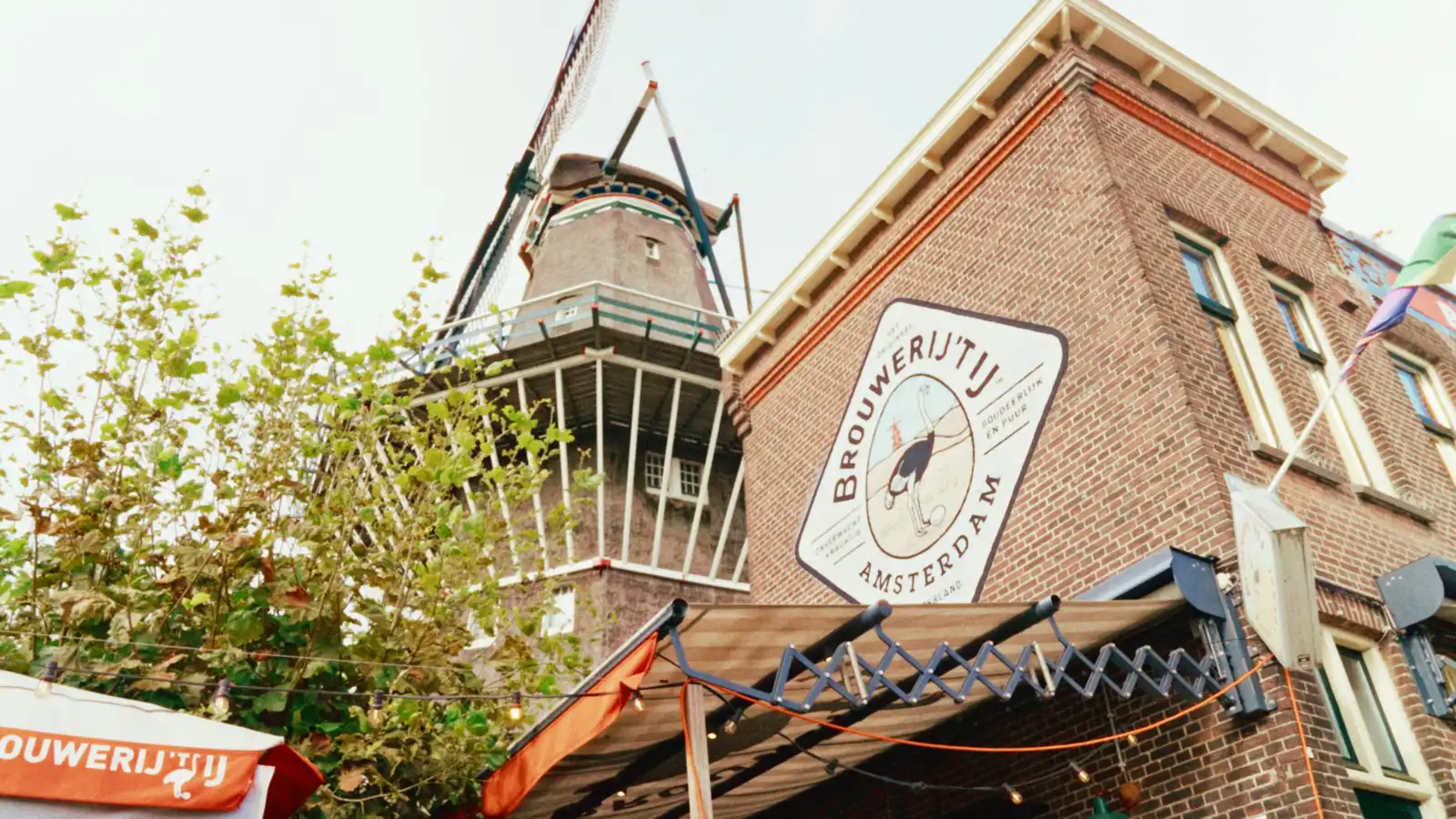
- Brouwerij 't IJ Calypso Session IPA 4% · 33 cl · Netherlands
- Brouwerij 't Ij Free IPA alcoholvrij bier 0.5% · 33 cl · Netherlands
- Brouwerij 't IJ IPA 7% · 33 cl · Netherlands
Related questions
What does hop do in beer?What is low-alcohol beer?What is alcohol-free beer?
Short answer
Short answers to related questions
- Which beer style has the highest IBU?
- Of the common styles, Double IPA goes highest: 60 to 100 IBU. American Barleywine goes up to the same upper limit.
- Is IBU always on the label?
- No. IBU is not one of the mandatory label particulars under Regulation (EU) No 1169/2011. Brewers state it voluntarily.
- Does the IBU change as beer ages?
- Yes. Iso-alpha acids break down slowly, even in the dark. An old beer therefore measures lower than at bottling.
- Does IBU also measure the bitterness of dry-hopped beer?
- Not well. According to a 2023 review in Molecules, the standard IBU measurement is a poor predictor of the perceived bitterness of dry-hopped beers.
The reasoning
Sources
- How is IBU measured?, Office for Science and Society, McGill University (accessed 4 September 2026)
- 2021 Beer Style Guidelines, 21A American IPA, Beer Judge Certification Program (accessed 4 September 2026)
- Effects of Dry-Hopping on Beer Chemistry and Sensory Properties, Molecules 28(18):6648, MDPI, 2023 (accessed 4 September 2026)
This page was written and checked by ’t Bockje Bathmen, wine and spirits shop at Brink 2 in Bathmen. Last updated on 24 October 2026.
Verkoop van alcohol onder de 18 jaar is verboden. NIX18.