
Gin · Explainer
What are botanicals in gin?
Botanicals are the plant ingredients that give gin its flavour: herbs, seeds, roots, peels and berries. Regulation (EU) 2019/787 makes one of them mandatory, juniper from Juniperus communis, and that flavour must predominate. Everything else is free. Common ones are coriander, angelica root, orris root and citrus peel. Gin contains at least 37.5% alcohol.
In brief
The key figures
| Mandatory botanical | Juniper, Juniperus communis L. |
|---|---|
| Flavour requirement | The flavour must be predominantly that of juniper |
| Minimum alcohol content of gin | 37.5% vol |
| Gin categories in the regulation | Gin, distilled gin, London gin |
| Alcohol for distilled gin | Agricultural ethanol of at least 96% vol |
| London gin, strength of the distillate | At least 70% vol |
| London gin, colouring | Not permitted |
| The term dry | At most 0.1 gram of sweetener per litre |
Which botanical is legally required in gin?
Juniper is the only mandatory botanical. Regulation (EU) 2019/787 requires gin to be flavoured with berries of Juniperus communis L. and the flavour to be predominantly that of juniper.
All other botanicals are the distiller's choice. The regulation names no other plant and sets no number either. A gin with four botanicals is just as legal as one with thirty, as long as juniper sets the tone. Without recognisable juniper, a drink may not be called gin.
Which other botanicals are used?
Besides juniper, coriander, angelica root, orris root and citrus peel are the best known. The Gin Guild's botanical directory also lists lavender, cinnamon and dozens of other herbs, seeds, roots and peels.
Coriander provides the spicy layer beneath the juniper. Angelica and orris are roots that hold on to the volatile aromas. Citrus peel brings the fresh top notes. The Gin Guild points out that the amount of volatile oil in a botanical varies from harvest to harvest, depending on the weather. A distiller therefore has to adjust the recipe for each batch.
What is the difference between maceration and vapour infusion?
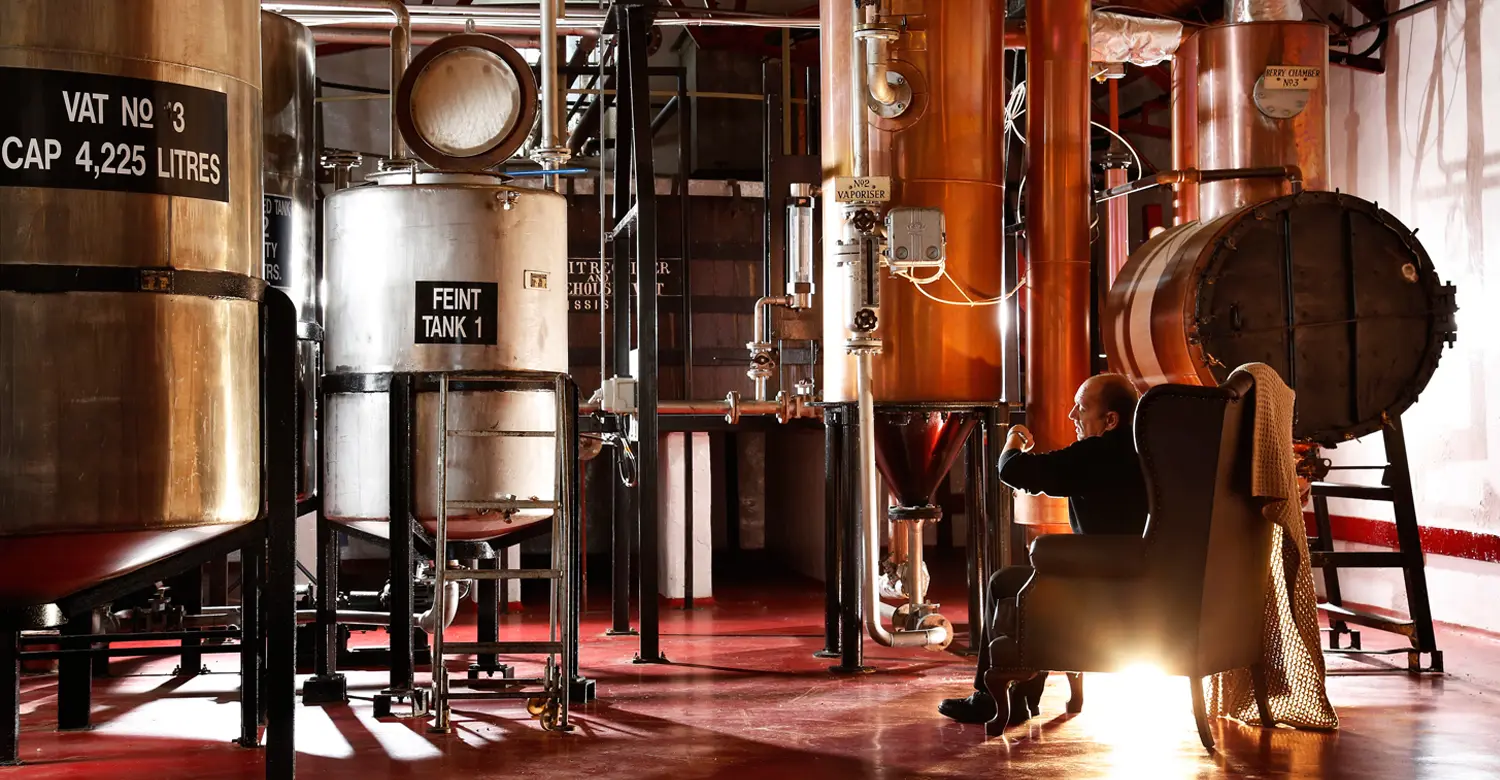
With maceration, the botanicals steep in the alcohol before distillation. With vapour infusion, they hang in a basket above the liquid and only the alcohol vapour passes through them.
The Gin Guild describes maceration as steeping botanicals in neutral alcohol, after which the liquid is strained and brought to strength. With vapour infusion, the alcohol vapour passes through a basket of botanicals and picks up the flavour on the way. Many distillers combine both. The label may state which route was chosen, but the regulation prescribes neither.
What is and is not allowed in each gin category?
Gin may be flavoured after distillation, distilled gin must have the botanicals distilled with it, and London gin must get all its flavour from that single distillation. All three at least 37.5% vol.
For gin, flavouring agricultural ethanol with juniper is sufficient. For distilled gin, agricultural ethanol of at least 96% vol must be distilled together with juniper and other natural botanicals. For London gin, the flavour must come solely from distillation, the distillate must be at least 70% vol, only water and the same agricultural ethanol may be added afterwards, and colouring is not permitted.
Why do some bottles say dry?
In the regulation, dry means that no more than 0.1 gram of sweetener per litre has been added, expressed as invert sugar. Gin, distilled gin and London gin may carry this term.
So the term says nothing about botanicals or the distillation method, only about sugar. Since London gin may in any case contain no more than 0.1 gram per litre, London dry gin is in practice almost always the name used.
From the shop in Bathmen
Gin in the shop in Bathmen
The shop in Bathmen has 255 gins from 98 different brands from 18 countries. The alcohol percentage ranges from 20% to 57.5%.
- Aviation American Gin Batch Distilled 42% · 70 cl · United States
- Battumse Gin 38% · 50 cl · Netherlands
- Beefeater 24 Gin 45% · 70 cl · England
- Beefeater Blood Orange 37.5% · 70 cl · England
- Beefeater Gin 40% · 70 cl · England
- Beefeater Gin 70cl + Glas EOY 40% · 70 cl · England
- Beefeater London Pink Gin 37.5% · 70 cl · England
- Ben Lomond Scottish Gin 43% · 70 cl · Scotland
- Berghorst Spiced Ginever 38% · 70 cl · Netherlands
- Berkshire Botanical Sloe Gin 28% · 50 cl · England
Related questions
Which gin do you use for a gin and tonic?Which gin would you give as a gift?Which gin can you drink neat?
Short answer
Short answers to related questions
- Must gin always taste of juniper?
- Yes. The regulation requires the flavour to be predominantly that of juniper. Without that flavour, a drink may not bear the name gin.
- Does London gin come from London?
- No. London gin is a production method, not an origin. It may be made anywhere.
- How many botanicals belong in a gin?
- The regulation does not specify a number. Only juniper is mandatory; the number of other botanicals is up to the distiller.
- May gin be coloured?
- For London gin, the regulation prohibits colouring. That ban does not apply to gin and distilled gin.
The reasoning
Sources
- Regulation (EU) 2019/787 on spirit drinks, EUR-Lex (accessed 4 September 2026)
- Annex I, categories 20, 21 and 22, The National Archives, official text as adopted (accessed 4 September 2026)
- Gin botanicals directory, Ginopedia, The Gin Guild (accessed 4 September 2026)
Deze pagina is geschreven en gecontroleerd door ’t Bockje Bathmen, slijterij aan de Brink 2 in Bathmen. Laatst bijgewerkt op 28 oktober 2026.
Verkoop van alcohol onder de 18 jaar is verboden. NIX18.