
Rum · Explainer
What is a pot still rum?
A pot still rum is rum that has been distilled per batch in a pot, not continuously in a column. Such a still leaves more congeners in the distillate, which makes the rum heavier in character. EU Regulation 2019/787 prescribes no type of still: rum must come from molasses, syrup or cane juice, be distilled to below 96% vol and contain at least 37.5% vol.
In brief
The key figures
| What a pot still is | A closed still, usually made of copper, that is filled, fired and emptied each time |
|---|---|
| How a column works | Continuous: mash goes in at the top, distillate and residues come out continuously |
| Minimum strength of rum in the EU | 37.5% vol at bottling (regulation 2019/787, annex I, category 1) |
| Maximum distillation strength | Less than 96% vol, so that the character of rum remains noticeable |
| Permitted raw material | Molasses or syrup from sugar cane manufacture, or cane juice itself |
| Requirement for the still type | None: Regulation 2019/787 prescribes neither pot still nor column |
| Strength of the heart | 60 to 94% vol, depending on the type of still (Fermentation, 2021) |
| Age limit in the Netherlands | NIX18: geen alcohol onder de 18 |
What is a pot still in rum?
A pot still is a closed kettle, usually made of copper, which is filled with wash each time, heated and then emptied again.
The vapour rises, passes through the neck to the condenser and becomes liquid again there. What comes out changes from the start to the end of the run, so the distiller makes the cuts at the right time: first the head, then the heart, then the tail. Only the heart goes into the cask. Afterwards the still is emptied, cleaned and refilled, and the same series of choices begins again.
Why does a pot still work per batch and a column continuously?
A pot still has only one charge per run, whereas a column is fed at the top and keeps running off at the bottom as long as mash goes in.
In a pot still the composition of the vapour shifts during the run, so the separation happens over time and depends on the cut points the distiller chooses. In a column the separation is fixed in place: the lightest substances at the top, the heart in the middle, the heaviest at the bottom. With the same settings a column therefore delivers the same distillate day after day, whereas two runs in the same pot still never turn out exactly alike.
What does the type of still do to the congeners and to the flavour?
A pot still lets more congeners through than a tall column, so the distillate turns out heavier in aroma and flavour.
Congeners are all substances other than water and ethanol: esters, higher alcohols, aldehydes and acids. The more a distillate is purified, the less of them remains. The review article in Fermentation from 2021 gives a range of 60 to 94% vol for the heart, depending on the type of still, and reports that distilling in a pot still raises the furfural content, among other things. A pot still ends up lower in that range than a tall column and therefore retains more. What an individual bottle ultimately delivers then still depends on fermentation, maturation and blending.
Which islands and styles are linked to the pot still?
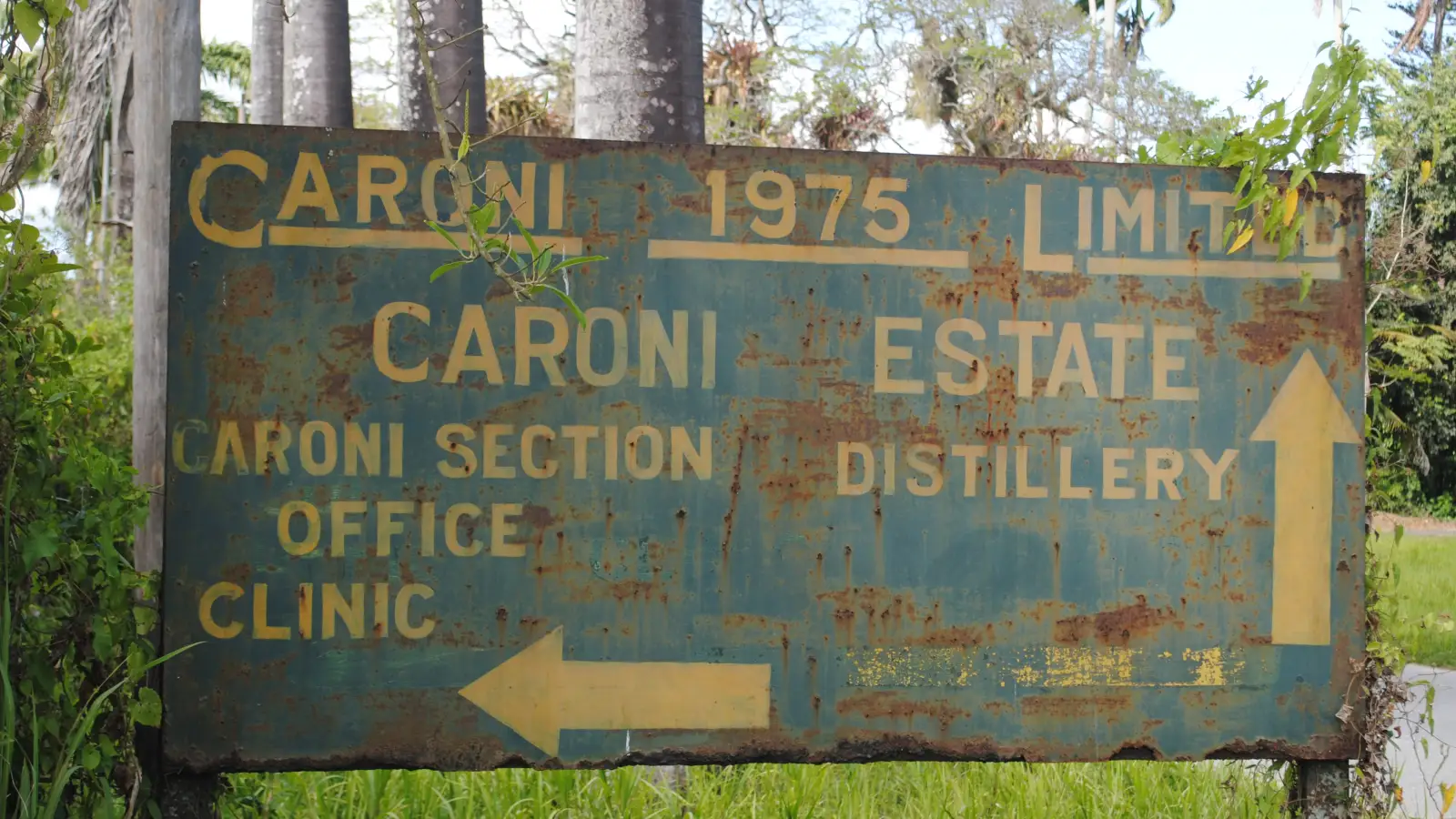
Pot still rum is mainly associated with Jamaica, Barbados, Guyana and Trinidad and Tobago, where the heavier English-speaking style comes from.
The overview article in Fermentation from 2021 places the pot still with the heavier, more strongly perfumed rums from the English-speaking Caribbean and the column still with the lighter rums from the former Spanish colonies. Many distilleries have both and blend the result. The country on the bottle therefore does not automatically say which type of still is behind it: it is a custom that grew out of the history of an island, not a rule.
What does the law say about the still type for rum?
EU Regulation 2019/787 sets no requirement on the still type for rum and only regulates the raw material, the distillation strength and the strength in the bottle.
Annex I, category 1 requires that rum comes from molasses or syrup from cane sugar manufacture or from cane juice itself, that it is distilled below 96% vol so that the character of rum remains noticeable, and that the bottle contains at least 37.5% vol at bottling. Adding alcohol is not allowed, flavoring is not allowed, caramel is only allowed for color and sweetening is limited to 20 grams per liter. Nothing is said about copper, stills or columns. In the United States it is regulated in the same way: 27 CFR 5,147 specifies less than 95% vol when distilling and at least 40% vol at bottling, without a word about the equipment.
How do you recognize a pot still rum on the label?
On the label, look for the words pot still or pot stilled, because there is no legally protected designation for the type of still.
Nobody is obliged to state it, so the absence of those words proves nothing. If nothing is said about it, you get further with the distillery: a house that only has pot stills can deliver nothing but pot still distillate, and a house with both often states itself whether the bottle comes from one run or from a blend. Also look at the strength, because a bottling at 37.5 or 40% vol has been diluted more with water than a bottling at cask strength. If you are in doubt, ask in the shop; we look it up at the distillery rather than guess.
From the shop in Bathmen
Which rum from the pot still countries is there in Bathmen?
In the shop in Bathmen there are 104 rums from Jamaica, Barbados, Guyana and Trinidad and Tobago from 36 different brands from 4 countries. Prices range from € 9.99 to € 364.99. The alcohol percentage ranges from 14.9% to 69%.
- Adelphi Foursquare 15 Years Old 2007 61% · 70 cl · Barbados
- Adelphi Selection Guyana Diamond Rum 13 Years Old 61.3% · 70 cl · Guyana
- Angostura 1919 40% · 70 cl · Trinidad and Tobago
- Angostura Tamboo Spiced Rum 40% · 70 cl · Trinidad and Tobago
- Appleton Estate 40% · 70 cl · Jamaica
- Appleton Estate 12Y Rare Cask 43% · 70 cl · Jamaica
- Appleton Estate 15Y Black River Casks 43% · 70 cl · Jamaica
- Appleton Estate 21 years Rare Limited Edition 43% · 70 cl · Jamaica
- Bacardi Mojito 14.9% · 70 cl · Barbados
- Banks Rum 7 70 cl · Barbados
Related questions
What is the difference between rum and rhum agricole?What is the difference between rum and whisky?What is the difference between white and dark rum?
Short answer
Short answers to related questions
- Is pot still rum better than column still rum?
- No, it is not a ranking. A pot still gives a heavier distillate and a column still a lighter one; which of the two you like better is a matter of taste.
- What does blended mean on a rum bottle?
- That the contents are composed of more than one distillate, often a mixture of pot-still and column distillate. How much of each is in it is rarely stated.
- Can rum made without a pot still still be called rum?
- Yes. Regulation 2019/787 sets requirements for the raw material, for distilling below 96% vol and for at least 37.5% vol in the bottle, not for the type of still.
- To what strength is pot still rum distilled?
- According to the review article in Fermentation from 2021, the heart of a rum distillation comes out at 60 to 94% vol, depending on the type of still. A pot still comes out lower in that range than a tall column.
- Where does pot still rum mainly come from?
- Mainly from Jamaica, Barbados, Guyana and Trinidad and Tobago. That is a habit from the history of those islands, not a rule.
The reasoning
Sources
- Verordening (EU) 2019/787, bijlage I, categorie 1: rum, EUR-Lex, Publications Office of the European Union (accessed 2026-10-15)
- 27 CFR 5,147 Rum, Electronic Code of Federal Regulations, United States (accessed 2026-10-15)
- Processes, Challenges and Optimisation of Rum Production from Molasses: A Contemporary Review, Fermentation 7(1):21, MDPI, journal Fermentation (accessed 2026-10-15)
- Alcoholwet, artikel 20, Overheid.nl, wetten.overheid.nl (accessed 2026-10-15)
This page was written and checked by ’t Bockje Bathmen, wine & spirits shop at Brink 2 in Bathmen. Last updated on 15 October 2026.
Verkoop van alcohol onder de 18 jaar is verboden. NIX18.