
Whisky · Explainer
What is a dunnage warehouse?
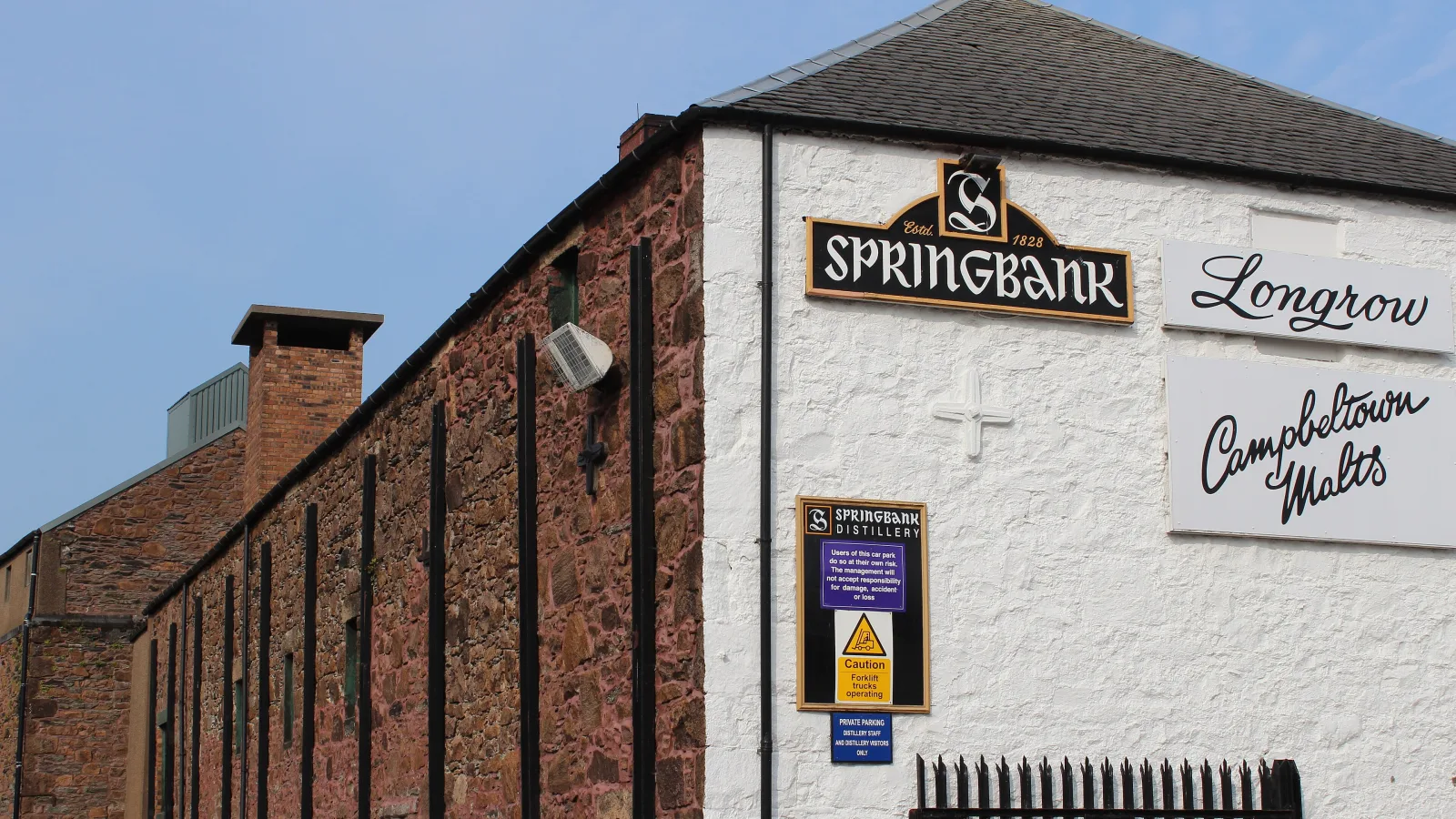
A dunnage warehouse is the traditional Scottish maturation warehouse: a low building with thick stone walls, a slate roof and an earth or gravel floor, in which casks are stacked lying on wooden beams, usually three high. The thick walls keep the temperature level throughout the year and the humidity high. Scotch whisky must mature for at least three years in oak casks of no more than 700 litres.
In brief
The key figures
| Definition | Traditionally low, often windowless maturation warehouse with stone walls, a slate roof and an earth or gravel floor |
|---|---|
| Stacking height | Casks lie on wooden beams, usually two to three layers high, about two metres |
| Floor and walls | Earth, gravel or cinder floor without damp-proofing, thick walls of stone or brick |
| Evaporation per year | In Scotland about 1 to 2 percent of the cask contents, the angel’s share |
| Legal maturation requirement | At least 3 years in oak casks of at most 700 litres, in Scotland and in a bonded warehouse |
| Warehouse types | Dunnage, racked (from the 1950s) and palletised (in Scotland from the mid-1980s) |
| Temperature in a rack warehouse | At the top in summer around 20 degrees, at the bottom 12 to 15 degrees |
| Humidity | High in Scotland, which means alcohol evaporates before water and the alcohol percentage falls |
What exactly is a dunnage warehouse?
A dunnage warehouse is a low, often windowless warehouse with thick stone walls and a slate roof on wooden trusses, in which whisky casks mature lying down. The floor is of earth, gravel or cinders and there is no damp-proof course beneath it, so that the ground and groundwater largely determine how humid the air inside is.
The casks lie on heavy wooden beams, the dunnage. They are stacked in rows, called stows in Scotland, usually two or three layers high. That comes to about two metres. There are also dunnage warehouses with two or more storeys, separated by wooden mezzanine floors.
What is the difference with a racked and a palletised warehouse?
A racked warehouse stacks casks in steel racks up to eight or twelve tiers high, a palletised warehouse puts them upright on pallets in four to seven tiers. A dunnage warehouse stays at two or three tiers. The difference is therefore mainly in height and density: the higher the stack, the more casks under the same roof.
Racked warehouses came into use from the 1950s, palletised warehouses in Scotland from the mid-1980s. Together they store the greater part of the Scottish stock: about sixty percent of the casks lie in racks and almost forty percent on pallets. What matures in a dunnage warehouse is therefore a small part of the whole.
What does a dunnage warehouse do to temperature and humidity?
Thick walls and a low build keep the temperature in a dunnage warehouse level all year round, and the earthen floor without damp-proofing keeps the air humid. Day and night, summer and winter: the difference inside stays small.
In a racked warehouse it works differently. The casks at the top can reach around 20 degrees in summer, while it stays at 12 to 15 degrees at the bottom. The air is also drier up there. A cask that lies high therefore goes through a different maturation from a cask on the floor, within the same building.
How much whisky evaporates in a dunnage warehouse?
In Scotland, roughly 1 to 2 percent of a cask's contents evaporates each year, and in the humid air of a dunnage warehouse it is mostly alcohol that is lost. That loss is called the angel's share.
Because more alcohol than water escapes from the cask, the alcohol percentage drops during maturation. In a dry environment the opposite happens: mainly water evaporates there and the percentage actually rises. Over a long maturation the volume loss adds up considerably. For a cask of twenty-five years, it amounts to roughly forty percent of the contents, and in warm countries annual evaporation can reach twelve or fifteen percent.
Is whisky from a dunnage warehouse really different?
A dunnage warehouse gives whisky a style of its own, but the difference from a racked or palletised warehouse is in practice smaller than is often suggested. Trade journals take the view that the influence of the warehouse on the quality of the whisky remains an open question.
There are good reasons for that. Every cask is different, and the position of the cask in the warehouse counts for more than the type of building: high and dry matures differently from low and cool. Moreover, a blender combines casks from different warehouses to achieve a consistent style, so the distinction disappears in the bottle. The shop on the Brink in Bathmen stocks 3,898 whiskies, of which 2,783 are from Scotland and 983 carry an age statement of twelve years or older. The type of warehouse in which a bottle matured is rarely stated on the label.
From the shop in Bathmen
Which Scotch whiskies of twelve years and older are there in Bathmen?
In the shop in Bathmen there are 983 whiskies from 190 different brands. Prices range from € 8.99 to € 11,750.00. The alcohol percentage ranges from 21.7% to 66.8%.
- A Highland Distillery 2005 – 16 Years Old – First Cask 58.3% · 70 cl · Scotland
- Aberfeldy 15 Years Old Cadillac Wine Finish 43% · 70 cl · Scotland
- Aberfeldy 18 Years Old Red Wine Cask Napa Valley 43% · 70 cl · Scotland
- Aberfeldy 19 YO Sherry Cask 43% · 70 cl · Scotland
- Aberfeldy 20y 43% · 70 cl · Scotland
- Aberfeldy 25 Years Old 46% · 70 cl · Scotland
- Aberfeldy Whisky 12 Years Old 40% · 70 cl · Scotland
- Aberfeldy Whisky 12Y 40% · 20 cl · Scotland
- Aberlour 12 Years Old Non Chill-Filtered 48% · 70 cl · Scotland
- Aberlour 13 Years Old Double Cask 40% · 70 cl · Scotland
Related questions
What is a manhattan?What is a marriage cask?What is an independent bottler?
Short answer
Short answers to related questions
- What does dunnage mean?
- Dunnage is the wood on which the bottom row of casks rests. In a dunnage warehouse the casks lie on heavy beams, not in a steel rack.
- How high are casks stacked in a dunnage warehouse?
- Usually two or three tiers high, together about two metres. In a racked warehouse the casks go up to eight or twelve tiers.
- Must Scotch whisky mature in a dunnage warehouse?
- No. The law requires at least three years in oak casks of no more than 700 litres, in Scotland and in a bonded warehouse. The type of warehouse is free.
- Does a bottle state whether the whisky comes from a dunnage warehouse?
- Rarely. Some bottlings state it, but it is not a mandatory or common designation. If you ask about it, we will look it up for you.
The reasoning
Sources
- Do dunnage warehouses create better whisky?, ScotchWhisky.com, Ask the Professor (accessed 2026-10-03)
- Warehouses, Whiskipedia (accessed 3 October 2026)
- Angel's Share, Whiskipedia (accessed 3 October 2026)
- The Scotch Whisky Regulations 2009, regulation 3, legislation.gov.uk (accessed 2026-10-03)
- Whisky Barrel Storage 101: All About Warehouses, Whisky Advocate (accessed 2026-10-03)
This page was written and checked by ’t Bockje Bathmen, wine & spirits shop at Brink 2 in Bathmen. Last updated on 3 October 2026.
Verkoop van alcohol onder de 18 jaar is verboden. NIX18.