
Whisky · Explainer
What is floor malting?
Floor malting is the traditional way of malting: the barley steeps in water for two to three days, then lies for four to five days in a layer of about 15 centimetres on a stone floor and is turned by hand, after which it dries for 20 to 48 hours in a kiln. A floor maltings needs 10 to 11 days, compared with 8 days at an industrial maltings. Nine Scottish distilleries still malt this way.
In brief
The key figures
| What it is | Malting barley on a stone or concrete floor, spread and turned by hand |
|---|---|
| Weeks | Two to three days of steeping and air rests; Kilchoman keeps the water at 12 to 16 degrees Celsius and works towards 43 to 45 percent moisture |
| Germination | Four to five days; Kilchoman turns the layer by hand every four hours |
| Layer thickness | Springbank spreads an even layer of six inches, about fifteen centimetres |
| Kilning (drying) | 20 to 48 hours, first 55 to 65 degrees and then 70 to 75 degrees Celsius; Springbank mentions 30 to 48 hours |
| Lead time | Ten to eleven days at a floor maltings, against about eight days at an industrial maltings |
| Legal requirement | The Scotch Whisky Regulations 2009 require water and malted barley, conversion by enzymes from the grain itself, maturation of at least three years in Scotland in oak casks of up to 700 litres, and a minimum of 40 percent alcohol |
| Share | Nine Scottish distilleries still have their own floor maltings; the rest buy malt from industrial maltings, which have supplied the largest share since the 1960s and 1970s |
What exactly happens in floor malting?
In floor malting, the barley goes through three steps: soaking in water, germinating in a thin layer on a floor, and drying in a kiln over a fire.
Steeping gets the grain going. The Scotch Malt Whisky Society describes periods of immersion and air rest over two to three days. Kilchoman keeps the steeping water at 12 to 16 degrees Celsius and works towards a moisture content of 43 to 45 percent. The damp barley then goes to the malting floor, where the grain forms rootlets and a small shoot. As soon as that shoot has reached about three quarters of the grain length, Kilchoman stops the process by kilning: drying the green malt, so that the conversion of starch does not go any further.
How long does floor malting take?
A floor maltings needs ten to eleven days for a batch, against about eight days at an industrial maltings, writes trade magazine Whisky Magazine.
The steps are the same for both, but on a floor everything is done by hand and is therefore slower. According to the Scotch Malt Whisky Society, germination takes four to five days and kilning 20 to 48 hours, with the kiln first at 55 to 65 degrees and then rising to 70 to 75 degrees. Springbank gives 30 to 48 hours for its own kiln, and Whisky Magazine arrives at three to four days for distillery kilns. The difference lies mainly in how much peat is burned and how long drying continues.
Why is the barley turned by hand?
Turning keeps the layer airy and the temperature even, so that all grains germinate equally fast and the rootlets do not grow together.
On the malting floor the barley lies in a layer of limited thickness. Springbank spreads an even layer of six inches, about fifteen centimeters, and turns it at fixed times. Kilchoman turns the layer by hand every four hours and adjusts the thickness of the bed to the season, to control the temperature of the grain. The tool is a wooden shovel, called a malt shiel in Scotland. Without turning, the bottom layer would get too warm and the grains would grow together into a mat.
What does the law prescribe about malt in Scotch whisky?
The Scotch Whisky Regulations 2009 prescribe that Scotch whisky is made from water and malted barley, to which only whole grains of other cereals may be added.
That regulation says nothing about the way of malting, so floor malting is not a legal requirement but a choice of the distillery. It does state that the mash is made at the distillery itself and that the conversion to a fermentable mash happens exclusively through enzymes from the grain itself. Added enzymes are therefore not permitted, and so malting is the only route to those enzymes. The regulation further demands fermentation with yeast only, distillation to below 94.8 percent alcohol, maturation of at least three years in Scotland in oak casks of at most 700 litres, and at least 40 percent alcohol in the bottle.
Which Scottish distilleries still malt on the floor themselves?
The Edinburgh Whisky Academy counts nine Scottish distilleries with a working floor maltings on their own site.
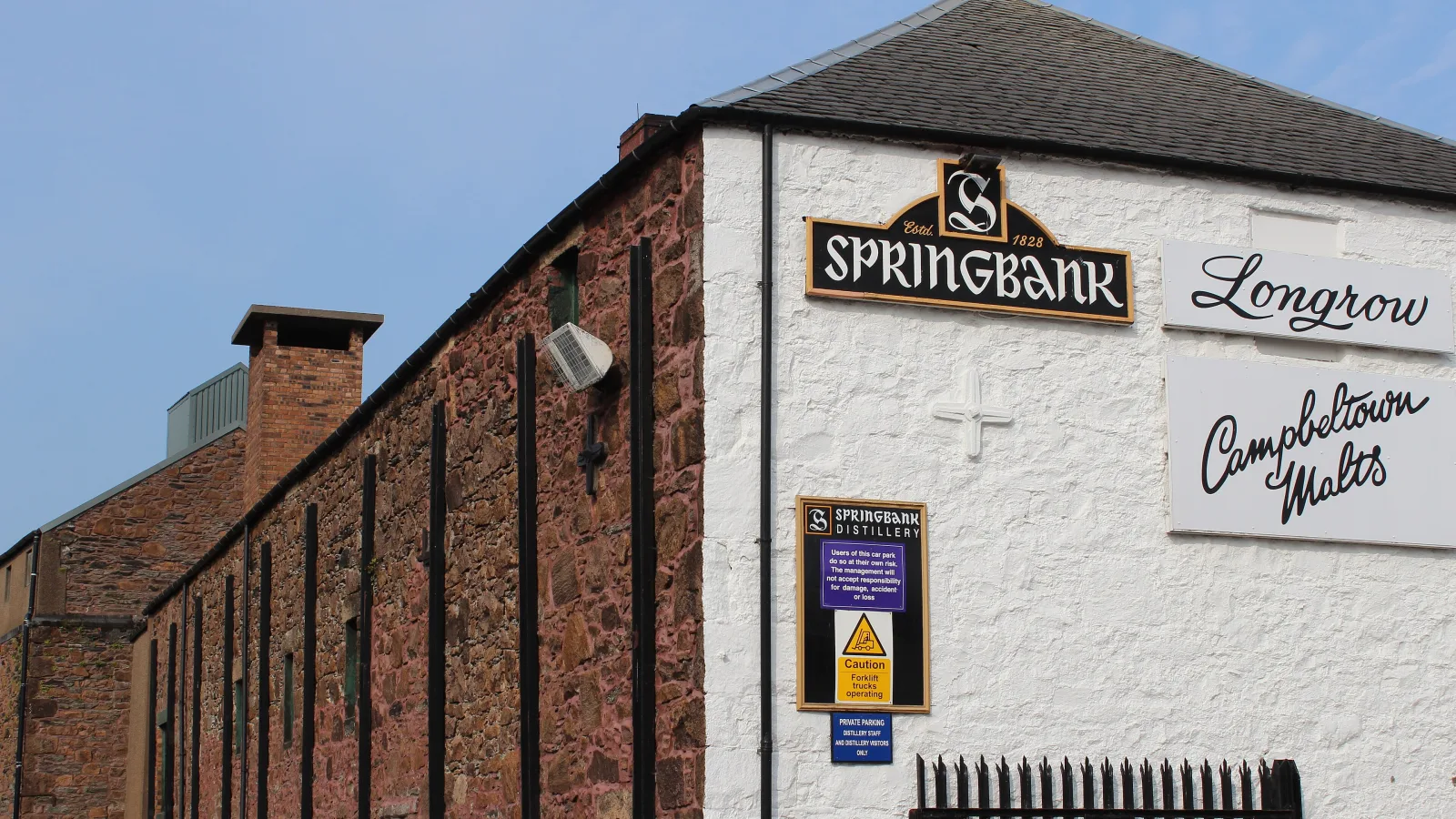
On that list are Springbank, Balvenie, BenRiach, Bowmore, Highland Park, Laphroaig, Kilchoman, Glen Garioch and Dunphail. According to that source, Springbank malts one hundred percent of its own barley in Campbeltown, Bowmore about thirty percent on Islay and Highland Park around twenty percent on Orkney. Balvenie calls itself the only distillery in the Scottish Highlands that still grows and malts part of its own barley itself. Glen Garioch brought back the floor maltings during a refurbishment costing six million pounds. Kilkerran comes from the neighbouring distillery Glengyle and uses malt from the floor maltings of Springbank. Whisky Magazine points out that most distilleries switched to industrial maltings in the sixties and seventies, which could compete with highly automated production on a cost item that makes up 55 to 60 percent of the total.
How many bottles from floor-malting distilleries are there in Bathmen?
In the whisky section in Bathmen there are 233 bottles from the nine Scottish distilleries that do their own floor malting, spread over nine brands.
These are Kilchoman with 58 bottles, Bowmore with 35, Highland Park with 28, Laphroaig with 28, BenRiach with 21, Balvenie with 19, Glen Garioch with 17, Springbank with 16 and Kilkerran with 11. All nine come from Scotland. The alcohol percentage ranges from 40 to 66.4 percent, from regular bottlings to cask strength. The whole whisky shelf comprises 3,898 items, so this group is a small part of it. Anyone who wants to find out what a distillery's own floor maltings does to the end result can line up bottles of these nine side by side in the shop.
From the shop in Bathmen
Which whiskies from floor-malting distilleries are there in Bathmen?
The shop in Bathmen stocks 233 whiskies from 9 different brands. Prices range from € 22.99 to € 4,999.00. The alcohol content ranges from 40% to 66.4%.
- Aston Martin Bowmore 22 Years Masters Selection 51% · 70 cl · Scotland
- Balvenie 2012 A Collection of Curious Casks 12Y 47.3% · 70 cl · Scotland
- Benriach 1994 Cask Edition 27 years old Oloroso Puncheon Smoky 53% · 70 cl · Scotland
- Benriach 20 Years Old Speyside Single Malt Scotch Whisky 43% · 70 cl · Scotland
- BENRIACH 2000 CASK STRENGTH SIGNATORY 59.1% · 70 cl · Scotland
- BenRiach 21Y The Twenty One 46% · 70 cl · Scotland
- BenRiach 25Y 46% · 70 cl · Scotland
- Benriach 30Y Authenticus Peated 46% · 70 cl · Scotland
- BenRiach 30Y The Thirty 46% · 70 cl · Scotland
- Benriach Malting Season second edition 48.9% · 70 cl · Scotland
Related questions
What are wash and low wines?What bottle sizes are there for spirits?What cask sizes are used for whisky?
Short answer
Short answers to related questions
- Is floor malting the same as peat or smoke in whisky?
- No, floor malting is about the way the barley is malted. Smoke only comes in during kilning, and only if peat is burned: Kilchoman gives about 20 ppm phenol for its own malt.
- Does every distillery with a floor maltings malt all of its own barley?
- No. According to the Edinburgh Whisky Academy, Springbank malts one hundred percent itself, while Bowmore malts about thirty percent and Highland Park around twenty percent on its own premises. The rest comes from industrial maltings.
- Why do most distilleries no longer do their own malting?
- Whisky Magazine points to the 1960s and 1970s: distilleries preferred to put their money into more stills and washbacks, and industrial maltings took over the malting.
- What does kilning mean in malting?
- Kilning is the drying of the green malt in a kiln. According to the Scotch Malt Whisky Society it takes 20 to 48 hours, at temperatures of 55 to 65 and then 70 to 75 degrees Celsius.
- Can you find whisky from these distilleries in Bathmen?
- Yes. In Bathmen there are 233 bottles from the nine Scottish distilleries that do their own floor malting, with alcohol percentages from 40 to 66.4 percent.
The reasoning
Sources
- The Scotch Whisky Regulations 2009, regulation 3, legislation.gov.uk (accessed 2 October 2026)
- What is Traditional Floor Malting? This is how we do it at Kilchoman, Kilchoman Distillery (accessed 2026-10-02)
- Process, Springbank Distillery (accessed 2 October 2026)
- Taking the Floor, Whisky Magazine (accessed 2026-10-02)
- Flavour focus: malting, Scotch Malt Whisky Society (accessed 2026-10-02)
- Scotch Whisky Distilleries with On-Site Floor Maltings, Edinburgh Whisky Academy (accessed 2026-10-02)
- The Balvenie, the most handcrafted of single malts, William Grant & Sons (accessed 2026-10-02)
- Glen Garioch's Famous Oldmeldrum Distillery Reopens to Public, Suntory Global Spirits (accessed 2 October 2026)
- Kilkerran Single Malt Whisky, Glengyle Distillery (accessed 2026-10-02)
This page was written and checked by ’t Bockje Bathmen, wine & spirits shop at Brink 2 in Bathmen. Last updated on 2 October 2026.
Verkoop van alcohol onder de 18 jaar is verboden. NIX18.