
Whisky glasses: tumbler, tulip glass and Glencairn
There are three main shapes of glass for whisky. The tumbler, also called an old fashioned glass or rocks glass, is low and wide with a heavy base and is meant for whisky with ice and for cocktails. The tulip glass or nosing glass (copita) has a stem and a bowl that narrows towards the rim, for nosing and tasting neat whisky. The Glencairn is a tulip-shaped glass without a stem. The shop on the Brink has 26 whisky glasses.
- 26bottles in the shop
- 6brands
- 2countries
What is a tumbler or old fashioned glass?
A tumbler is a low, wide glass with a thick base. Other names are old fashioned glass, rocks glass and lowball. The regular size holds about 180 to 300 ml; the larger double old fashioned about 350 to 470 ml. The wide rim makes it easy to fit ice, and the sturdy base lets you muddle sugar or fruit in the glass before the drink is added. That is why the tumbler is used for whisky on ice and for cocktails such as the old fashioned.
The shape goes back to the quaich, a shallow Scottish drinking bowl with two handles from the 17th and 18th centuries, made of wood, silver or leather. From the 19th century that bowl was gradually replaced by the glass tumbler, which was cheaper to make. Older tumblers are often cut glass; most modern ones are pressed in a mould.
What is a tulip glass or nosing glass?
A tulip glass, also called a copita or nosing glass, is a glass with a long, thin stem and a bowl that narrows towards the rim. The shape comes from the Spanish sherry glass. Blenders and distilleries use this glass to nose and taste whisky. The narrow opening keeps the aroma together above the glass, so you can pick it up better. The long stem lets you hold the glass without warming the whisky with your hand, and keeps your fingers away from the rim. Anyone who does want to let the whisky warm up a little can take the bowl in hand. The tulip glass is made for neat whisky, perhaps with a few drops of water, and not for ice or mixed drinks.
Whisky glasses: tumbler, tulip glass and Glencairn at ’t Bockje
A selection from the 26 bottles currently in the shop on the Brink.


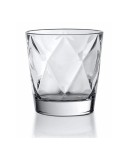
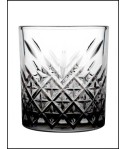




View all whisky glasses: tumbler, tulip glass and Glencairn in the Online shop
In brief
| Other names for tumbler | Old fashioned glass, rocks glass, lowball |
|---|---|
| Tumbler capacity | About 180 to 300 ml; double old fashioned 350 to 470 ml |
| Tulip glass | Copita or nosing glass, derived from the Spanish sherry glass |
| Designer Glencairn | Raymond Davidson, Glencairn Crystal (Scotland) |
| Glencairn in production | Since 2001 |
| Glencairn capacity | About 175 ml, intended for about 50 ml of whisky |
| Lead crystal (EU) | At least 24 percent lead oxide; full lead crystal at least 30 percent |
| In the shop | 26 bottles |
Who came up with the Glencairn whisky glass?
The Glencairn glass was designed by Raymond Davidson, who founded the family business Glencairn Crystal in Scotland in 1981. According to the company, the prototype lay in a filing cabinet for almost twenty years, until his brother Paul found it again. After further development with master blenders from large Scotch whisky companies, it was finalised around 2000 and went into production in 2001. The shape is derived from the copita, but without a stem and with a thicker, wider bowl.
The glass is about 115 mm tall, has a capacity of about 175 ml and is intended for a pour of about 50 ml. It won the Queen's Award for innovation in 2006 and, according to the available sources, is the first whisky glass endorsed by the Scotch Whisky Association. More than five million are sold every year.
Which whisky glass do you use when?
The choice depends on how you drink the whisky:
- With ice or as a cocktail: a tumbler. It holds ice and the base is sturdy enough for stirring or muddling.
- With soft drink or soda water: a taller long drink glass (highball), so there is room for ice and the carbonation lasts longer.
- Neat, for nosing and tasting: a tulip glass or a Glencairn. Both narrow towards the rim and keep the aroma together.
- Neat with a few drops of water: also a tulip glass or Glencairn, because in it you can smell what the water does to the whisky.
A tumbler is not made for nosing, because the open rim does not hold the aroma together. The Glencairn is sturdier than a stemmed copita and is therefore often chosen for ordinary use at the table or at a tasting with several people.
What is the difference between crystal and glass?
Crystal is glass with a certain composition, and in the European Union it is laid down which name goes with which composition. Directive 69/493/EEC distinguishes four categories. Full lead crystal contains at least 30 percent lead oxide, lead crystal at least 24 percent. In addition there are two categories, crystal glass and sonorous glass, with at least 10 percent zinc, barium, lead or potassium oxide, alone or together. For every category there are also requirements for density and light refraction.
Glass that does not meet these requirements may not be sold under these designations. Versions of the Glencairn glass exist or existed in lead crystal, lead-free crystal and soda-lime glass; most glasses in circulation are lead-free crystal. Check the packaging for the exact designation.
Which whisky glasses does ’t Bockje have?
The shop has 26 whisky glasses, from Scotland and the Netherlands among others, with brands such as Spiegelau and the Classic Malts Selection. Examples are the Glencairn whisky glass 17 cl, the Whisky Tulpglas 14 cl, the Spey dram whisky glass 9 cl, the Spey tumbler whisky glass 20 cl, the Jack Daniel's Old No.7 Tumbler, the Tumbler whisky glass Timeless, the Tumbler Black, the Tumbler Concerto Vidivi, the Pure Kristallen Whisky Glas Tulp, the Avant Garde Kristallen Whisky Glas op Voet and The Ultimate Perfect Dram Whisky Glas. Among the glasses there is also a decanter, the RCR Adagio Whisky Karaf, for pouring whisky. Would you like to hold a glass in your hand before you choose, or do you have a question about which shape suits the way you drink? Call 0570 541 278 or drop by at Brink 2 in Bathmen.
Brands in this selection
- Whisky Almanak Hans 4
- Brouwerij Frontaal 1
- ESTE 1
- Lindemans 1
- Spiegelau 1
- Classic Malts Selection 1
What customers also ask
Is a tumbler the same as an old fashioned glass?
Yes. Tumbler, old fashioned glass, rocks glass and lowball are names for the same low, wide glass with a thick base.
Can you put ice in a Glencairn?
That is possible, but the glass is made for smelling and tasting neat whisky. A tumbler is meant for whisky with ice.
What is a dram glass?
A small glass for a small pour of whisky, such as the Spey dram whisky glass of 9 cl.
Why does a nosing glass have a stem?
So that your hand does not warm the whisky and your fingers do not come near the rim, where you smell.
How many whisky glasses does ’t Bockje have?
In the shop on the Brink there are 26 whisky glasses, from tumbler to tulip glass and Glencairn.
Keep browsing
Sources
- Glencairn whisky glass, Wikipedia, en.wikipedia.org/wiki/Glencairn_whisky_glass (accessed 17 October 2026)
- Old fashioned glass, Wikipedia, en.wikipedia.org/wiki/Old_fashioned_glass (accessed 2026-10-17)
- More than 5 million sold each year: the Scottish company behind world's favourite whisky glass, The Scotsman, scotsman.com/lifestyle/food-and-drink/drink/whisky/more-than-5-million-sold-each-year-the-scottish-company-behind-worlds-favourite-whisky-glass-8992997 (accessed 2026-10-17)
- Whisky glasses, The Macallan, themacallan.com/en/knowledge/whisky-glasses (accessed 2026-10-17)
- The Whisky Glass Guide, The Lakes Distillery, lakesdistillery.com/pages/whisky-glass-guide (accessed 2026-10-17)
- Council Directive 69/493/EEC on crystal glass, European Union (legislation.gov.uk, copy of EU text), legislation.gov.uk/eudr/1969/493/data.htm (accessed 17 October 2026)
The shop is at Brink 2 in Bathmen. Open Tuesday to Friday from 09.00 to 18.00 and Saturday from 09.00 to 17.00. For advice, call 0570 541 278 or email info@bockje.nl.
Wij verkopen geen alcohol aan personen onder de 18 jaar. NIX18.