
From the shelf
Four of the 6
Click on a bottle for the rest of the details.
Four Aalborgs side by side on the shelf
For many people, Aalborg is the first thing that comes to mind with akvavit. The house began in 1846, when Isidor Henius opened his factory on Urbansgade in Aalborg and brought the Taffel onto the market. Versions followed that are nothing alike: one clear and based on caraway, another on dill, yet another golden from the cask.
We have six of them, and that is exactly the point of a shelf like ours: you can put the Taffel, the Dild, the Jubileum and the Nordguld side by side instead of choosing the one bottle the supermarket happens to stock. The Taffel and the Jubileum are there in two bottle sizes.
Not sure where to start? Just give us a call. That is what we are here for.
The clear akvavits
The Taffel in two bottle sizes and the Dild. All percentages below come from the label information in our online shop.
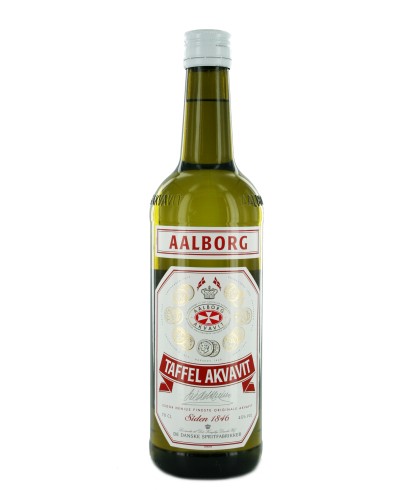
Aalborg Taffel Akvavit
The bottle the house started with in 1846: clear, based on caraway seed. 70 centilitres, 45 per cent.
€ 19,99
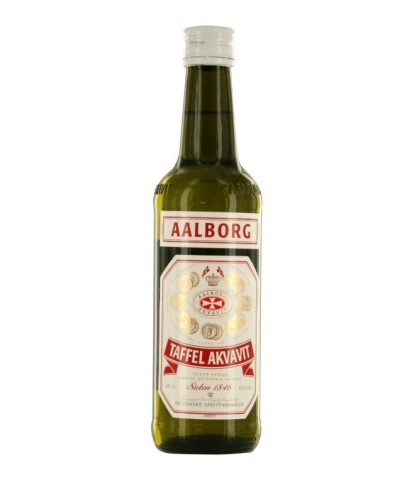
Aalborg Taffel Akvavit
The same Taffel in the small bottle. 35 centilitres, 45 per cent.
€ 12,99
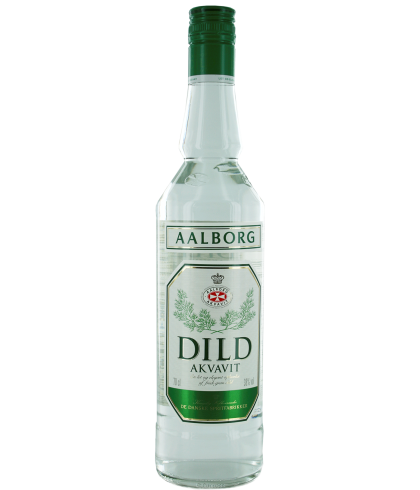
Aalborg DILD Akvavit
With a distillate of fresh dill, dill seed and lemon peel. 70 centilitres, 38 per cent.
€ 19,99
From Urbansgade in Aalborg to Norway
- The brand in four facts
- 1846Isidor Henius opens his factory on Urbansgade in Aalborg and launches the Taffel.
- 1946The Jubileum appears, a hundred years after the Taffel.
- 2007The Nordguld is added, with aroma from amber.
- 2015The factory in Aalborg closes in April; production moves to Norway.
Akvavit is the Scandinavian spirit based on grain or potato whose flavour, under European rules, must come mainly from a distillate of caraway and/or dill seed. Aalborg is the house that made the Danish form of it big.
It began in 1846, when Isidor Henius opened his factory in the city of Aalborg and launched the Taffel: clear, based on caraway, and according to the house itself the closest thing to a Danish national schnapps. In 1946, exactly a hundred years later, the Jubileum was added. It is made with a distillate of dill and coriander seed and finished with American oak extract. It contains no caraway, which sets it apart within the range.
The Nordguld appeared in 2007. Alongside a distillate of caraway and dill seed, it also contains aroma extracted from amber, and the akvavit ages in sherry casks. The Dild is the dill version, with a distillate of fresh dill, dill seed and lemon peel; it returned in 2010 in the familiar 70 centilitre bottle.
The factory in Aalborg itself closed in April 2015. Production of the Aalborg brands went to Norway, to Arcus, which merged with Altia in 2021 to form Anora Group.
Four versions that are all called akvavit and none of which taste the same.
The golden akvavits
The Jubileum in two bottle sizes and the Nordguld from sherry casks.
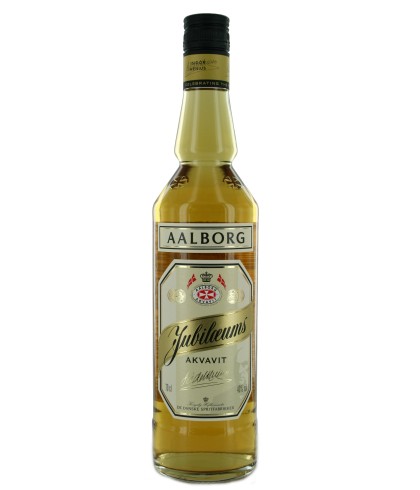
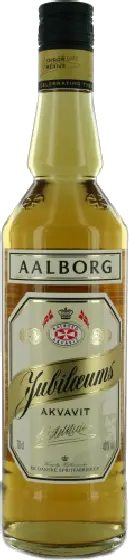
Aalborg Jubileum Akvavit
From 1946, with dill and coriander seed and American oak extract. 70 centilitres, 42 per cent.
€ 21,99
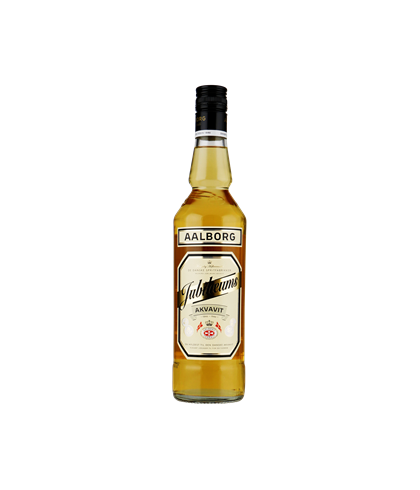
Aalborg Jubileum Akvavit
The same Jubileum in the litre bottle. One litre, 40 per cent.
€ 26,99
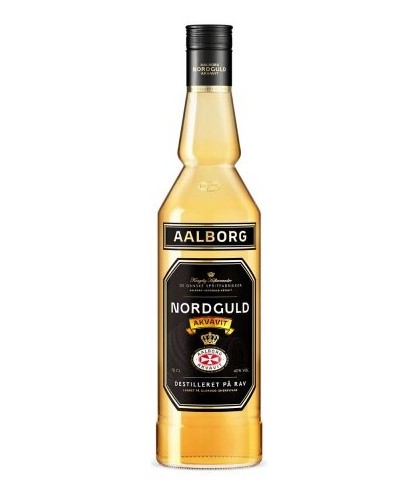
Aalborg Nordguld Akvavit 70cl
From 2007, with caraway and dill seed and aroma from amber, aged in sherry casks. 70 centilitres, 40 per cent.
€ 26,99
What actually is akvavit?
Akvavit is the Scandinavian spirit made from grain or potato and then flavoured with herbs and spices. Under European rules, the predominant flavour must come from a distillate of caraway and/or dill seed. That is the difference from jenever, which gets its flavour from juniper berries, and from gin, where juniper also leads.
The name comes from the Latin aqua vitae, water of life. That is the same origin as the French eau de vie and the Gaelic uisce beatha that whisky comes from. That is also where the different spellings come from: in Danish and Swedish you write akvavit, in Norwegian akevitt, and in English, German and Dutch you usually see aquavit. It is the same drink; Aalborg itself puts akvavit on the label. The oldest known mention is in a letter from 1531 from Eske Bille, lord of Bergenshus Castle in Norway, to the Archbishop of Norway.
In Denmark, akvavit is served cold, in a small schnapps glass, with herring and other fish. Aalborg itself says so on the Taffel and the Dild too.
Frequently asked questions about Aalborg
How many bottles of Aalborg does ’t Bockje have in stock?
Six, all available for immediate delivery: the Taffel in 70 and 35 centilitres, the Dild, the Jubileum in 70 centilitres and in the litre bottle, and the Nordguld.
What exactly is akvavit?
A Scandinavian spirit based on grain or potato, flavoured with herbs. Under European rules, the predominant flavour must come from a distillate of caraway and/or dill seed.
Is it spelt akvavit or aquavit?
Both are used. In Danish and Swedish it is akvavit, in Norwegian akevitt, and in English, German and Dutch you usually see aquavit. All three go back to the Latin aqua vitae, water of life. Aalborg itself writes akvavit.
Where does Aalborg come from?
From the Danish city of Aalborg. Isidor Henius opened his factory on Urbansgade there in 1846 and launched the Taffel. The factory in Aalborg closed in April 2015; production of the Aalborg brands then moved to Norway.
What is the difference between the Taffel and the Jubileum?
The Taffel is the clear akvavit from 1846, based on caraway seed. The Jubileum appeared a hundred years later, in 1946, and according to the house is made with a distillate of dill and coriander seed and finished with American oak extract, so without caraway.
What is Aalborg Nordguld?
It was added in 2007. Alongside a distillate of caraway and dill seed, it contains aroma extracted from amber, and the akvavit ages in sherry casks.
How much alcohol is in the bottles ’t Bockje has?
That differs per bottle. According to the label information in our online shop: Taffel 45 per cent, Dild 38 per cent, Jubileum 42 per cent in the 70 centilitre bottle and 40 per cent in the litre bottle, and Nordguld 40 per cent.
Does ’t Bockje also ship Aalborg abroad?
Yes. We ship to around forty countries. Email info@bockje.nl if you want to know whether your country is included.
Order, collect or drop by
- In stock in our shop at Brink 2 in Bathmen
- Available to order online and have delivered, including abroad
- Order online or collect in Bathmen
- Personal advice via 0570 541 278 or info@bockje.nl
- Opening hours: Tuesday to Friday 09.00–18.00, Saturday 09.00–17.00. Closed Monday and Sunday
Wij verkopen geen alcohol aan personen onder de 18 jaar. NIX18.
Keep browsing
Brink 2, Bathmen
All our stock is in the shop, not in a warehouse somewhere else. If you walk in with a name you couldn't find anywhere, it is often simply here on the shelf. You can also call: 0570 541 278.
Wij verkopen geen alcohol aan personen onder de 18 jaar. NIX18
- Tuesday to Friday 09.00 – 18.00
- Saturday 09.00 – 17.00
- Monday and Sunday closed