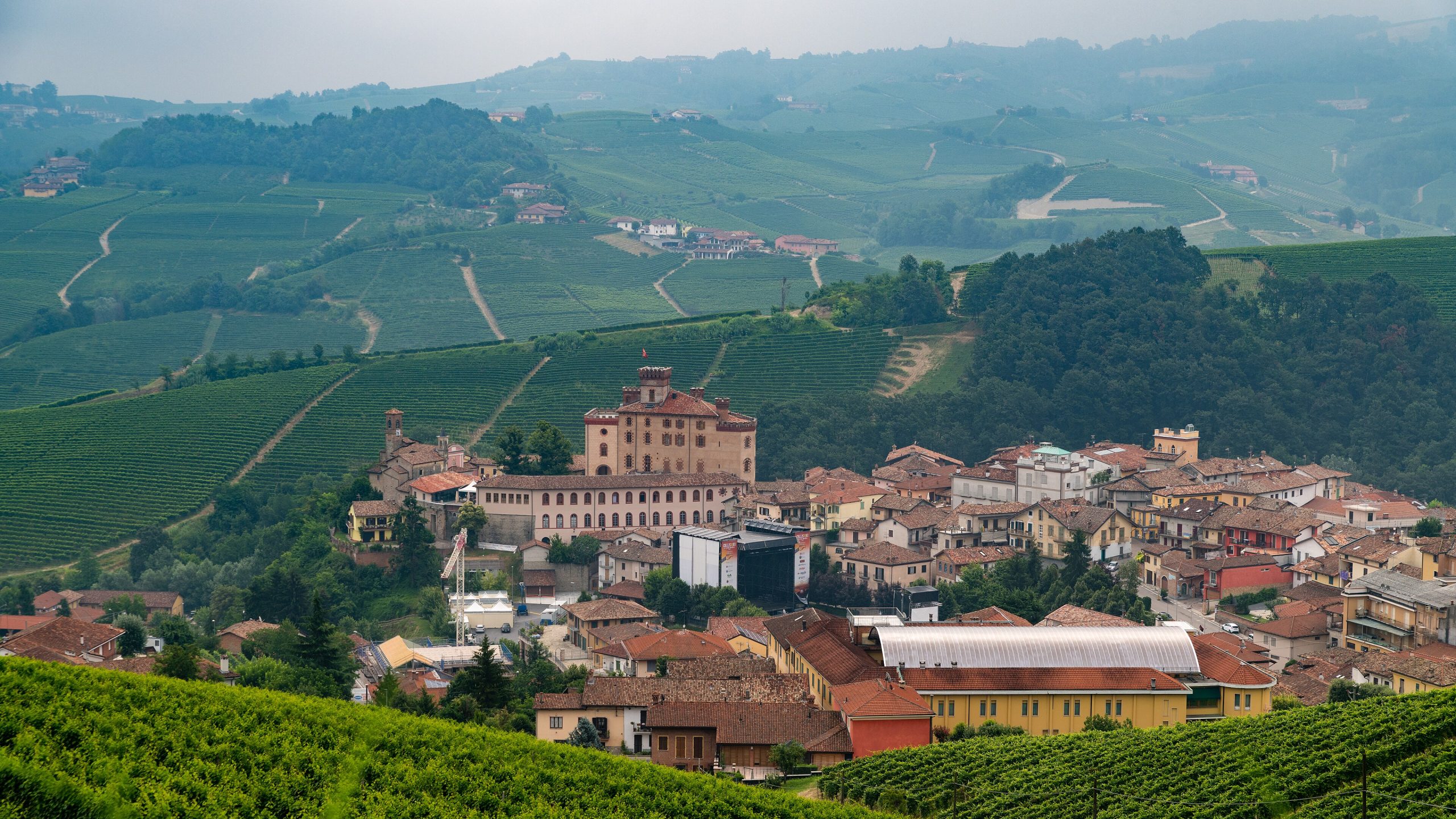
Our wine database contains 1,015 wines. One hundred and ninety-four of them come from Italy, and within that Piemonte is a small corner: a handful of bottles from the hills around the town of Alba. It is precisely those bottles that we get the most questions about at the counter.
It is then almost always about Barolo. Why does it have to lie so long, why does it taste so austere if you open it too early, and what is the difference with Barbaresco. The answer begins with a single grape variety and with a stretch of hill country you can drive through in an hour.
Nebbiolo, and nothing else
Barolo is made from one grape. Not mostly, not as the main component, but entirely. The legal requirement leaves no room for a second variety. The same rule applies to Barbaresco. Anyone in the Langhe who wants to blend must sell their wine under a different name.
That grape is nebbiolo, and it is difficult. It buds early, so late spring frost can hit it, and it ripens very late. In the Langhe it is usually picked only in the second half of October, weeks after the barbera and dolcetto are already in. In between lies an autumn with a chance of rain. The variety therefore needs luck at both ends of the season.
The skin is thin and contains little colour, but a lot of tannin. That explains something that surprises many people: a Barolo is often lighter in colour than you would expect from its taste. It looks almost translucent garnet red and at the same time feels firm and dry in the mouth. With this variety, colour and structure do not go hand in hand.
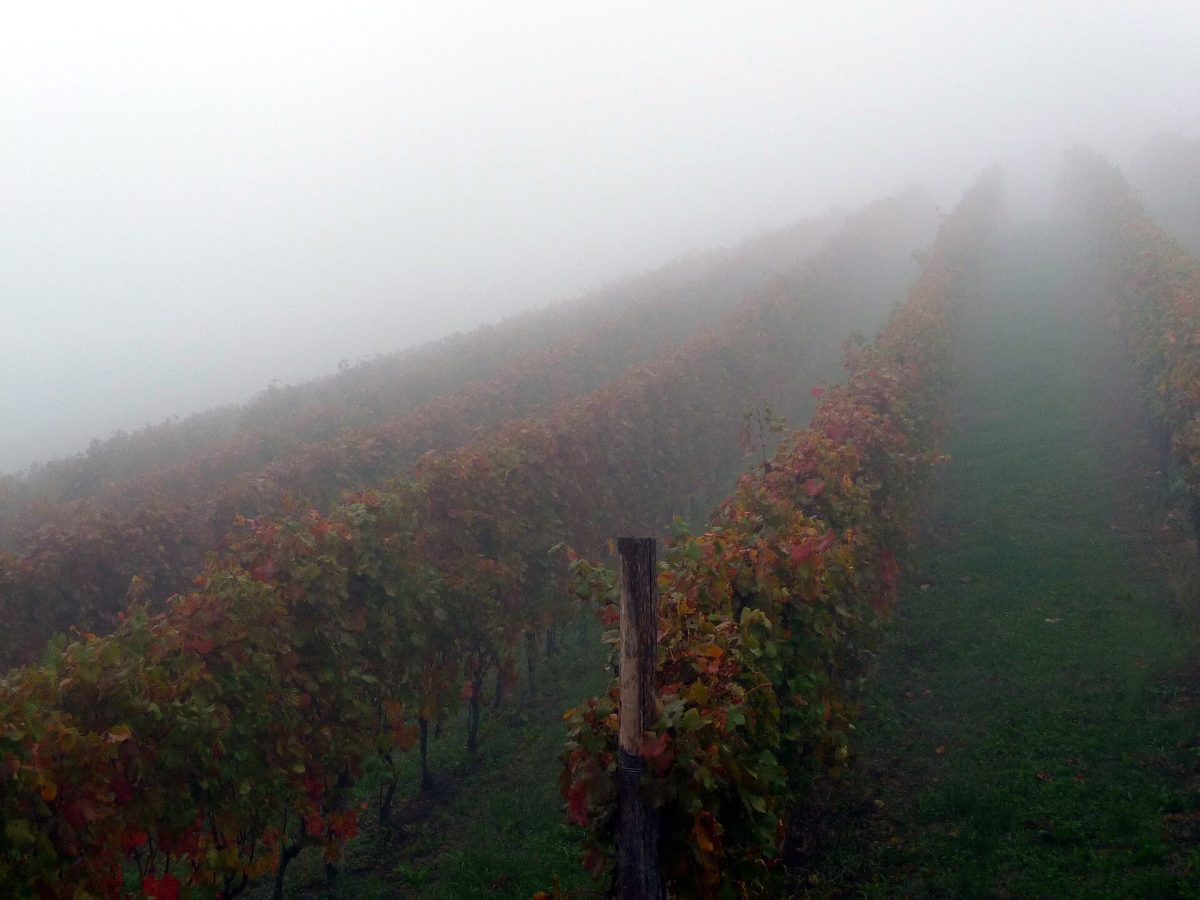
Opinions are divided about the name. The best-known explanation links nebbiolo to nebbia, the Italian word for fog, which lingers between the hills in October. Others point to nobile, or to the white waxy bloom on the berries that looks like fog from a distance. There is no conclusive proof for any of the three. We prefer to say so honestly.
The Langhe: eleven municipalities, two types of soil
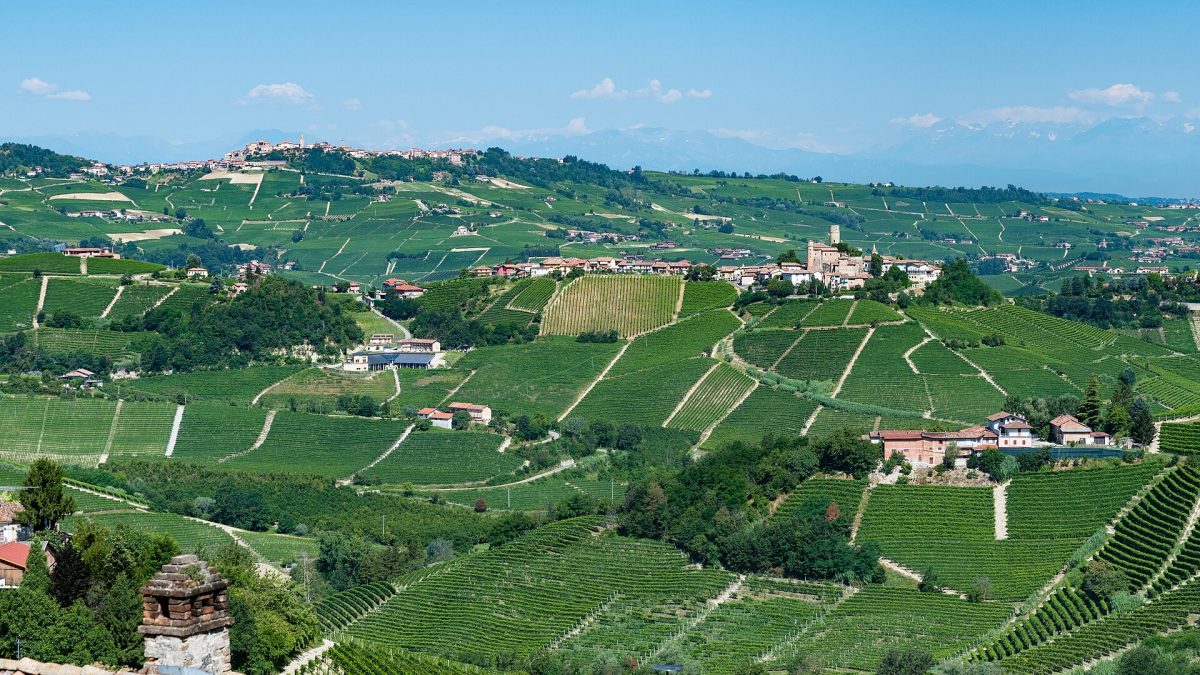
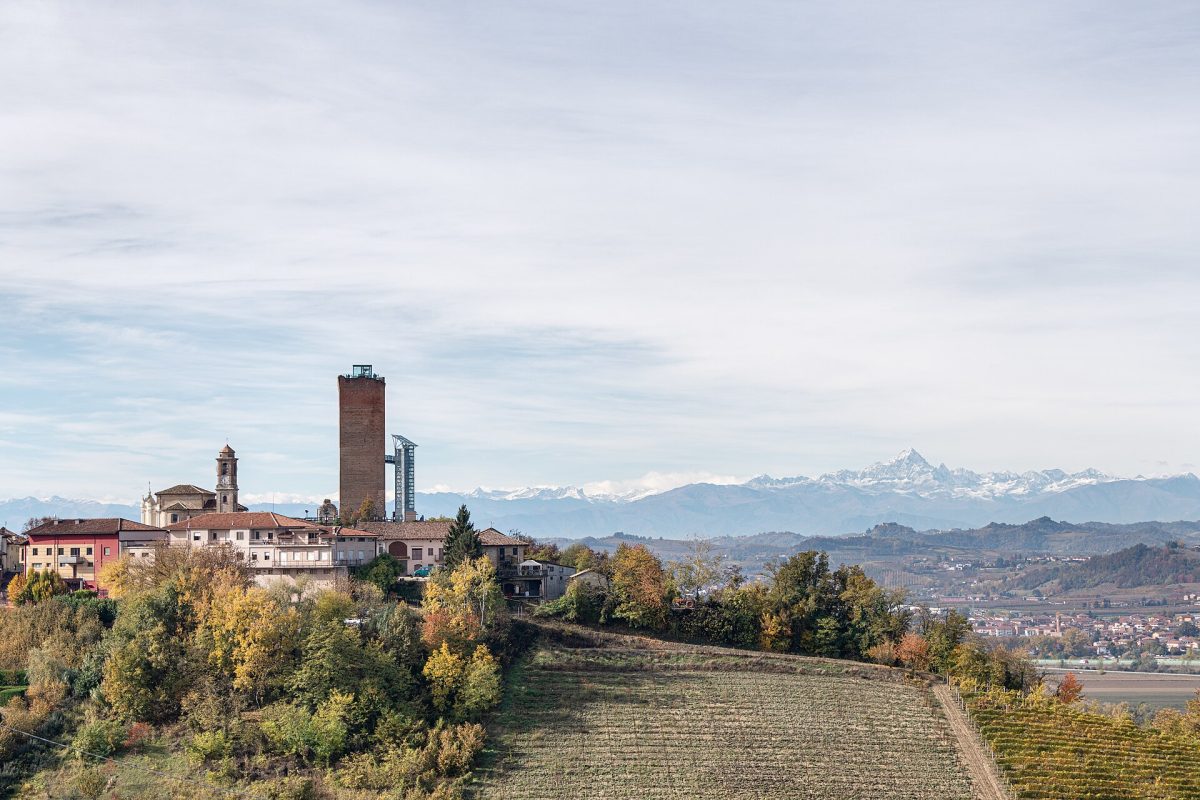
The Barolo area lies south-west of Alba, in the hills of the Langhe. Eleven municipalities may use the name. Three of them lie entirely within it: Barolo, Castiglione Falletto and Serralunga d’Alba. The other eight, including La Morra, Monforte d’Alba, Verduno and Novello, contribute part of their territory.
The subsoil is ancient seabed. Millions of years ago there was water here, and the silt left behind now lies in bands through the hills. Roughly speaking, there are two types. In the west, around La Morra and the village of Barolo itself, there is younger marl with more clay. In the east, around Serralunga and Monforte, the soil holds more sand and limestone. Wines from the west are known as more aromatic and approachable sooner, those from the east as sturdier and slower to open up. Castiglione Falletto lies at the transition and has a bit of both.
Since 2010, the names of delimited vineyard areas may appear on the label. Cannubi, Brunate, Bussia and Vigna Rionda are such names. A bottle can therefore say just Barolo, or also name the municipality, or be accurate down to the vineyard. For those who know the region a little, such a label therefore says more than a brand name.
What the DOCG prescribes
Barolo received DOC status in 1966 and the heavier DOCG in 1980, in the first group of four, together with Barbaresco, Brunello di Montalcino and Vino Nobile di Montepulciano. This heavier status comes with an inspection before bottling is allowed.
The best-known requirement concerns time. Barolo must age for at least thirty-eight months, counted from 1 November of the harvest year, and of that it must spend at least eighteen months in wood. A 2021 harvest can therefore not be in the shop before 2025. For a Riserva the period rises to sixty-two months, well over five years, with the same eighteen months of wood as the minimum.
What it does not specify is which wood. The size of the cask is free. Traditional houses use large oval botti of Slavonian oak, which impart little flavour and above all let air through very slowly. From the late eighties onwards, other houses switched to small French barriques, which work faster and give more of themselves. That difference caused disagreement in the Langhe for years. Both are permitted, and the label does not tell you which side a house has chosen.
Barolo and Barbaresco: the same grape, different rules
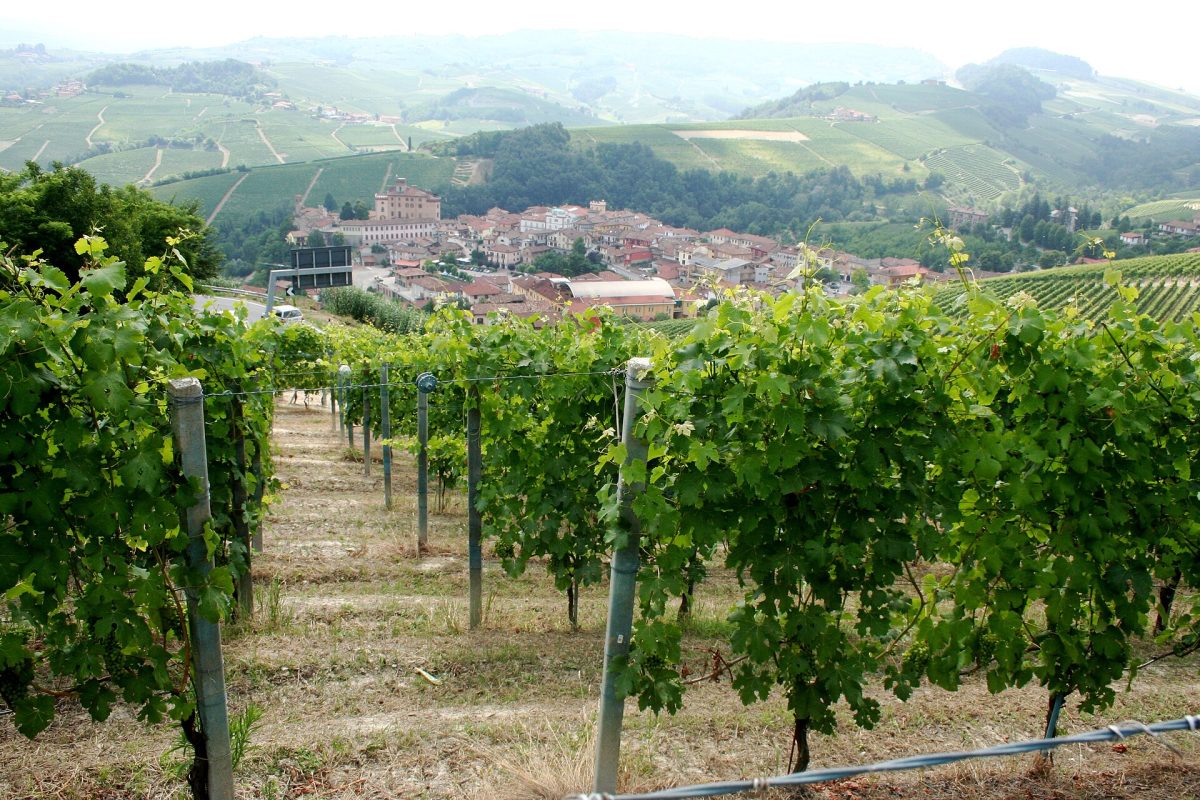
Barbaresco lies on the other side of Alba, to the north-east, closer to the river Tanaro. Four municipalities may use the name: Barbaresco, Neive, Treiso and part of Alba itself. The area is considerably smaller than that of Barolo, roughly a third of the surface.
The hills there are a little lower and the river keeps things slightly milder. As a result, nebbiolo ripens a few days earlier on average. That is why the law demands less patience there: twenty-six months instead of thirty-eight, of which nine months in wood instead of eighteen. A Barbaresco Riserva must have fifty months.
Otherwise the rules are virtually the same. The same grape, the same region, a few kilometres further on. If you set the two side by side, you will taste the difference between two producers and two vineyards sooner than between two names on the label.
Where to start
A young Barolo is not immediately accommodating. The tannin is up front, and that is exactly the intention: that structure is what keeps the wine standing for years. If you want to drink it now, give it air. An hour in a decanter and a large glass do more than anything.
If you don’t want to wait, there is a shorter route. Langhe Nebbiolo and Nebbiolo d’Alba are also made from the same grape, with much lighter maturation requirements. They are not lesser wines, they are different agreements. They show what the variety does without the years of wood around it. In our wine database you can search by grape and so put all the nebbiolo together.
If you are not sure which way to go, drop by in Bathmen or call +31 570 541 278. We will help you choose.
Keep browsing
Everything we stock in wine is in the wine database, where you can filter by country, region, grape and colour. The background per region is in the wine guide, and the wineries whose wine we stock are listed together on wineries. Clicking straight through is also possible: wine from Italy, wine from Piedmont and wine from the nebbiolo grape.
If you want to look at Italy from the other side, read Amarone della Valpolicella: why the grapes dry out first. It is all about what happens after the harvest. The rest of what is on the shelf in Bathmen you will find on our blog.