The calvados shelf on the Brink in Bathmen holds forty-five bottles from thirteen houses. For a drink known here mainly as something for after dinner, that is a long row, and the question we hear most often at the counter is not about which bottle it will be.
The question is: how do I actually drink that? The answer is shorter than you would think. A narrow glass, room temperature, no hurry. Below you can read why that is so, and what else happens in Normandy with a glass of calvados.
Which glass does the job
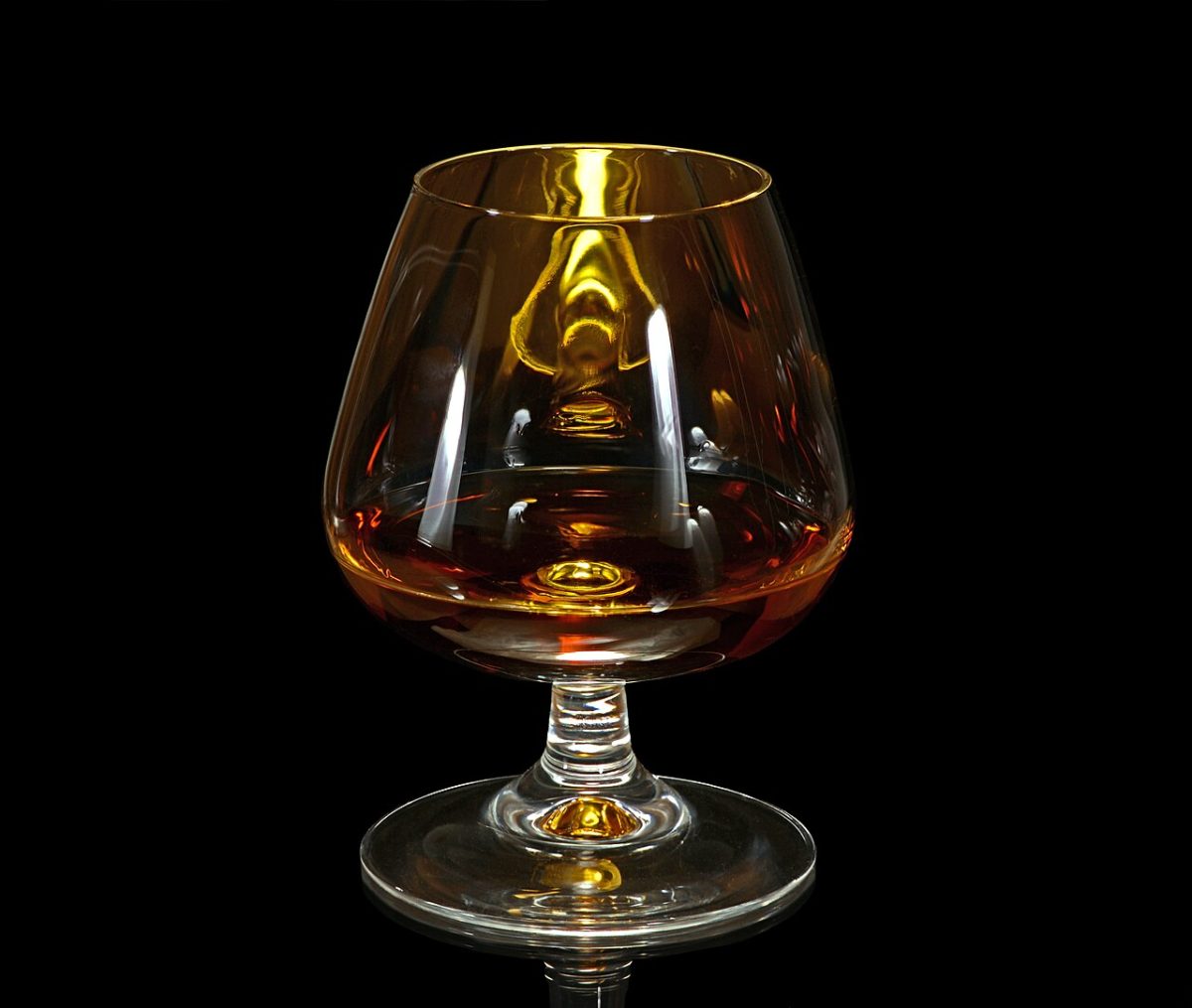
Most people reach for the balloon: the wide, rounded glass on a short stem found in many cupboards. That glass was once designed for cognac, and with calvados it does exactly what you do not want. The opening is wide, the alcohol has all the room it needs to rise, and the apple fruit disappears behind it.
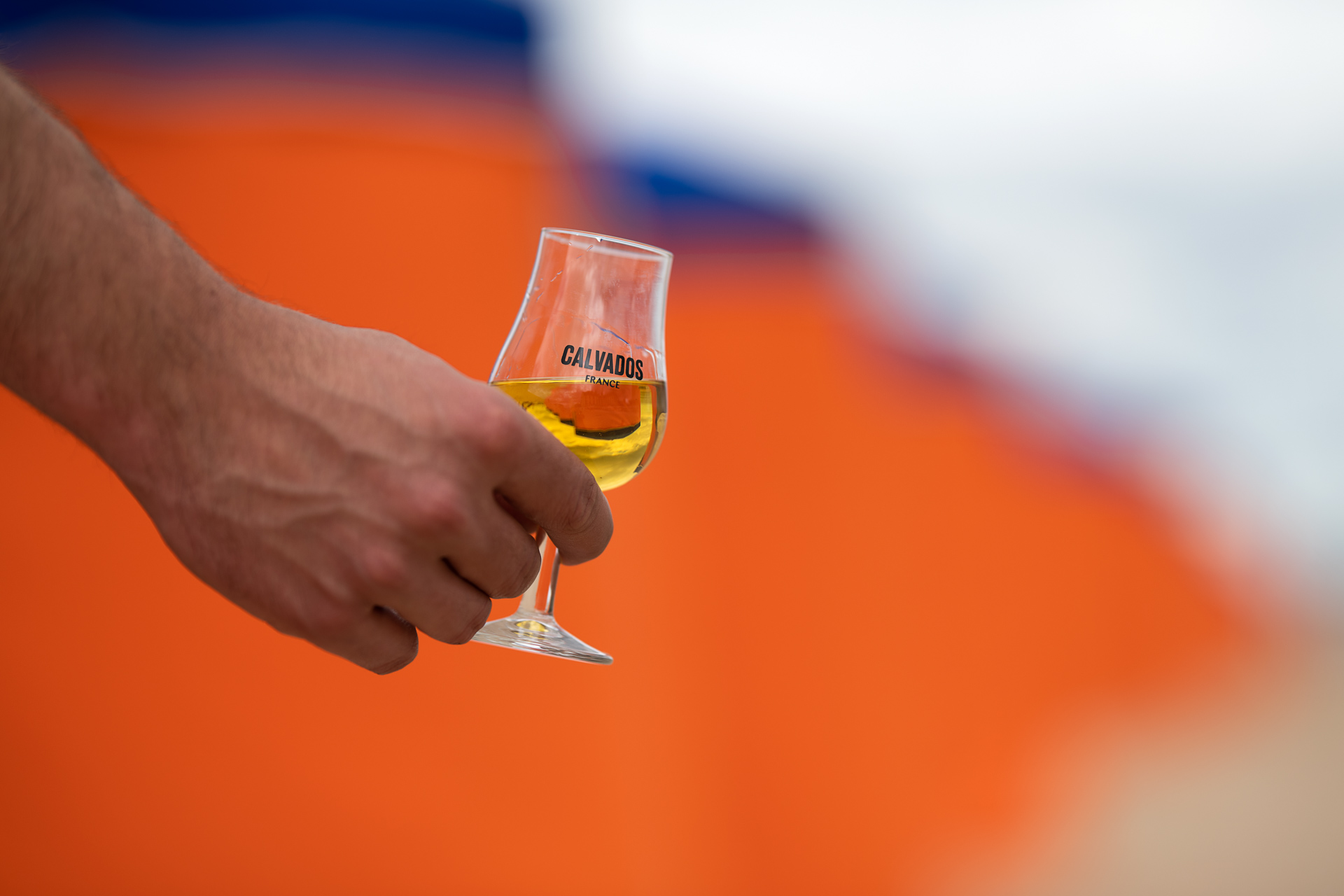
Choose a glass that is narrower at the top than in the middle instead: a tulip-shaped tasting glass on a stem, like the one you use for sherry or whisky. The narrow rim keeps the aroma together and guides the alcohol past your nose rather than into it. A wine glass with a slightly tapered rim also works, and there is usually one in the house.
Pour only a little. Two to three centimetres in the bowl is enough; the glass should stay more than half empty, because that empty space does the work. And otherwise leave the glass alone. Calvados does not need to be warmed over a small flame or in the hollow of your hand: anything warmer than room temperature only drives the alcohol upwards.
What temperature to serve at
Room temperature, and you do not need to do anything else for it. Serving it cold costs you the apple fruit: the aroma closes up and what remains is mostly alcohol. The freezer, which works well for jenever or limoncello, is therefore no place for calvados.
Almost all calvados is bottled at forty percent. It comes out of the still much stronger and is reduced with water, and that reduction is precisely the reason you need to do nothing more to it at home. A single bottle goes onto the shelf at cask strength. A few drops of water belong with that: they open up the nose, and you can always add one more drop, never take one back.
Ice is a different choice from water. A cube chills the glass and also dilutes unpredictably, because it keeps melting while you sit talking. With an older bottle, that is a waste of the years in cask. With a young calvados in a long drink it is different; more on that below.
The moment: before, after or in between
In the Netherlands, the bottle usually comes to the table after the meal, with the coffee. That is a fine moment, and it is also the reason most people only know calvados neat.
In Normandy itself the use is broader. The café-calva is commonplace there: a cup of coffee with a small glass of calvados alongside, or a dash in it. And a young calvados works well in a long drink, topped up with tonic or with cloudy apple juice and a slice of lemon. For that glass, take the youngest bottle from the cupboard, not the oldest: the wood of an old blend disappears under the mixer.
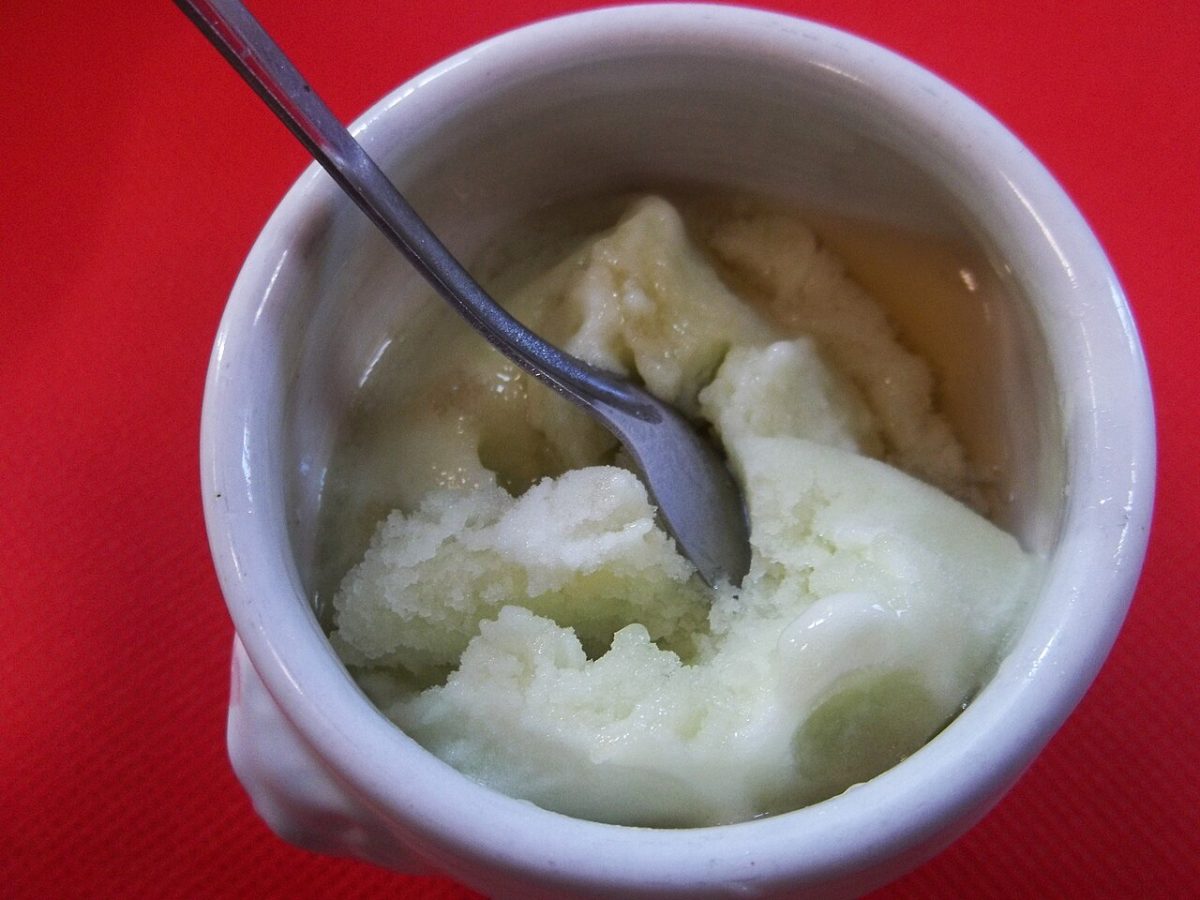
Then there is the trou normand, literally the Norman hole. Halfway through a long dinner the meal is interrupted for a small glass of calvados, meant to make room for the courses still to come. In restaurants that custom has often become a scoop of apple sorbet with calvados over it. At home the glass itself suffices, provided you keep it small.
What the label says about the moment
Twenty-eight of our forty-five bottles carry a designation; the rest bear a vintage or only a name. Those designations say something about how long the youngest part of the blend has lain in oak, and thereby indirectly also something about the glass the bottle belongs in.
Fine is the youngest, VS stands for a shorter maturation, VSOP for the middle ground of a few years in cask. Those are the bottles for long drinks, for the kitchen and for those still getting to know calvados. XO and hors d’âge have spent longer in wood; the bottle becomes darker and the wood more evident, and then neat in a narrow glass is the only way that does justice to those years.
Note one thing: the letters come from cognac, the requirements do not. VSOP on a calvados bottle does not mean the same as VSOP on a cognac bottle, and houses use hors d’âge without a strict definition, for the same as XO or for even older work. If a year is stated, it concerns a single harvest and nothing is blended. What the three calvados appellations do prescribe exactly is set out in an earlier article.

Where to start
If you are just starting, take a VSOP. It sits in the middle: the sharpness has gone, the apple is still recognisable and the wood does not dominate. Drink it neat from a narrow glass first, then try the same glass with half a centimetre of water added. The difference is bigger than you expect, and it teaches you what you are looking for faster than any tasting note.
If you want to know how that apple fruit gets into the bottle in the first place, it is explained in how calvados is made, from cider to cask. Below are four bottles from four different houses.
Browse further in the calvados range
The whole shelf is on our calvados page, with an explanation per chapter of cider, maturation and strength, and with filters for designation, house and volume. If you would rather search yourself, you will find all bottles in the search engine of the wine & spirits shop.
They can all be ordered online as well, for example the Busnel hors d’âge or another bottle from the calvados section of the online shop. Would you rather stand at the shelf for a moment? At Brink 2 in Bathmen we are happy to help.