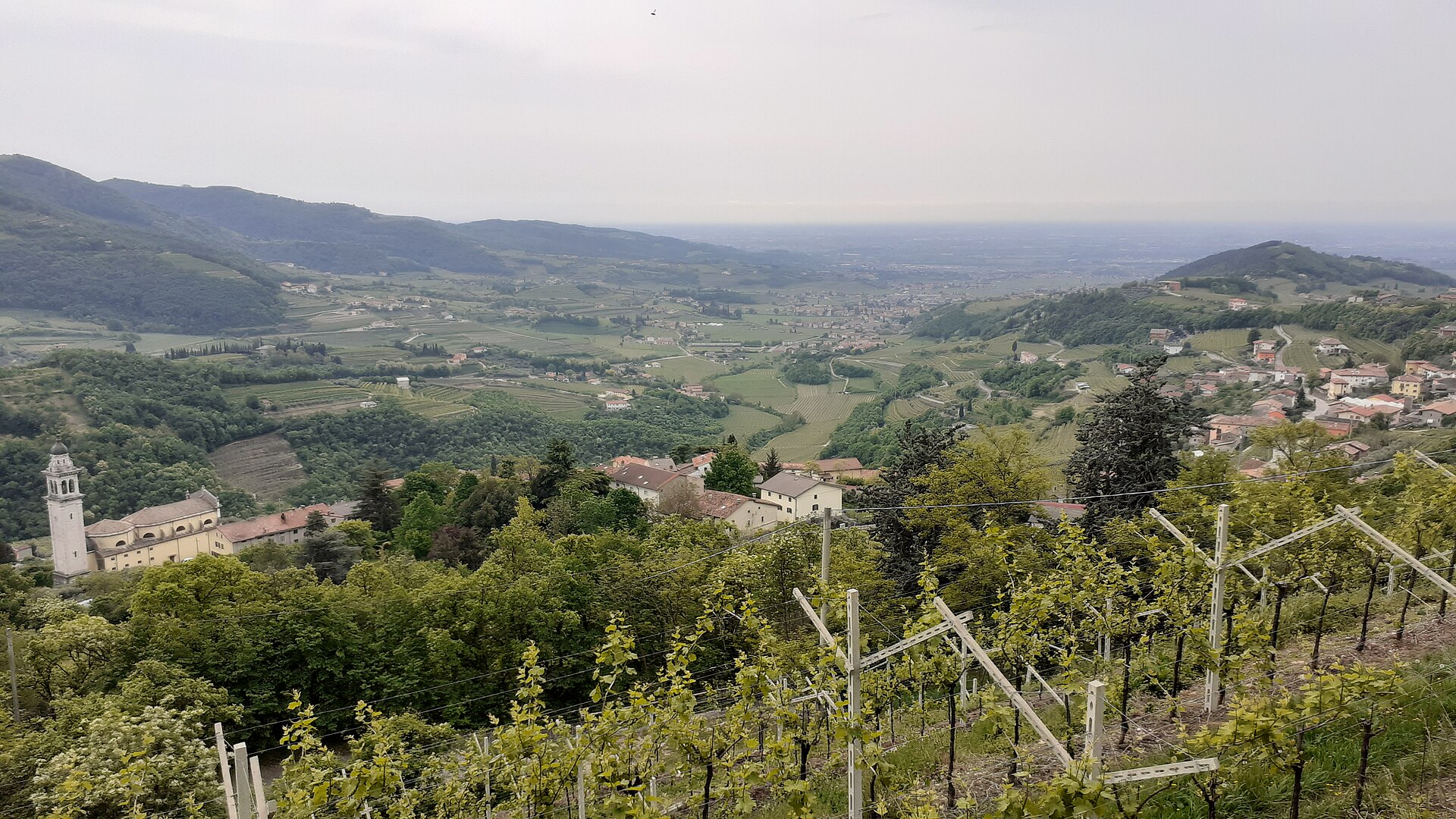
Of the 1,015 wines in our wine database, 194 come from Italy, and twenty-three of those fall under the Veneto, the region around Verona. It is, however, the corner that needs the most explanation.
Because four bottles from that same valley can carry four different names: Valpolicella, Ripasso, Amarone and Recioto. The same grapes, the same hills, and yet four wines you cannot swap for one another. The difference lies almost entirely in what happens to the grape after it has been picked.
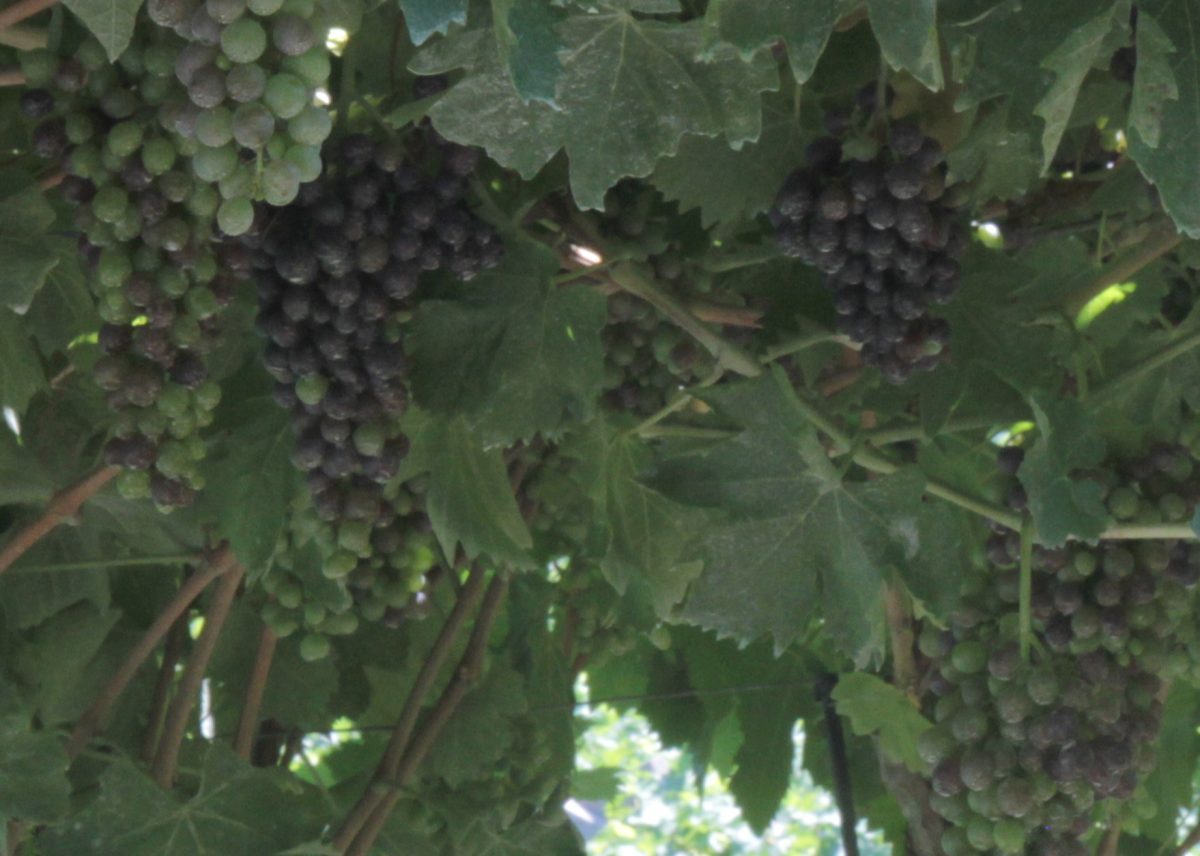
Corvina, rondinella and the rest of the company
The base is always a blend, never a single variety. Corvina is the most important: the specification allows between 45 and 95 percent of it. In addition rondinella is mandatory, between 5 and 30 percent. The rest may be topped up with other permitted red grapes from the region.
Corvina was not chosen because it yields so much, but because it holds out. The bunches are loose, the berries barely touch one another, and the skin is firm. That makes it suited to what happens next: lying for months without rotting. Rondinella has remained for the same reason.
There is a fourth name you often come across: corvinone. For a long time it was mistaken for a variant of corvina, until research showed it is an independent variety. Since then it has been listed separately in the regulations and may replace part of the corvina. Molinara, which used to be mandatory, no longer is.
Appassimento: the grapes dry first
This is where the real story begins. The bunches destined for Amarone are picked by hand and sorted straight away. Only whole, sound, loose bunches go along. Anything damaged is removed: a single mouldy bunch can spoil an entire batch.
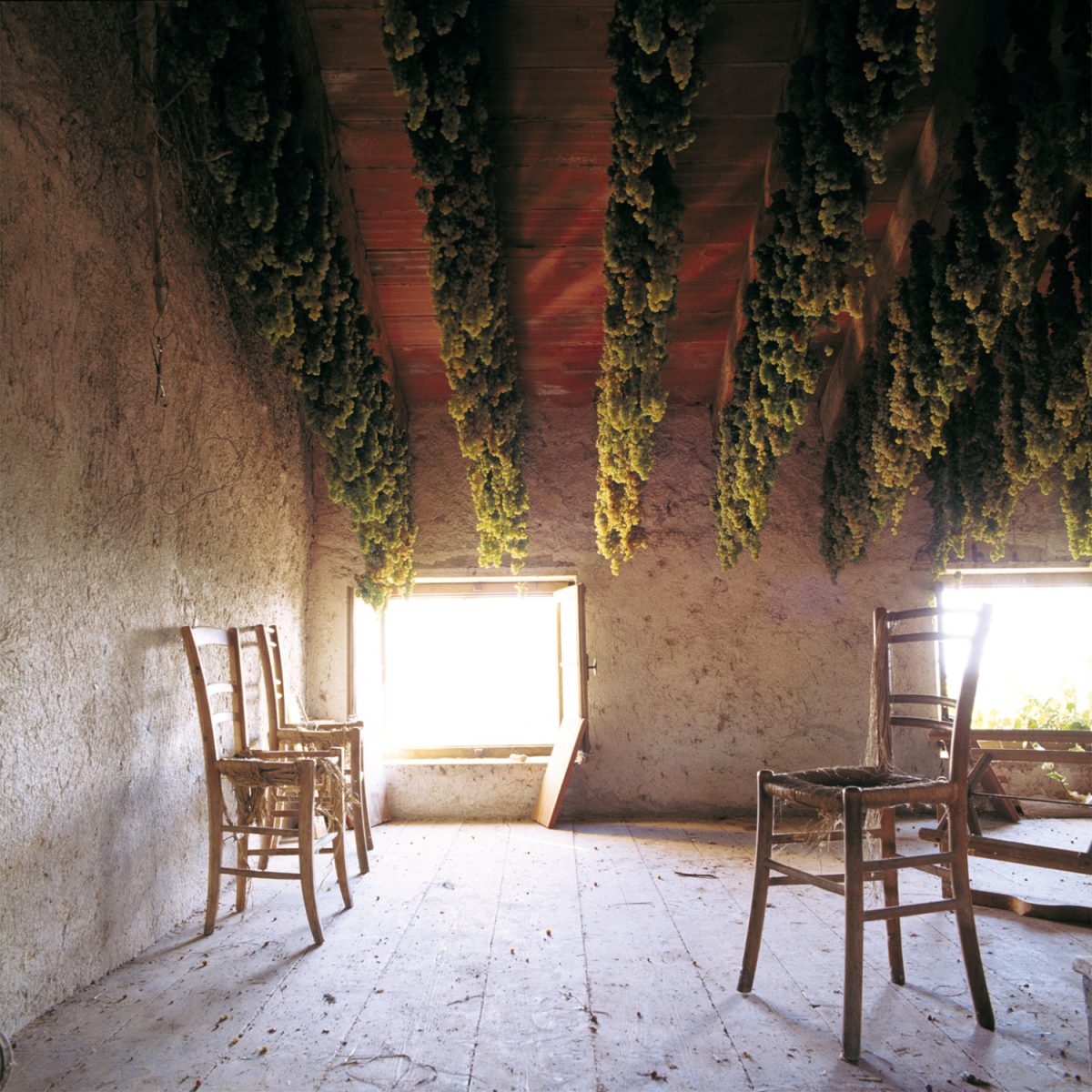
Those selected bunches go to a drying loft, the fruttaio. In the past they lay there on mats of reed and bamboo, the arele. Today most houses use shallow plastic crates, stacked with space in between, so that air can pass on all sides. The principle remained the same: cool, dry and airy.
They stay there for three to four months, from the harvest in autumn until sometime in winter. During that time water evaporates and the grapes lose roughly a third to forty percent of their weight. Everything that does remain, sugar first of all, stays behind in a smaller volume. Anyone who walks into such a loft does not smell wine, but something between raisin and dried fig.
It is also the most vulnerable step of the whole process. A wet, warm autumn means rot in the drying loft, and then the harvest is lost. Not part of it: lost. That risk, and the fact that roughly twice as many grapes are needed for the same amount of wine, explains why Amarone is made in small quantities.
Four names, one valley
Valpolicella is the basis: fresh grapes, simply pressed and fermented, a light red wine without oak ageing. Recioto della Valpolicella is the oldest type in the series and the very opposite: dried grapes, but the fermentation is stopped before all the sugar is used up, leaving a sweet wine. The name comes from recie, dialect for ears: the two side wings at the top of a bunch, which catch the most sun and were traditionally kept apart.
Amarone is Recioto that kept going. When the yeast eats all the sugar, no sweetness remains and you are left with a dry wine with plenty of body. The story goes that this was discovered by accident around the 1930s, with a forgotten cask that had fermented too far. Whether it happened exactly like that can no longer be verified, but the name does point that way: amaro means bitter, and was used to distinguish it from the sweet Recioto.
Ripasso is the clever middle way. After an Amarone or Recioto has finished fermenting, the soaked skins remain. An ordinary young Valpolicella is pumped over them, which starts a second, short fermentation. The wine gains in colour, body and alcohol. Ripasso literally means: going over it once more.
What the rules require, and what Classico refers to
Amarone and Recioto received DOCG status in 2010, the highest Italy has. Ripasso became its own DOC in that same year. Before that they were all designations within the broader Valpolicella DOC, which dates from 1968.
For Amarone, it must mature for at least two years, counted from 1 January after the harvest. For a Riserva that is four. Add the months in the drying loft and you quickly reach three years between picking and sale. The law also sets a lower limit on the alcohol content, which follows from the sugar that is in the grape after drying.
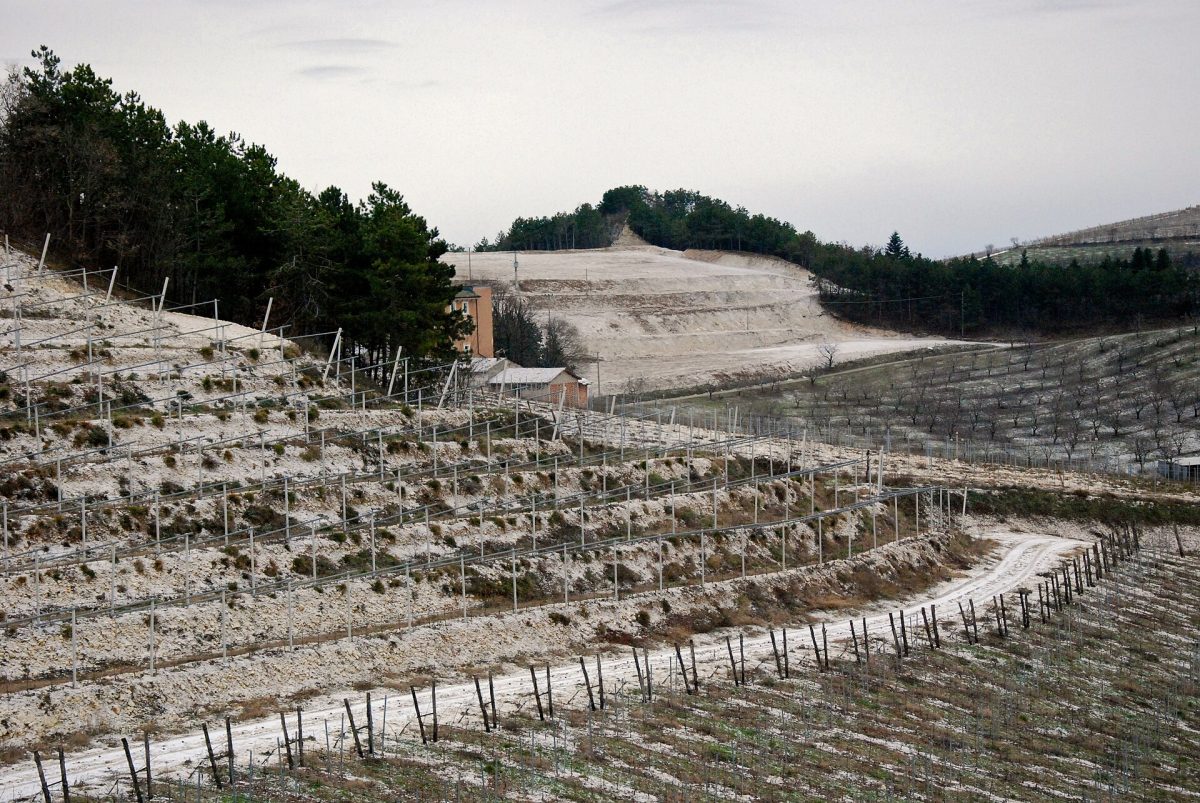
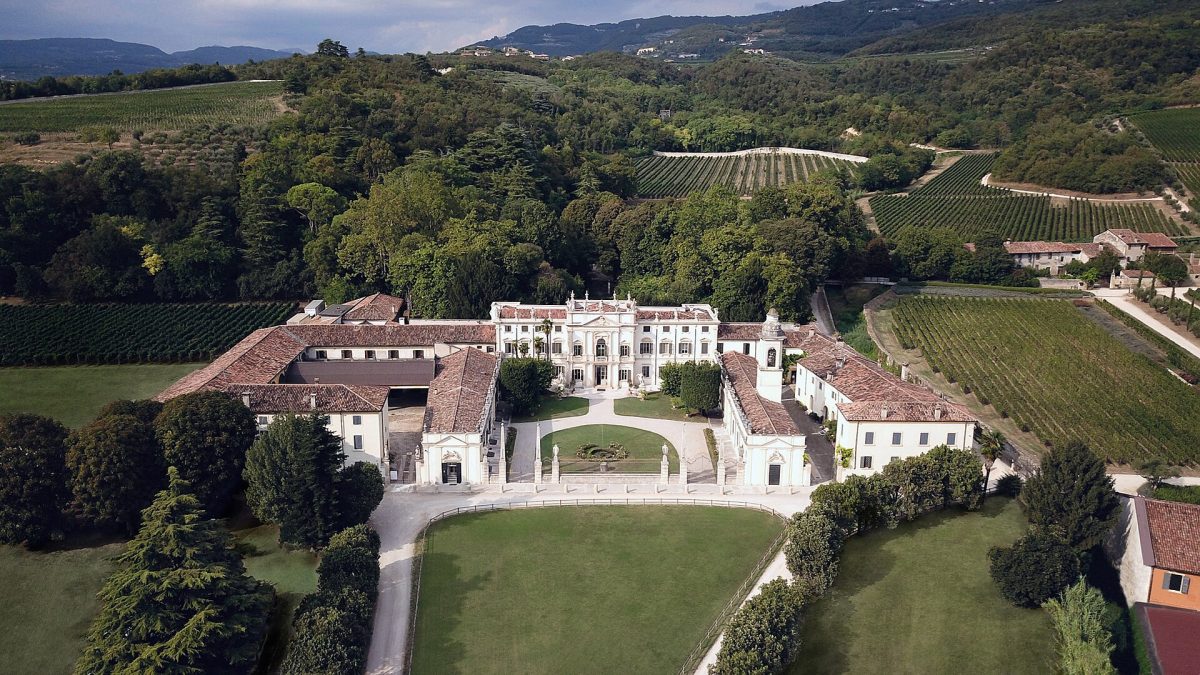
Then the word Classico. That does not refer to style or quality, but to place. It is the original area in the west, the valleys around Negrar, Marano, Fumane, Sant’Ambrogio and San Pietro in Cariano. When the production area was extended eastwards in 1968, that old heart received its own designation. Valpantena, the valley north of Verona, may also put its name on the label.
If the bottle does not say Classico or Valpantena, it comes from the wider area. That in itself says nothing about the wine, but it is worth knowing.
Where to start
The most pleasant way to get to know this region is from the bottom up. Start with an ordinary Valpolicella, then move on to a Ripasso, and set an Amarone next to it. You will then taste exactly what the drying and the repeated fermentation do, with the same grapes as the starting point.
An Amarone calls for a large glass and time in the decanter, and it is not meant as a wine for drinks. Serve it with something hearty, or keep it for after dinner with an aged cheese. Recioto is rare in the Netherlands; we do not have any at the moment. Ask about it and we will see what is available.
If you do not know where to start, visit us in Bathmen or call +31 570 541 278.
Keep browsing
All the wine we stock is in the wine database, with filters for country, region, grape and colour. The background for each region is in the wine guide, and the houses themselves are listed together under wine houses. You can also click straight through: wine from Italy, wine from the Veneto and wine from the corvina grape.
If you want to look at Italy from the other side, read Barolo wine: one grape, eleven municipalities and three years of patience. There, everything is staked on a single variety. The rest of our stories are on the blog.