
Cinsault
Cinsault, spelled cinsaut in official French texts, is a black grape from the south of France. In the Côtes de Provence it is one of the five main grapes for rosé and red, and in the Languedoc rosé is mainly made from syrah, cinsault and grenache. In South Africa the grape is one of the parents of pinotage. In the shop on the Brink in Bathmen there are 18 bottles of rosé and red wine from France in which cinsault may be part of the blend.
- 18bottles in the shop
- 14wine houses
- 12–13,5%alcohol
What grape is cinsault?
Cinsault is a black grape originally from France. The German variety register VIVC lists the grape under the main name Cinsaut, with black berries and France as the country of origin. You will also find that spelling without the l in the French appellation rules; on labels and in the trade it is usually cinsault.
The register lists more than a hundred other names for the same grape, including Hermitage, Ottavianello and Oeillade Noir. That shows how widely the grape was planted around the Mediterranean. Who the parents of cinsault themselves are has, according to VIVC, not been established. Decanter names the south of France, Languedoc-Roussillon, as its cradle.
How is cinsault used in rosé from Provence?
In Provence, cinsault is one of the fixed building blocks of rosé. The specification of the AOC Côtes de Provence names five main grapes for rosé and red: cinsaut, grenache, mourvèdre, syrah and tibouren. In addition, carignan, cabernet sauvignon, clairette, sémillon, ugni blanc and vermentino, among others, may be used as secondary grapes.
The rules for planting a wine estate assume several grape varieties:
- the main grapes together make up at least 70 percent of the plantings;
- there are at least two main grapes present, and none may exceed 90 percent;
- white grapes together may make up a maximum of 20 percent of the plantings.
A Côtes de Provence rosé therefore comes from a vineyard with several grape varieties, and cinsault is one of the grapes the producer can choose from. For By Ott, a Côtes de Provence rosé from Domaines Ott, the producer lists grenache, cinsault, syrah and mourvèdre, for example.
Cinsault at ’t Bockje
A selection from the 18 bottles currently in the shop on the Brink.




In brief
| Official name (VIVC) | Cinsaut |
|---|---|
| Colour | Blue grape |
| Origin | France (south) |
| Other names | Hermitage (South Africa), Ottavianello, Oeillade Noir |
| Côtes de Provence | One of five main grapes for rosé and red |
| AOC Languedoc rosé | Mainly syrah, cinsault and grenache |
| Descendant | Pinotage (Cinsault x Pinot Noir, 1925) |
| In the shop | 18 bottles |
How is rosé with cinsault made?
Rosé is made from blue grapes whose juice is in contact with the skins only briefly. Vins de Provence, the trade organisation of the Provence wines, describes two main methods.
- Direct pressing: the bunches go, whole or destemmed, straight into the press, without prior soaking.
- Short maceration: the must stays 2 to 20 hours on the skins in a tank, at a controlled temperature of 16 to 20 °C.
Outside Provence, saignée is also used: after a few hours, some 5 to 15 percent of the juice is drawn off from a tank of red wine. The colour of a rosé therefore depends mainly on the method and the duration of skin contact. The choice and proportion of grapes in the blend also helps determine which method a winemaker chooses.
What role does cinsault play in rosé from the Languedoc?
In the Languedoc, cinsault is one of the three grapes that the rules expressly name for rosé. According to the specification of the AOC Languedoc, rosé comes from a blend of at least two grapes, mainly syrah, cinsault and grenache. The wine is made by direct pressing, short maceration or saignée.
Red AOC Languedoc is, under the same rules, always a blend of several grapes. Sometimes the grape is simply on the label too. An example is the Père et Fils Cinsault-Syrah Rosé from Laurent Miquel: both grapes are in the name.
What does cinsault have to do with pinotage and South Africa?
Cinsault is one of the two parents of pinotage, South Africa's best-known own grape. Professor Abraham Perold crossed cinsault with pinot noir in Stellenbosch; Decanter gives 1925 as the year in which pinotage came into being. Wine house Bosman describes pinotage as pinot noir crossed with Hermitage, as cinsault was then called in South Africa.
The grape came to the Cape in the 1850s under that name. Only almost a century later did ampelographers establish that it was the same grape as cinsault. The Bosman wine estate in Wellington writes that nobody knows exactly why the farmers used the name Hermitage. In the 1970s cinsault was the most planted grape in South Africa; today, according to Decanter, it is the sixth red grape variety there, with some 1,700 hectares.
Which wines with cinsault does ’t Bockje have?
At ’t Bockje, cinsault is found mainly in French rosé and red wines from Provence, the Languedoc and the Rhône, in which the grape is part of the blend. For a few bottles, the producer confirms that cinsault is in there:
- Laurent Miquel Père et Fils Cinsault-Syrah Rosé: cinsault is on the label.
- AIX Rosé (Coteaux d'Aix-en-Provence): grenache, syrah and cinsault.
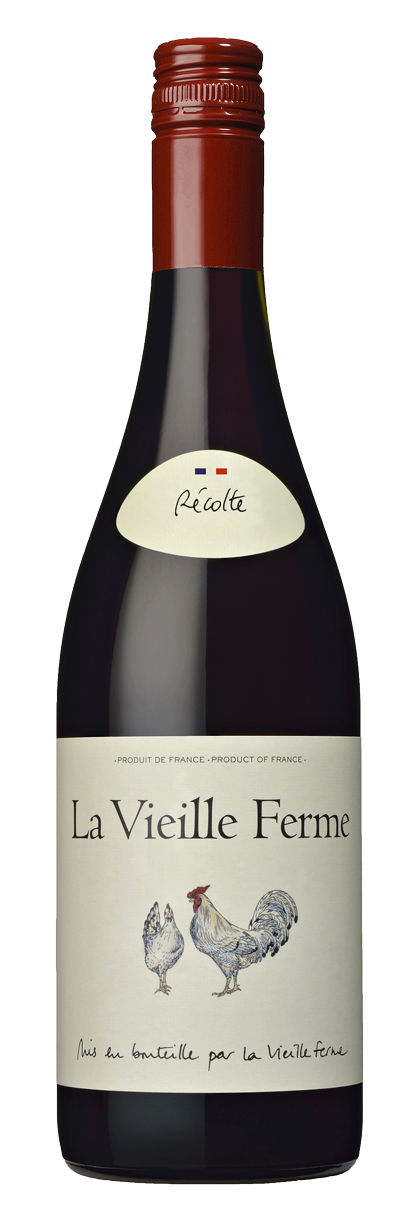
- La Vieille Ferme Rosé: Cinsault, Grenache and Syrah; La Vieille Ferme Rouge contains Carignan, Cinsault, Grenache and Syrah.
- Domaines Ott By Ott (Côtes de Provence): with cinsault in the blend.
There are also rosés such as Aumérade Style Côtes de Provence, Domaines Ott Château de Selle Coeur de Grain, Maison Sainte Marguerite Symphonie, Lorgeril La Borie Blanche, Laurent Miquel Les Auzines Languedoc and Vendanges Nocturnes Classic, and reds such as Domaine Brunely Vacqueyras, Laurent Miquel Les Auzines Languedoc Rouge, Louise Bruneau Rouge Pays d'Oc and Maison La Chenais Réserve Rouge: wines from regions where cinsault can be in the blend. Would you like to know exactly which grapes are in a bottle? Drop by at the Brink 2 in Bathmen or call 0570 541 278.
Wine houses in this selection
- Laurent Miquel 4
- La Vieille 2
- AIX 1
- Aumérade 1
- Domaine Brunely 1
- Domaines By 1
- Domaines Ott 1
- Louise Bruneau 1
- Maison La Chenais 1
- Maison Lorgeril 1
- Maison Sainte 1
- Marie 1
- Oh! 1
- Xavier Roger 1
What customers also ask
Is cinsault the same as cinsaut?
Yes. Cinsaut is the spelling in the VIVC variety register and in the French appellation rules, cinsault the common spelling on labels.
Is a Provence rosé made from cinsault?
Not always, but it can be. The rules for Côtes de Provence require at least two main grapes in the planting, and cinsault is one of the five.
Why is cinsault called Hermitage in South Africa?
The grape came to the Cape under that name in the 1850s. Why exactly, nobody knows for sure. Only later was it established that it is cinsault.
What is the difference between cinsault and pinotage?
Cinsault is an old French grape. Pinotage was bred in South Africa in 1925 from cinsault and pinot noir.
How many wines with cinsault does ’t Bockje have?
In the shop at the Brink 2 in Bathmen there are 18 bottles of French rosé and red wine in which cinsault may be in the blend.
Keep browsing
Sources
- Cinsaut (passport), Vitis International Variety Catalogue (VIVC), vivc.de/index.php?r=passport%2Fview&id=2672 (accessed 2026-10-06)
- Cahier des charges de l'appellation d'origine contrôlée Côtes de Provence, INAO, extranet.inao.gouv.fr/fichier/CDCPNOCotesdeProvencePierrefeu.pdf (accessed 6 October 2026)
- Côtes de Provence (fiche appellation), INAO, inao.gouv.fr/node/35369/printable/pdf (accessed 6 October 2026)
- Cahier des charges de l'appellation d'origine contrôlée Languedoc, INAO, extranet.inao.gouv.fr/fichier/pnodulanguedoc.pdf (accessed 2026-10-06)
- The elaboration of rosé, Vins de Provence (CIVP), vinsdeprovence.com/en/le-rose/l-elaboration-du-rose (accessed 2026-10-06)
- Cinsault: South Africa's new star from old vines, Decanter, decanter.com/premium/cinsault-south-africas-new-star-from-old-vines-457581/ (accessed 2026-10-06)
- Cinsaut: A Love Affair That Started on Hermitage Hill, Bosman Family Vineyards, bosmanwines.com/seasonal-newsletters/cinsaut-a-south-african-red-worth-knowing/ (accessed 2026-10-06)
- AIX Rosé, Maison Saint Aix, aixrose.com/ (accessed 2026-10-06)
- La Vieille Ferme Rosé, Famille Perrin / La Vieille Ferme, lavieilleferme.com/en/vin/la-vielle-ferme-rose-2/ (accessed 2026-10-06)
- La Vieille Ferme Rouge, Famille Perrin / La Vieille Ferme, lavieilleferme.com/en/vin/la-vielle-ferme-red/ (accessed 2026-10-06)
- By.Ott 2024 sell sheet, Domaines Ott / Maisons Marques & Domaines, mmdusa.net/assets/uploads/materials/sell-sheet/By_Ott_2024_sell_sheet_01.pdf (accessed 2026-10-06)
The shop is at Brink 2 in Bathmen. Open Tuesday to Friday from 09.00 to 18.00 and Saturday from 09.00 to 17.00. For advice, call 0570 541 278 or email info@bockje.nl.
Wij verkopen geen alcohol aan personen onder de 18 jaar. NIX18.