
Carignan
Carignan is a black grape that grows around the Mediterranean, with the Languedoc and Roussillon as its centre of gravity. In Spain it is called cariñena, samsó or mazuelo, in Sardinia carignano. Until the end of the twentieth century it was the most widely planted grape in France. In the shop on the Brink in Bathmen there are 12 bottles with carignan, mainly blends from the Languedoc and the Rhône.
- 12bottles in the shop
- 8wine houses
- 12,5–14,5%alcohol
What kind of grape is carignan?
Carignan is a black grape for red wine. The German variety register VIVC lists it under the main name Carignan Noir and records well over a hundred synonyms. According to that register, DNA markers have established that Castellana Blanca is one of the parents; the second parent is unknown.
The sources do not agree on its origin. VIVC names France as the country of origin. Jancis Robinson assumes a Spanish origin: the name refers to Cariñena in Aragón, where the grape has since largely been replaced by grenache. There is also a light variant, carignan blanc, in the Roussillon.
Is carignan called something else in Spain and Italy?
Yes, the grape has its own name in each country and region. Anyone who knows the names will recognise carignan even on a label where the word itself does not appear.
- Cariñena: the usual Spanish name, also in South America.
- Samsó: in Catalonia, including Priorat, Montsant, Penedès and Terra Alta.
- Mazuelo or mazuela: in the Rioja. VIVC gives Mazuela as the official name in Spain.
- Carignano: in Sardinia, known for the Carignano del Sulcis.
- Carignane: in the United States.
Outside Europe, the grape is found in California, Chile, Israel and North Africa, among other places.
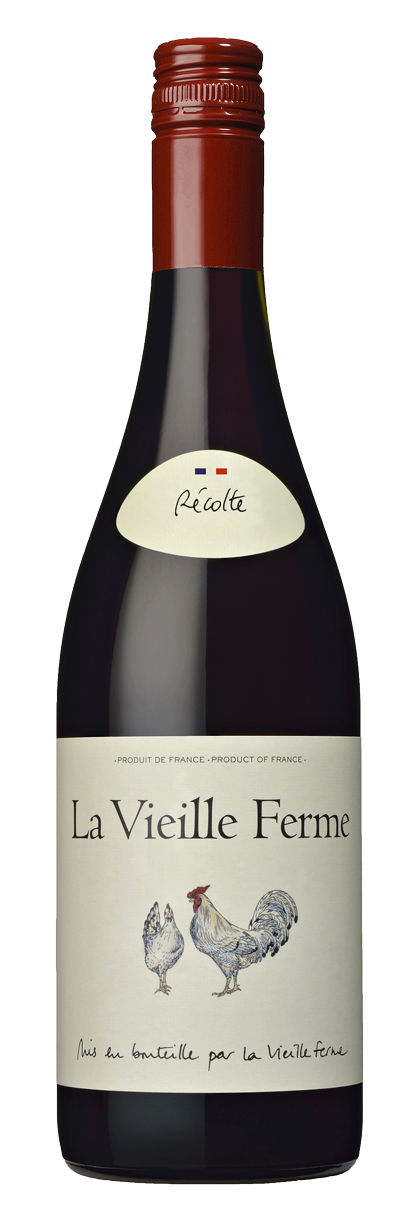
Carignan at ’t Bockje
A selection of the 12 bottles now in the shop on the Brink.




In brief
| Main name (VIVC) | Carignan Noir |
|---|---|
| Colour | Blue, for red wine |
| Parent (DNA) | Castellana Blanca x unknown |
| Spanish names | Cariñena, samsó, mazuelo (mazuela) |
| Italian name | Carignano (Sardinia) |
| Ageing | Late, needs a warm climate |
| Saint-Chinian | Carignan and cinsault together at most 50% |
| Saint-Chinian Berlou | Minimum 30% carignan |
| In the shop | 12 bottles |
Why was carignan so important in France?
Because for a long time it was the most planted grape in the country. According to Jancis Robinson, carignan remained so until merlot overtook it at the end of the twentieth century. After the harsh winters of 1956 and 1963, many vineyards in the Languedoc were replanted with carignan, so that by the mid-sixties the region consisted largely of carignan.
Then came the turnaround. In the nineties French plantings roughly halved, because winegrowers grubbed up vines with European subsidy. Decanter writes that a lot of old carignan made way for syrah, merlot and cabernet sauvignon.
Where does Carignan grow best?
In a warm climate. Carignan ripens late and therefore only succeeds where summers are long and hot. The grape is susceptible to powdery and downy mildew. According to Jancis Robinson, the stems are so tough that mechanical harvesting is difficult, and the vine can give very high yields, up to as much as 200 hectolitres per hectare.
With high yields, quality falls behind. Jancis Robinson names grapes from old vines, fully ripe on poor soil after a warm summer, as the basis of the best Carignan. On French labels this is often written as vieilles vignes. To make Carignan drinkable young, some producers use macération carbonique, fermentation of whole bunches.
What do the appellation rules in the Languedoc say about carignan?
In the Languedoc, Carignan is usually a blending partner, and the appellations set how much may go in. A few examples from the official specifications of the INAO:
- Saint-Chinian: Carignan is one of the main grapes, alongside Cinsault, Grenache, Lledoner Pelut, Mourvèdre and Syrah. Carignan and Cinsault together may not make up more than 50 percent of the plantings.
- Saint-Chinian Berlou: here, by contrast, a minimum of 30 percent carignan applies.
- Corbières: the wines come from at least two grapes, with the INAO naming carignan as the grape that gives the red wine its structure.
Jancis Robinson also names Minervois, Faugères, Fitou and the Languedoc appellation as areas where carignan is part of the blend.
Which wines with Carignan are available at ’t Bockje?
At ’t Bockje there are wines from the Languedoc and the Rhône with carignan in the blend, and a wine that carries the grape on the label. All from France.
- By name of the grape: Xavier Roger Carignan vieilles vignes.
- Saint-Chinian and Minervois: Maison Lorgeril Château de Ciffre Saint Chinian and Domaine La Borie Blanche Minervois.
- Languedoc and Pays d’Oc: Laurent Miquel Les Auzines Languedoc Rouge and Aussières rouge Pays d’Oc by Domaines Barons de Rothschild (Lafite).
- Rhône: La Vieille Ferme Rouge and Domaine Brunely's Côtes du Rhône Rouge, Vacqueyras Rouge and Ventoux.
- Also: Laurent Miquel Vendanges Nocturnes Classic Rouge, Nizas Le Clos Rouge and Dune Gris de Gris.
If you would like to know how much carignan is in a particular bottle, drop by at Brink 2 in Bathmen or call 0570 541 278.
Wine houses in this selection
- Domaine Brunely 3
- Laurent Miquel 2
- Maison Lorgeril 2
- Aussieres 1
- Dune 1
- La Vieille 1
- Nizas 1
- Xavier Roger 1
What customers also ask
Is cariñena the same as carignan?
Yes. Cariñena is the Spanish name of the same grape, and also a town and wine region in Aragon.
What does vieilles vignes mean on a bottle of carignan?
Old vines. According to Jancis Robinson, old carignan vines on poor soil produce the best carignan.
Is mazuelo from Rioja also carignan?
Yes. In Rioja the grape is called mazuelo, in Catalonia samsó.
How many wines with carignan does ’t Bockje have?
In the shop at Brink 2 in Bathmen there are 12 bottles with carignan, mainly from the Languedoc and the Rhône.
Keep browsing
Sources
- Carignan Noir (passport), Vitis International Variety Catalogue (VIVC), vivc.de/index.php?r=passport%2Fview&id=2098 (accessed 2026-10-06)
- Carignan, Jancis Robinson, jancisrobinson.com/learn/grape-varieties/red/carignan (accessed 2026-10-06)
- Carignan, Decanter, decanter.com/wine/grape-varieties/carignan (accessed 2026-10-06)
- Cahier des charges AOP Saint-Chinian, INAO, extranet.inao.gouv.fr/fichier/PNO2024AOPSaintChinian.pdf (accessed 2026-10-06)
- Corbières, INAO, inao.gouv.fr/node/5563/printable/pdf (accessed 2026-10-06)
The shop is at Brink 2 in Bathmen. Open Tuesday to Friday from 09.00 to 18.00 and Saturday from 09.00 to 17.00. For advice, call 0570 541 278 or email info@bockje.nl.
Wij verkopen geen alcohol aan personen onder de 18 jaar. NIX18.