
Verdejo
Verdejo is a white grape from Castilla y León in Spain. The grape is regarded as the native main grape of DO Rueda, the first designation of origin in that region, recognised in 1980. According to the rules, a wine with Verdejo on the label contains at least 85 percent of this grape. The shop on the Brink in Bathmen currently has 7 bottles of verdejo.
- 7bottles in the shop
- 7wine houses
- 12–13%alcohol
What is verdejo wine?
Verdejo wine is white wine made from the verdejo grape, which is grown mainly in Rueda, in the Spanish region of Castilla y León. The production rules of the DO Rueda explicitly name verdejo as the native main grape of the designation of origin.
According to the trade magazine Decanter, the grape was probably brought to the region from North Africa by the Mozarabs in the eleventh century. At the end of the nineteenth century the vineyards were hit hard by the grape louse phylloxera.
The first regulation of the DO Rueda was approved on 12 January 1980: the first recognised designation of origin of Castilla y León. The area lies in the provinces of Valladolid, Segovia and Ávila, at 700 to 870 metres altitude, with long, cold winters and hot, dry summers.
What is on the label of a Rueda verdejo?
If Verdejo is on the label, the wine must by law contain at least 85 percent verdejo. A white Rueda without a grape name must contain at least 75 percent of the main white grapes: verdejo, sauvignon blanc, viura, chardonnay and viognier. White Rueda has a minimum of 11 percent alcohol.
Above that is the Gran Vino de Rueda category, with stricter requirements. The vines are older than 30 years, the yield is at most 6,500 kilos of grapes per hectare and at most 65 percent of the grape weight may be pressed into wine. Such a wine may only be sold after 15 October following the harvest and is stored separately from other wines of the DO.
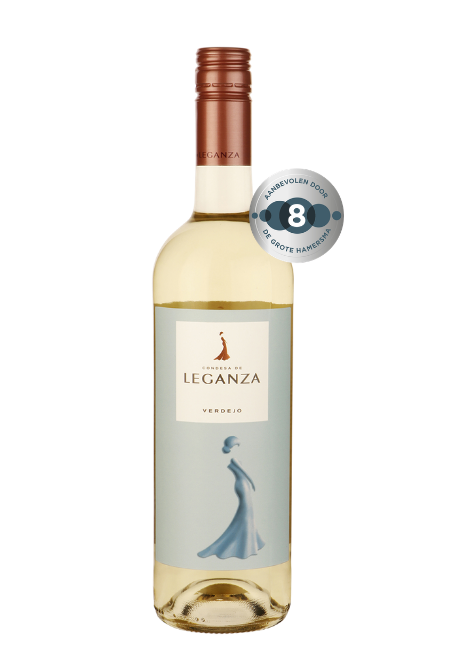
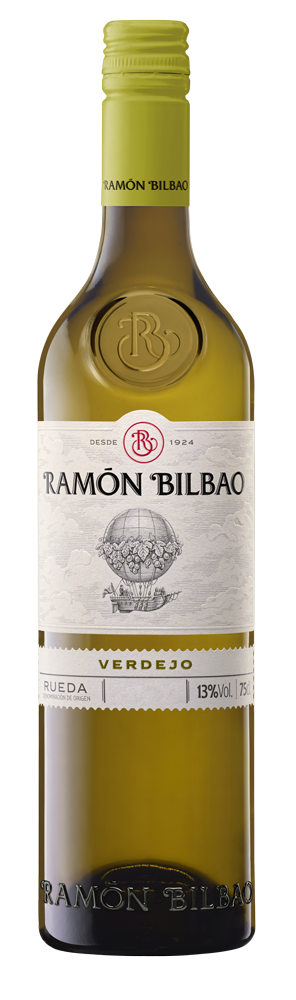
Verdejo at ’t Bockje
A selection from the 7 bottles currently in the shop on the Brink.




In brief
| Grape | Verdejo, white grape |
|---|---|
| Origin | Rueda, Castilla y León (Valladolid, Segovia, Ávila) |
| DO since | 12 January 1980 |
| Grape name on the label | At least 85 percent verdejo |
| Vineyard altitude | 700 to 870 metres |
| Gran Vino de Rueda | Vines older than 30 years, maximum 6,500 kilos per hectare |
| Historic styles | Rueda Dorado and Rueda Pálido, at least 15 percent alcohol |
| In the shop | 7 bottles |
What are Rueda Dorado and Rueda Pálido?
Rueda Dorado and Rueda Pálido are the region's historic fortified wines. Until the 1970s, verdejo was mainly made oxidatively, into yellow-brown fortified wine. The palomino grape also played a major role then.
The production rules still define both styles. A Dorado ages oxidatively, for at least four years, the last two of them in oak casks. A Pálido ages biologically under a layer of yeast cells, for at least three years in oak. Both have a minimum of 15 percent alcohol. The modern, unoaked white style only emerged when Marqués de Riscal came from Rioja to Rueda in the early seventies, with advice from the French oenologist Émile Peynaud.
What is the difference between verdejo, verdelho and sauvignon blanc?
Verdejo and verdelho are two different grapes, despite the almost identical name. Verdejo is Spanish and belongs to Rueda. Verdelho is a Portuguese grape, known from Madeira and now also widely planted in Australia.
Sauvignon blanc is likewise a different grape. In Rueda it is listed in the rules as a separate permitted grape, and verdejo is regularly blended with it. If you want a wine of pure or predominantly verdejo, check whether the grape name Verdejo is on the label: then the bottle contains at least 85 percent verdejo.
Which verdejo does ’t Bockje have?
The shop stocks white wines from verdejo from Spain, including those from Arrumaco, Condesa de Leganza, Marqués de Riscal, Portia and Ramón Bilbao. Marqués de Riscal was one of the houses that, from the 1970s onwards, got the modern white wine of Rueda going.
On every label you can see whether the wine comes from the DO Rueda and whether the grape name Verdejo is on it. If you want to know which verdejo suits an occasion, call the shop or come by at Brink 2 in Bathmen.
Wine houses in this selection
- Arrumaco 1
- Condesa 1
- Marqués de Riscal 1
- Portia 1
- Ramón Bilbao 1
- Viña Cerrada 1
- Wine by Nature 1
What customers also ask
Is verdejo the same as verdelho?
No. Verdejo is a Spanish grape from Rueda, verdelho a Portuguese grape known from Madeira.
What does Rueda Verdejo mean on the label?
That the wine comes from the DO Rueda and contains at least 85 percent verdejo.
Is verdejo white wine?
Yes. Verdejo is a white grape. In Rueda it is mainly made into white wine, and alongside that the historic fortified styles Dorado and Pálido.
How much verdejo is in the shop?
At the moment 7 bottles, all from Spain.
Keep browsing
Sources
- Pliego de condiciones de la DOP Rueda, Ministerio de Agricultura, Pesca y Alimentación, mapa.gob.es/dam/mapa/contenido/alimentacion/temas/calidad-agroalimentaria/2017-calidad-diferenciada/nuevo_denominaciones/pliegos-de-condiciones/pliego-condiciones-vinos/dops/rueda_2025_06_12.pdf (accessed 2 October 2026)
- The Verdejo grape, Rueda DO, Decanter China, decanterchina.com/en/promotion/the-verdejo-grape-rueda-do (accessed 2 October 2026)
- D.O. Rueda, Marqués de Riscal, marquesderiscal.com/en/do-rueda (accessed 2 October 2026)
- Verdelho, JancisRobinson.com, jancisrobinson.com/learn/grape-varieties/white/verdelho (accessed 2 October 2026)
The shop is at Brink 2 in Bathmen. Open Tuesday to Friday from 09.00 to 18.00 and Saturday from 09.00 to 17.00. For advice, call 0570 541 278 or email info@bockje.nl.
Wij verkopen geen alcohol aan personen onder de 18 jaar. NIX18.