
German wine
German wine comes from thirteen legally defined wine regions, the Anbaugebiete, with Rheinhessen, Pfalz and Mosel as the best known. The label shows the quality class, from Qualitätswein to the six Prädikate from Kabinett to Trockenbeerenauslese, and often a taste indication such as trocken or halbtrocken. In the shop on the Brink in Bathmen there are now 34 bottles of German wine, from dry riesling and dornfelder to Eiswein and Sekt.
- 34bottles in the shop
- 16wine houses
- 6,9–13,5%alcohol
What are the thirteen German wine regions?
Germany has thirteen Anbaugebiete: Ahr, Baden, Franken, Hessische Bergstraße, Mittelrhein, Mosel, Nahe, Pfalz, Rheingau, Rheinhessen, Saale-Unstrut, Sachsen and Württemberg. Together they cover, according to the Deutsches Weininstitut, well over 100,000 hectares of vineyard. Every Qualitätswein and Prädikatswein comes entirely from one of these regions.
Rheinhessen is the largest region at 27,499 hectares, followed by the Pfalz at 23,793 hectares. With 5,954 hectares, the Pfalz has the most Riesling in the world. The Mosel (8,536 hectares) is the largest steep-slope region in the world and is planted 91 percent with white grapes. The Mittelrhein is the smallest region at 460 hectares.
What do Kabinett, Spätlese and Auslese on the label mean?
These are Prädikate: the highest quality class of German wine, measured by the sugar content of the grapes at harvest, expressed in degrees Oechsle. No sugar may be added to a Prädikatswein. With an ordinary Qualitätswein, often called QbA, that is allowed before fermentation, within limits. Both wines undergo a quality inspection.
The six Prädikate are, in ascending order: Kabinett (67 to 85 degrees Oechsle, depending on grape and region), Spätlese (76 to 95, late-harvested ripe grapes), Auslese (85 to 100, selected fully ripe bunches), Beerenauslese (110 to 125, overripe and noble-rot berries), Eiswein (harvested frozen and pressed at minus 7 degrees Celsius or colder) and Trockenbeerenauslese (above 150, dried-out berries). A Spätlese or Auslese does not have to be sweet.
German wine at ’t Bockje
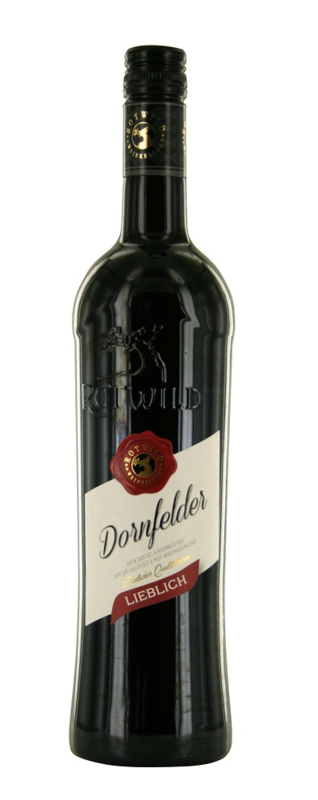
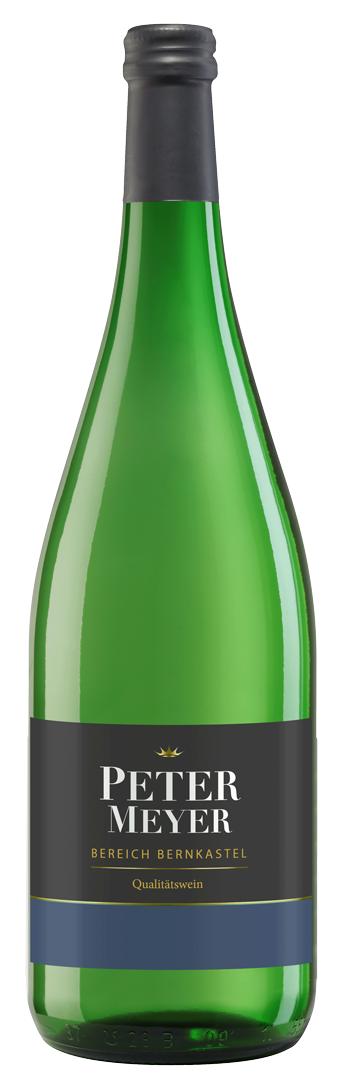
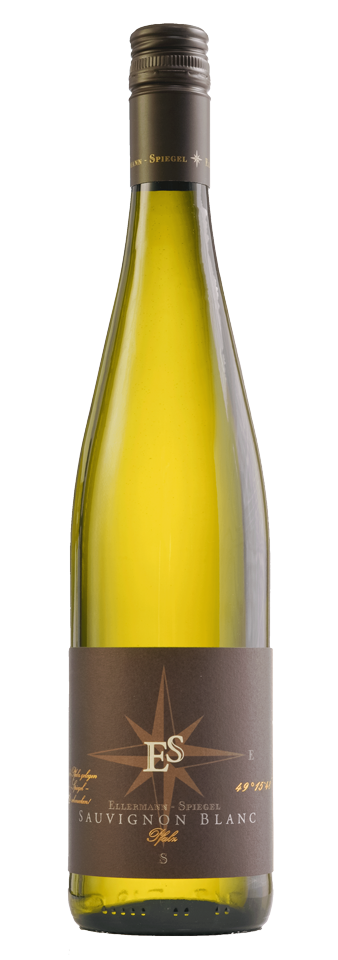
A selection from the 34 bottles now in the shop on the Brink.






In brief
| Wine regions | 13 wine regions, more than 100,000 hectares |
|---|---|
| Largest area | Rheinhessen, 27,499 hectares |
| Prädikate | Kabinett, Spätlese, Auslese, Beerenauslese, Eiswein, Trockenbeerenauslese |
| Ice wine | Harvested and pressed at a minimum of minus 7 °C |
| Dry | Up to 4 g/l residual sugar (up to 9 g/l with sufficient acidity) |
| Off-dry | Up to 12 g/l residual sugar (up to 18 g/l with sufficient acidity) |
| Sekt | Sparkling, at least 3.5 bar pressure |
| In the shop | 34 bottles |
What is the difference between trocken, halbtrocken, feinherb and lieblich?
Those words say how much residual sugar is in the wine. Trocken means at most 4 grams per litre, or up to 9 grams if the acidity is at most 2 grams lower than the residual sugar. Halbtrocken means at most 12 grams per litre, or up to 18 grams if the residual sugar exceeds the acidity by no more than 10 grams.
Lieblich lies above that limit, up to at most 45 grams per litre; above that the wine is called süß. Feinherb is not defined by law. According to the Deutsches Weininstitut, such a wine usually lies between halbtrocken and slightly lieblich. The taste designation is separate from the Prädikat: a Spätlese trocken therefore exists too.
Which grapes are important in Germany?
Riesling and Müller-Thurgau, also called Rivaner, together cover a good third of German vineyards. About 69 percent of plantings are white grapes. Riesling dominates in the Mosel, the Rheingau and the Mittelrhein. In Franken there are 1,563 hectares of Silvaner, more than Müller-Thurgau.
Among the blue grapes, spätburgunder (pinot noir) and dornfelder are the most important. Baden alone has 5,029 hectares of spätburgunder. Grauburgunder (pinot gris) and weissburgunder (pinot blanc) are the white burgundy varieties; Rheinhessen has 2,424 hectares of grauburgunder. Sekt is German sparkling wine with at least 3.5 bar of pressure, in which the carbon dioxide comes from fermentation. Winzersekt matures at least nine months on the lees in the bottle.
Which German wine does ’t Bockje have?
From the Pfalz, the dry range of Ellermann-Spiegel is in stock: Riesling, Grauburgunder, Weissburgunder, Auxerrois, Sauvignon Blanc, Dornfelder and St. Laurent, all trocken, plus a Spätburgunder. From Markus Molitor in the Mosel come the Alte Reben Riesling Trocken and the Haus Klosterberg line: Riesling Trocken, Riesling Feinherb, Pinot Blanc and Pinot Noir. J. Förster from Rheinhessen is available as Kabinett, Spätlese and Auslese.
Also on the shelf: the Piesporter Spätlese and Morio Muskat from P. Mertes, Peter Meyer Bereich Bernkastel, Forster Bereich Bingen in the litre bottle, the Silvaner Eiswein from Michel Schneider, Rebe Dornfelder Halbtrocken and Riesling Mosel Halbtrocken, Rotwild Dornfelder Halbtrocken and Lieblich, and Falkenburg Dornfelder. For Sekt there is Henkell Trocken, also in the 300 cl bottle. Then there are Käfer Hugo, Sternthaler Glühwein and alcohol-free from Eisberg: Cabernet Sauvignon and Rosé 0.0. Feel free to call or drop by at Brink 2 in Bathmen.
Wine houses in this selection
- Ellermann-Spiegel 6
- Markus Molitor 5
- J.Förster 3
- Haus 2
- Henkell 2
- P. 2
- Rebe 2
- Rotwild 2
- Eisberg 1
- Ellerman 1
- Falkenburg 1
- Forster 1
- Käfer 1
- Michel 1
- Peter 1
- Sternthaler 1
What customers also ask
What is German sparkling wine called (4 letters)?
Sekt. The carbon dioxide is produced during fermentation and the pressure is at least 3.5 bar.
Is Spätlese always sweet?
No. Spätlese says something about ripeness at harvest; if it says trocken, the wine is dry.
What does feinherb mean?
Feinherb is not legally defined and usually lies between halbtrocken and slightly lieblich.
How much German wine is there in the shop?
Currently 34 bottles, from dry Riesling to Eiswein and Sekt.
Keep browsing
Sources
- Die 13 deutschen Weinbaugebiete im Profil, Deutsches Weininstitut, deutscheweine.de/news-medien/meldungen/meldung/783/die-13-deutschen-weinbaugebiete-im-profil (accessed 3 October 2026)
- Prädikate, Deutsches Weininstitut, deutscheweine.de/qualitaetstandard/449/pr%C3%A4dikate (accessed 3 October 2026)
- Weingeschmacksrichtungen, Deutsches Weininstitut, deutscheweine.de/wein-probieren/195/geschmacksrichtungen (accessed 3 October 2026)
- Rebsorten, Deutsches Weininstitut, deutscheweine.de/unser-wein/rebsorten (accessed 3 October 2026)
- Winzersekt, Deutsches Weininstitut, deutscheweine.de/weinerzeugnis/259/winzersekt (accessed 3 October 2026)
- Prädikatswein (Qualitätswein mit Prädikat): protected food name, UK Government (GI-register), gov.uk/protected-food-drink-names/pradikatswein-qualitatswein-mit-pradikat-star-supplemented-by-spatlese-auslese-beerenauslese-trockenbeerenauslese-eiswein-kabinett (accessed 3 October 2026)
The shop is at Brink 2 in Bathmen. Open Tuesday to Friday from 09.00 to 18.00 and Saturday from 09.00 to 17.00. For advice, call 0570 541 278 or email info@bockje.nl.
Wij verkopen geen alcohol aan personen onder de 18 jaar. NIX18.