
Sweet wine and dessert wine
Zoete wijn is wijn waarin na de gisting veel natuurlijke druivensuiker achterblijft. Volgens de Europese etiketregels mag een stille wijn vanaf 45 gram suiker per liter zoet heten. Die suiker komt van overrijpe of ingedroogde druiven, van edele rotting of van het stoppen van de gisting met alcohol. In de winkel aan de Brink in Bathmen staan nu 36 flessen zoete wijn en dessertwijn, wit en rood.
- 36bottles in the shop
- 30wine houses
- 10countries
- 5,5–20%alcohol
How does a wine become sweet?
A wine becomes sweet because not all the sugar in the grape is converted into alcohol. There are three main routes: concentrate the sugar in the grape so strongly that the yeast cannot process it all, let the grapes dry after the harvest, or stop the fermentation by adding alcohol.
Sauternes in Bordeaux is the best-known example of concentration through noble rot. From late September, morning mists rise there from the Garonne and its cooler tributary, the Ciron. The fungus Botrytis cinerea pierces the skin while the flesh stays intact. The berries dry out and the juice becomes concentrated.
Because the grapes ripen unevenly, they are picked in several rounds, the so-called tries. The harvest can last into November, in exceptional years into December. Sauternes is made from more than 80 percent sémillon, supplemented with sauvignon and muscadelle. The appellation requires at least 221 grams of natural sugar per litre of must and the yield is limited to 25 hectolitres per hectare.
What do dry, medium dry, medium sweet and sweet mean on the label?
On the label of a still wine, sweetness may only be indicated with fixed terms from Annex III, Part B, of European Regulation 2019/33. Each term belongs to a limit in grams of sugar per litre.
Dry means at most 4 grams per liter, or at most 9 grams if the total acidity (expressed in grams of tartaric acid per liter) is no more than 2 grams below the residual sugar content. Medium dry goes up to 12 grams per liter, or up to 18 grams if the acidity is no more than 10 grams below the sugar content. Medium sweet applies up to 45 grams per liter. Sweet means at least 45 grams of sugar per liter.
Separate terms from part A of the same annex apply to sparkling wine such as Moscato d’Asti.
Sweet wine and dessert wine at ’t Bockje
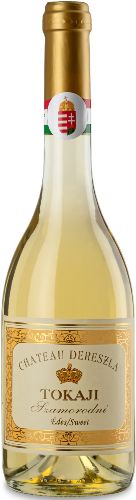
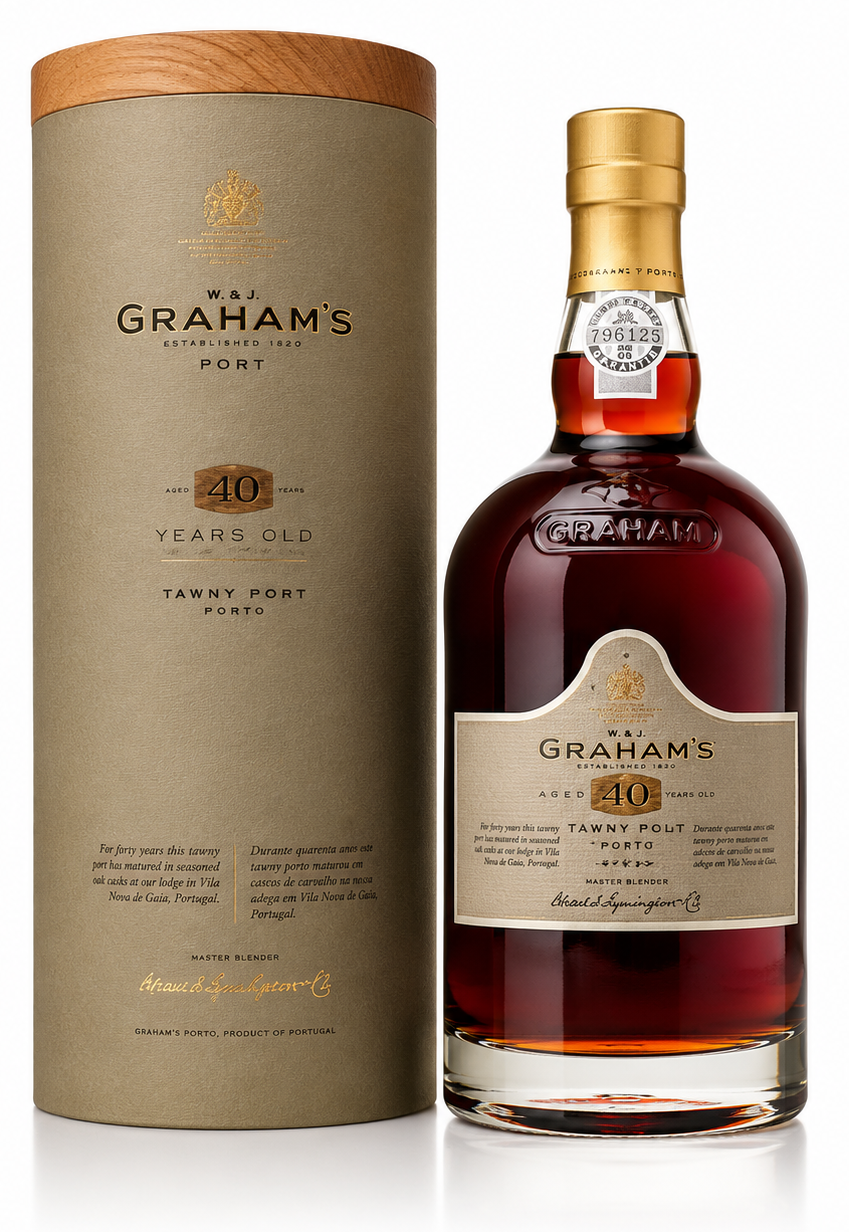
Een greep uit de 36 flessen die nu in de winkel aan de Brink staan.




In brief
| Sweet on the label | At least 45 grams of sugar per litre (EU Regulation 2019/33) |
|---|---|
| Medium sweet | Up to 45 grams of sugar per litre |
| Sauternes | At least 221 grams of natural sugar per litre of must, yield no more than 25 hl/ha |
| Vin santo | Dried grapes, aged at least 24 months in small casks of no more than 3 hl, minimum 16 percent alcohol |
| Mutage | Addition of neutral wine spirit during fermentation, attributed to 1285 |
| Roussillon | 80 percent of French vins doux naturels, AOC since 1936 |
| In the shop | 36 bottles |
What is vin santo?
Vin santo is a Tuscan dessert wine made from dried grapes: the passito method. For Vin Santo del Chianti Classico, the grapes are dried naturally in suitable rooms after careful selection. Only when the must contains at least 27 percent sugar does fermentation begin.
Fermentation and ageing take place in small wooden casks, caratelli, of at most 3 hectolitres. The wine matures in them for at least 24 months and may only be sold from 1 November of the third year after the harvest. The minimum alcohol content is 16 percent.
The white vin santo consists of at least 60 percent trebbiano toscano and malvasia. The red variant is called Occhio di Pernice and contains at least 80 percent sangiovese. The DOC was recognised by ministerial decree of 24 October 1995.
What is a vin doux naturel, and is there such a thing as red sweet wine?
A vin doux naturel is a sweet wine in which the winemaker adds neutral wine alcohol during the alcoholic fermentation. That is called mutage. It stops the yeasts before they have converted all the sugar into alcohol, so that part of the grape sugar remains in the wine.
The discovery of mutage is attributed to Arnaud de Villeneuve, physician at the court of the kings of Majorca in Perpignan, in 1285. According to the trade association, Roussillon makes 80 percent of all French vins doux naturels. From 1936 these wines were the first to receive AOC status. Well-known names are Muscat de Rivesaltes, Banyuls, Rivesaltes Grenat and Maury Grenat.
So sweet red wine certainly exists. Sweetness does not depend on color: the same methods and the same label terms apply to red wine. Examples are vin santo Occhio di Pernice made from sangiovese and red vins doux naturels from Roussillon.
Which sweet wine does ’t Bockje have?
The dessert wines in the shop come from France, Italy, Portugal, Greece, Hungary and the United States. From France there are Sauternes from Delor (Héritages 1864), Monbazillac and Bergerac Moelleux from Château Belingard, Coteaux du Layon from Domaine des Hauts Perrays, Muscat de Rivesaltes from, among others, Cazes, and Banyuls from Maison Lorgril and Cornet & Cie, who also make a Banyuls Blanc.
From Italy come the Moscato d’Asti by Batasiolo and the Santovino by Castellani. Greece is represented with Samos Vin Doux and the Mavrodaphne of Patra by Cavino Deus, Hungary with the Tokaji Szamorodni by Château Dereszla and Portugal with the Moscatel by Vista Alegre. From California come Elysium and Essensia by Andrew Quady.
If you are unsure which bottle suits an occasion, call the shop or drop by at Brink 2 in Bathmen.
Wine houses in this selection
- Chateau Belingard 2
- Rivesaltes 2
- Vista Alegre Moscatel 2
- Banyuls 1
- Batasiolo 1
- Castellani 1
- Cazes 1
- Château Dereszla 1
- Cornet 1
- Delor 1
- Domaine du Hauts 1
- Domaines Schlumberger 1
- Donnafugata 1
- Ferreira 1
- Godet 1
- Graham's 1
- Michel 1
- MUSCAT 1
- Muskavino 1
- P. 1
- Pellegrino 1
- Portillo 1
- Prince 1
- Quattro 1
- The Royal Tokaji 1
- Tonino 1
- Torres 1
- Trasanto 1
- Vendanges 1
- Yarden 1
What customers also ask
What is the difference between sweet wine and dessert wine?
In everyday use the two words are used interchangeably. On the label, only the sugar content determines whether a still wine may be called sweet: from 45 grams per litre.
What is noble rot?
The fungus Botrytis cinerea pierces the skin of ripe grapes. The berries dry out and the juice becomes concentrated, as in Sauternes.
Is sweet wine always white?
No. There is also red sweet wine, such as vin santo Occhio di Pernice made from sangiovese and red vins doux naturels from the Roussillon.
How much sweet wine is there in the shop?
Op dit moment 36 flessen zoete wijn en dessertwijn, uit onder meer Frankrijk, Italië, Griekenland en Hongarije.
Keep browsing
Sources
- Commission Delegated Regulation (EU) 2019/33, Annex III, legislation.gov.uk (text of EU Regulation 2019/33), legislation.gov.uk/eur/2019/33/annex/III (accessed 2 October 2026)
- Sauternes et Barsac: terroir, Conseil des Grands Crus Classés en 1855, gcc-1855.fr/sauternes/terroirGCC1855sauternes-fr.pdf (accessed 2 October 2026)
- Nos singularités, Conseil Interprofessionnel des Vins du Roussillon, roussillon.wine/vins-et-terroirs/nos-singularites/ (accessed 2 October 2026)
- Disciplinare di produzione Vin Santo del Chianti Classico, ISMEA, ismeamercati.it/flex/AppData/Redational/pdf/Vin%20Santo%20del%20Chianti%20Classico.pdf (accessed 2 October 2026)
The shop is at Brink 2 in Bathmen. Open Tuesday to Friday from 09.00 to 18.00 and Saturday from 09.00 to 17.00. For advice, call 0570 541 278 or email info@bockje.nl.
Wij verkopen geen alcohol aan personen onder de 18 jaar. NIX18.