
Rosé champagne
Rosé champagne is champagne with a pink colour, made according to the same rules as white champagne: second fermentation in the bottle and at least fifteen months of ageing after bottling. The colour arises in two ways: by blending white and red champagne wine, or by letting the skins of black grapes soak briefly. In the shop on the Brink in Bathmen there are 10 bottles of rosé champagne.
- 10bottles in the shop
- 7wine houses
- 12–12,5%alcohol
How is rosé champagne made?
Rosé champagne is made in two ways: by blending or by maceration. The specification of the AOC Champagne mentions both explicitly. The base wines for rosé may come from direct pressing, from maceration or saignée, or from a blend of white and red wine before bottling.
With assemblage, the producer, according to the Comité Champagne, adds roughly 5 to 20 percent red Champagne wine to the white base wines. With maceration, the juice of black grapes stays on the skins for some time, so that it takes up colour. After that, both methods follow the same route: second fermentation in the bottle and ageing on the lees.
Why is mixing white and red wine exceptional here?
Because European rules in principle do not allow white and red wine to be blended into rosé. According to Article 8 of Delegated Regulation (EU) 2019/934, a white wine without a protected designation of origin may not be blended with a red wine to make rosé.
There is an exception to that rule: it does not apply when the end product is intended for a sparkling wine cuvée. Champagne falls under that. The Champagne specification therefore expressly allows the blending of white and red wine before the tirage. For still wine without a protected designation of origin, that practice remains prohibited within the EU.
Rosé champagne at ’t Bockje
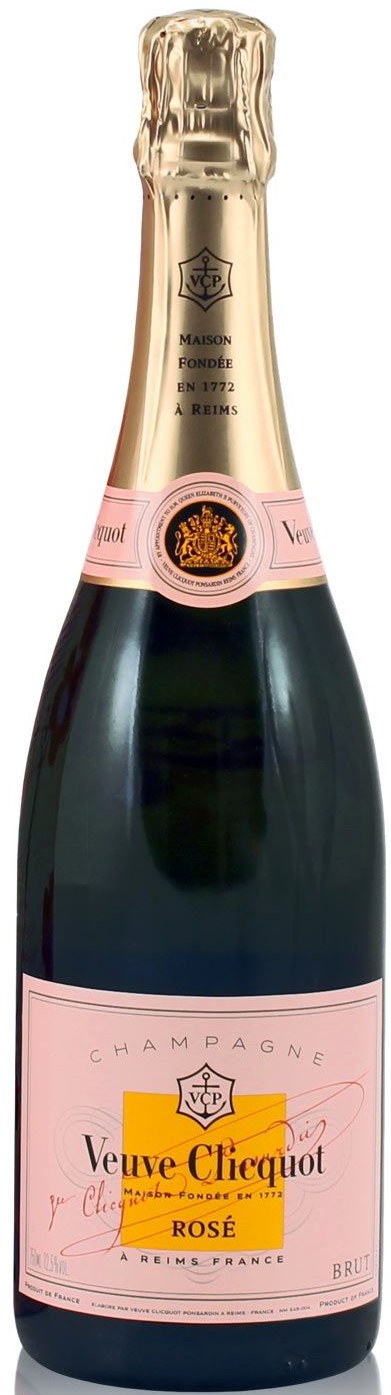
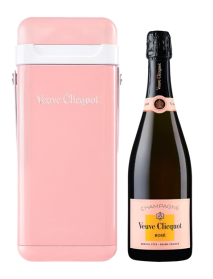
A selection from the 10 bottles currently in the shop on the Brink.




In brief
| Country | France |
|---|---|
| Appellation | AOC Champagne |
| Methods | Blend of white and red wine, maceration or saignée |
| Share of red wine in the blend | Approximately 5 to 20 percent |
| Main grapes | Pinot noir, Meunier, Chardonnay |
| Minimum maturation | 15 months after tirage, 36 months for millésime |
| Fermentation | Second fermentation in the bottle |
| In the shop | 10 bottles |
What is the difference between saignée and maceration?
The difference lies in how long the grapes soak on the skins. The Comité Champagne describes macerated rosé as rosé in which the juice of black grapes stays in contact with the skins for about 36 hours. With rosé de saignée that soaking time is shorter, between 8 and 12 hours.
With both methods the colour comes straight from the grape, with no red wine involved. The juice of blue grapes is in fact white; it only takes on colour through contact with the skin. That is where it differs from blending, in which the colour comes from red champagne wine that the maker adds to the white base wines before the tirage.
Which grapes go into rosé champagne?
Rosé champagne uses the same grapes as all champagne. The specification names Pinot noir, Meunier and Chardonnay as the main varieties, alongside Arbane, Petit meslier, Pinot blanc, Pinot gris and Chardonnay rose. According to the Comité Champagne, Pinot noir covers 38 percent of the vineyards, Chardonnay 31 percent and Meunier 31 percent. The other varieties together reach no more than 0.3 percent.
For the colour, the black grapes, Pinot noir and Meunier, are what matter: they supply the red wine for the blend or the juice for the maceration. Chardonnay can take part in the blend as a white grape: according to Moët & Chandon, the Rosé Impérial consists of 10 to 20 percent Chardonnay, alongside Pinot noir and Meunier.
What do brut, extra brut and demi-sec mean, and what is an Ice?
These terms indicate how much sugar the champagne contains after the dosage, the final addition before the bottle is sealed. The Comité Champagne uses these limits:
- Brut nature (pas dosé, dosage zéro): less than 3 grams per litre
- Extra brut: less than 6 grams per litre
- Brut: less than 12 grams per litre
- Extra dry: 12 to 17 grams per litre
- Sec: 17 to 32 grams per litre
- Demi-sec: 32 to 50 grams per liter
- Doux: more than 50 grams per litre
An Ice champagne is a cuvée that the producer makes to be served over ice. According to the house, Moët & Chandon Ice Impérial Rosé has a dosage of 38 grams per litre and therefore falls into the demi-sec category.
Which rosé champagne is in the shop at 't Bockje?
At ’t Bockje there is rosé champagne from several French houses. Among others you will find Veuve Clicquot Rosé, also in the Veuve Clicquot Champagne rosé cooler, a pack that doubles as a cool bag. Also on the shelf are Ayala Champagne Rosé, Bollinger Rosé in gift box, Deutz Rosé Brut, Ernest Rapeneau Champagne Rosé Brut and Lanson Le Rosé.
From Moët & Chandon there are the Rosé Impérial, a brut, and the Ice Rosé, meant to be served over ice. Piper-Heidsieck Rosé Sauvage is also in the shop. Would you like to know which bottle suits your occasion? Drop by at Brink 2 in Bathmen or call 0570 541 278.
Wine houses in this selection
- Moët & Chandon 2
- Ayala 1
- Bollinger 1
- Deutz 1
- Ernest Rapeneau 1
- Lanson 1
- Piper-Heidsieck 1
What customers also ask
May rosé champagne be made by blending white and red wine?
Yes. The specifications of the AOC Champagne expressly allow blending white and red wine before the tirage.
How long does rosé champagne mature at minimum?
At least fifteen months after bottling, and for a vintage champagne at least thirty-six months.
Is demi-sec sweeter than brut?
Yes. Brut contains less than 12 grams of sugar per litre, demi-sec between 32 and 50 grams per litre.
How many rosé champagnes are in the shop?
In the shop at Brink 2 in Bathmen there are 10 bottles of rosé champagne.
Keep browsing
Sources
- Cahier des charges de l'appellation d'origine contrôlée Champagne, INAO, extranet.inao.gouv.fr/fichier/CDCPNOChampagne20240911.pdf (accessed 2026-10-04)
- Champagne Rosé, Comité Champagne, champagne.fr/en/champagne-tasting/choosing-your-champagne/champagne-rose (accessed 2026-10-04)
- Grape varieties, Comité Champagne, champagne.fr/en/about-champagne/a-great-blended-wine/champagne-and-its-grape-varieties (accessed 2026-10-04)
- Savoir lire une étiquette de champagne, Comité Champagne, champagne.fr/system/files/2025-09/FICHE%20SAVOIR%20LIRE%20UNE%20ETIQUETTE%20DE%20CHAMPAGNE%20FR%202025.pdf (accessed 2026-10-04)
- Gedelegeerde Verordening (EU) 2019/934, artikel 8, Europese Unie (EUR-Lex), eur-lex.europa.eu/legal-content/EN/TXT/HTML/?uri=CELEX:32019R0934 (accessed 2026-10-04)
- Champagne Ice Impérial Rosé, Moët & Chandon, moet.com/en-us/ice-imperial-rose (accessed 4 October 2026)
- Brut Impérial Rosé, Moët & Chandon, moet.com/en-int/rose-imperial (accessed 4 October 2026)
The shop is at Brink 2 in Bathmen. Open Tuesday to Friday from 09.00 to 18.00 and Saturday from 09.00 to 17.00. For advice, call 0570 541 278 or email info@bockje.nl.
Wij verkopen geen alcohol aan personen onder de 18 jaar. NIX18.