The short answer to this question is on the question page What is a grappa riserva?. Below you will read the whole story behind it.
Of the 39 grappas on our shelves in Bathmen, twelve carry the word riserva on the label, three the word barricata or barrique and exactly one the word invecchiata. One says bianca.
These words seem to be synonyms, but they are not. They are legal designations, each with its own requirement, and all four say something different about what happened to the grappa after it came out of the still.
Grappa is distilled pomace, not distilled wine
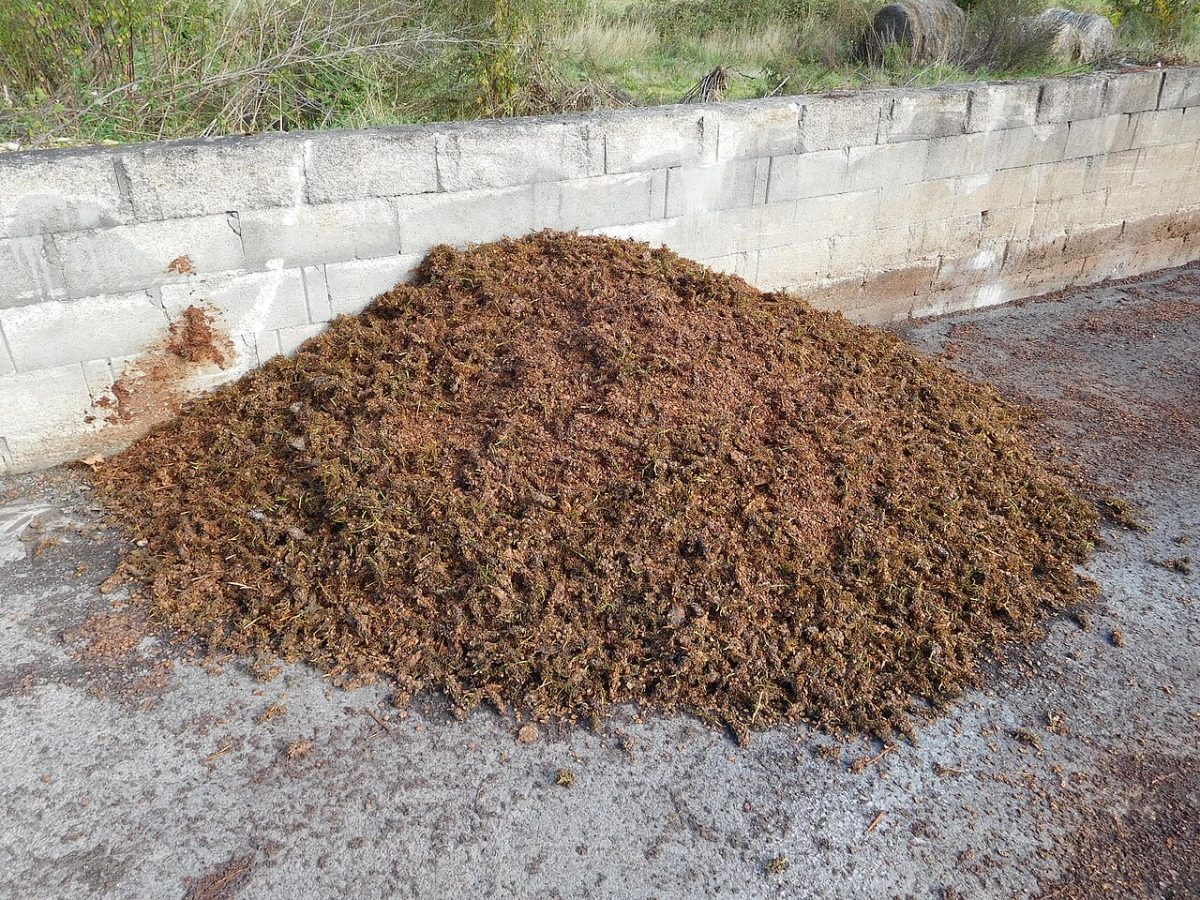
Start at the beginning, because that is where the most common misunderstanding lies. Grappa is not distilled from wine. It is distilled from vinaccia: the press cake that remains after the grapes have been pressed for wine. Skins, pips and sometimes a few stalks.
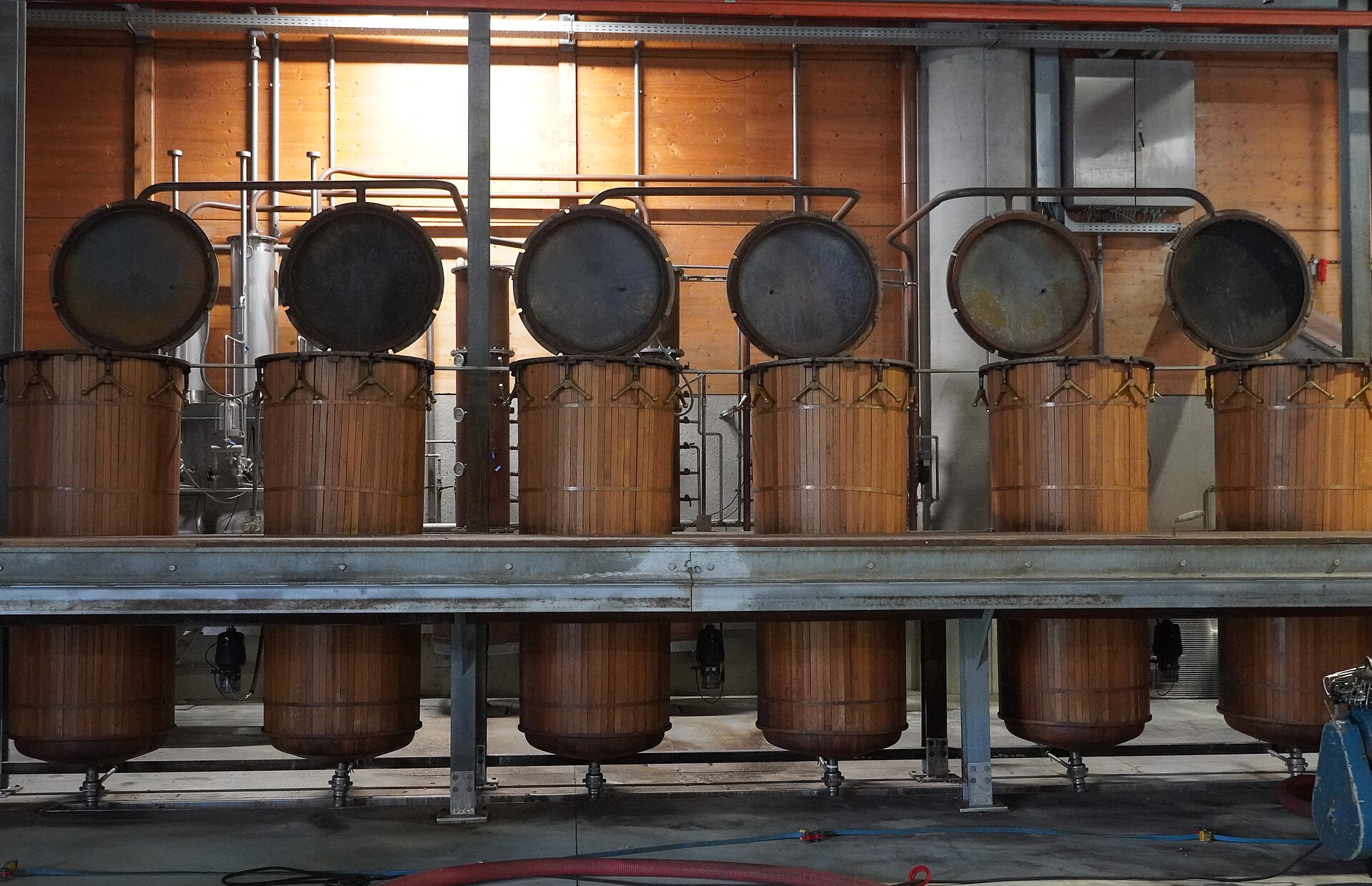
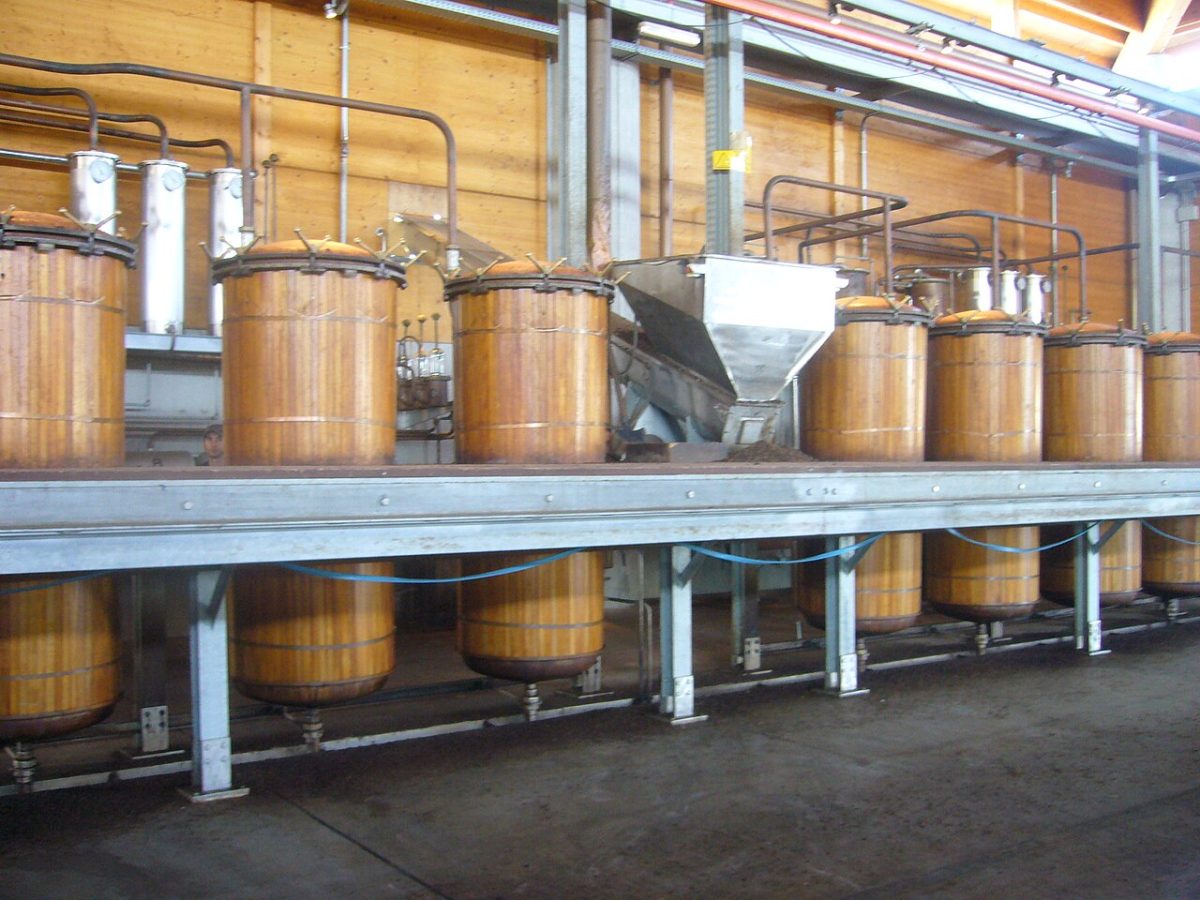
That pomace must first ferment, because it still contains sugar and without fermentation there is no alcohol to extract. Then it goes into the still as it is. So the distillation is not of a liquid but of a solid mass, usually with steam slowly passing through it.
If wine is distilled, it is not called grappa but acquavite di vino, which is in fact a brandy. And the name grappa itself is protected: the pomace must be Italian and the distilling must take place in Italy.
Bianca or giovane: never been in wood
The simplest category is that of clear grappa. The label then says bianca or giovane, sometimes also cristallo. After distilling, such a grappa goes into stainless steel or glass and stays there until bottling.
Colourless does not mean untreated here. The grappa often still rests for months, to take the sharpness off. Only no wood is involved, and so no colour either.
This is the style in which you find most of the grape, simply because nothing is layered over it.
Invecchiata and riserva: here the months count
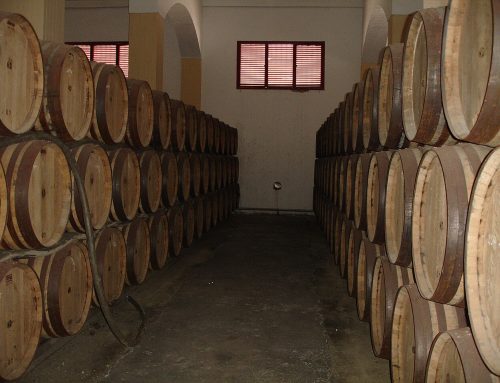
As soon as wood comes into play, minimum periods apply. They are short compared with whisky, but they are fixed.
- Affinata in legno: has seen wood, but for less than twelve months. This is not an age statement but a softening.
- Invecchiata or vecchia: at least twelve months in wood.
- Riserva or stravecchia: at least eighteen months in wood.
Those months only count if the casks lie under supervision in a sealed warehouse. A distiller therefore cannot claim afterwards that a batch spent two years somewhere.
What stands out on our own shelves: riserva appears twelve times, invecchiata once. That is no coincidence. Eighteen months is not a long time for a grappa, and many houses simply skip the intermediate step.
Barricata means something different from invecchiata
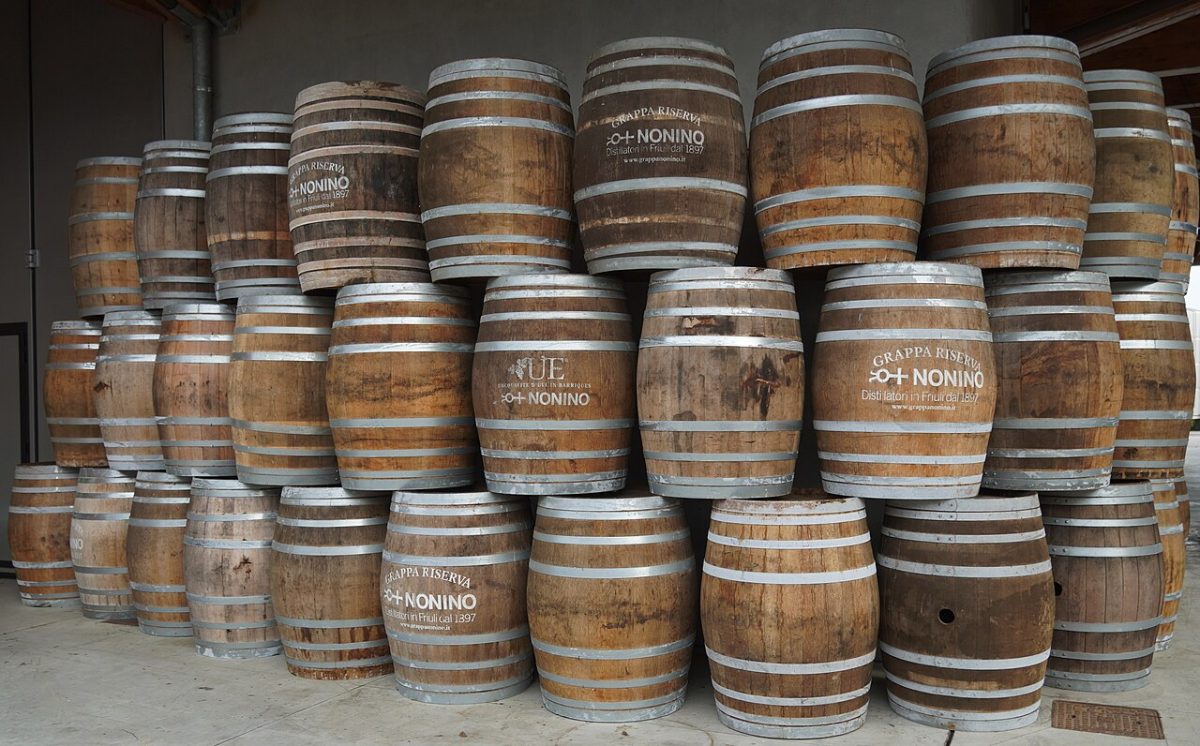
This is where it often goes wrong. Barricata or barrique is not a higher level above riserva. The word says nothing about how long, but about in what: the wood was a barrique, a small cask.
Small wood works harder than large wood. The ratio between wine surface and wood is more favourable, so more happens in the same time. A barricata of twelve months can therefore taste woodier than a riserva of eighteen months in a large cask.
If you come across cask finish, something else is going on. Then the grappa has spent the last part of its maturation in a cask that previously held something else. Four of our bottles do this, with casks that previously held barolo, bourbon, port and sherry.
What else can appear on the label
If a bottle names a grape, it is called a monovitigno, and then the pomace must come for the great majority from that one grape. Fifteen of our thirty-nine bottles name a grape or a wine in this way.
If it says aromatica, the pomace comes from an aromatic grape such as moscato or traminer. That is an indication of origin, not a verdict on quality.
And there are regional designations. Grappa Piemontese, Grappa Trentina, Grappa Friulana, Grappa Veneta, Grappa Lombarda and a few others are protected; they tie the pomace and the distilling to an area. Grappa di Barolo goes one step further: it may only come from nebbiolo pomace from the Barolo area.
What is not on it
Two things that are useful to know, and that you will not find on any label.
First, a golden colour is not in itself proof of wood ageing. A limited addition of caramel is permitted in aged grappa. Anyone who goes by colour may therefore be wrong; the designation invecchiata or riserva is more reliable.
Second, the rules allow a small amount of sugar to round off the sharpness. That does not have to be stated. It explains why two grappas with the same designation can feel so different in the mouth.
Where to start
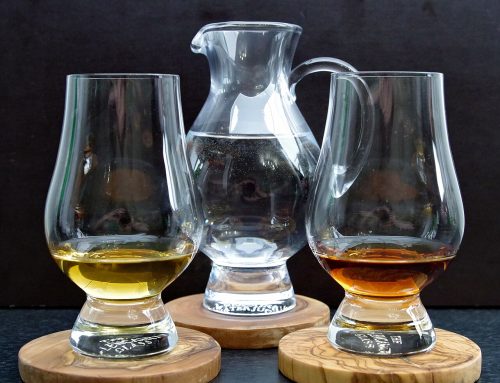
The clearest comparison is a bianca next to a riserva from the same house and the same grape. That keeps everything equal except the wood, and you see straight away what those months do.
If you would rather learn the difference between the grapes, take two monovitigni that have both seen no wood. A moscato and a merlot, for example: the same method, a very different pomace.
If you are not sure which way to go, drop in or call +31 570 541 278. We check for each bottle which designations it carries, and where the label says nothing, we say so too.
Keep browsing
The whole grappa range is on our grappa page, and with the wine & spirits shop's search engine you can go through everything. Houses we stock include Nonino, Francoli, Bottega, Julia and Castello.
A shorter explanation is on our page what is grappa. How the cask pulls another drink in different directions is shown in ruby or tawny port.
Grappa is one of the fruit distillates. Eau de vie, obstler, marc and slivovitz sets out the others alongside it.