The short answer to this question is on the question page What is the difference between cognac, armagnac and brandy?. Below you can read the whole story behind it.
Our brandy shelf in Bathmen holds 57 bottles from eight origins. Spain supplies by far the most with twenty-six, followed by Italy with eight, France with seven and Greece with six. We keep the cognacs in a separate cabinet, and there are more than a hundred of them.
That separation on the shelf comes up almost every week at the counter. Is cognac a kind of brandy, or something else? A bit of both. All cognac is brandy. Of all brandy, only a small part is cognac, and that comes down to three things: where the grapes grow, which grapes they are and how it is distilled.
Brandy is a legal category, not a mood word
The European rules for spirit drinks state exactly what brandy is. The basis is wine spirit: distilled wine, and nothing else. A second wine distillate may be added, as long as it came off the still at under 94.8 per cent.
Then it has to go into wood. At least one year in oak casks of a thousand litres or more, or at least six months in casks smaller than a thousand litres. The bottle must contain at least 36 per cent alcohol.
Two rules matter most. No alcohol may be added, and no flavouring is allowed. Caramel is permitted, but only to adjust the colour. So anyone who mixes neutral alcohol with wood flavouring is not making brandy, however brown the result.
What cognac adds on top: the place
Cognac is a protected designation of origin. The area lies around the town of Cognac in the departments of Charente and Charente-Maritime. The outer boundary was laid down by decree in 1909 and the area has been divided into six crus since 1938. Anything from outside it may not bear the name, even if it is made in exactly the same way.
That is the big difference straight away. Brandy says nothing about the place. A Spanish brandy from Jerez, an Italian one from Romagna and a German Weinbrand all fall under the same European definition. Cognac lays a map over that, and that map is binding.
The grape is fixed; with brandy it is not
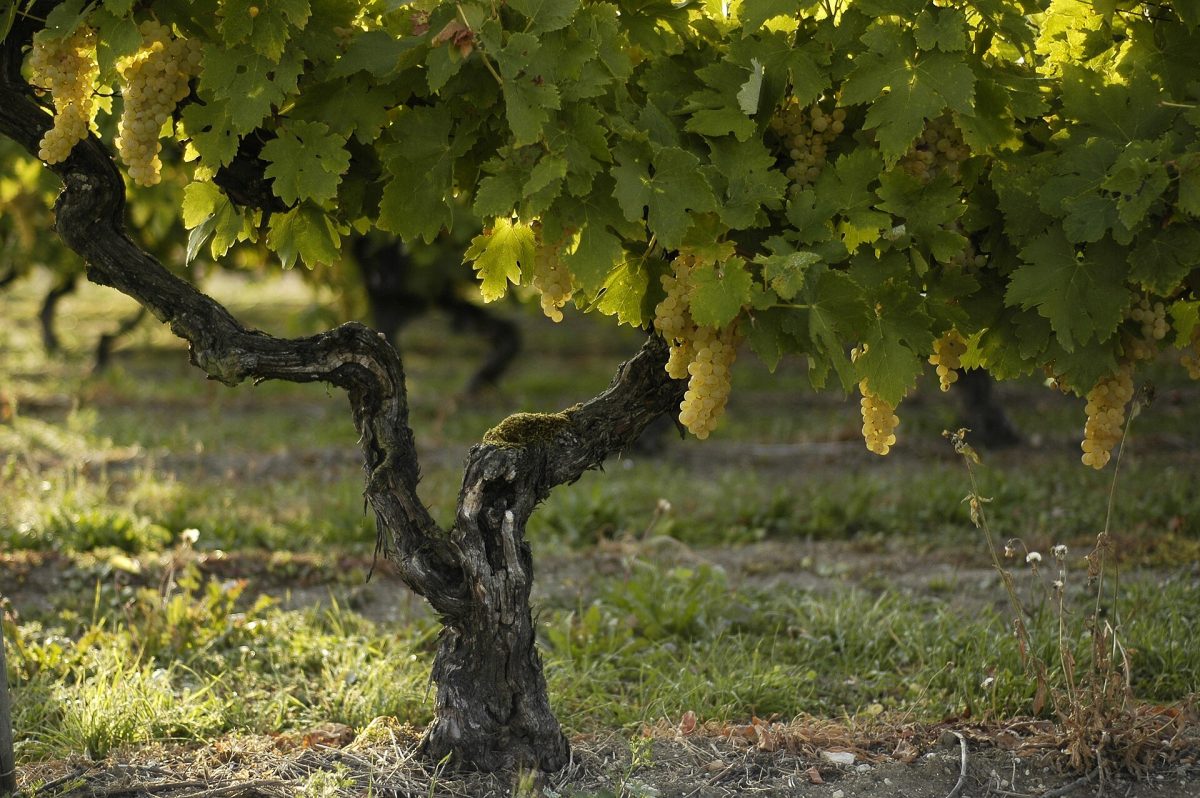
For cognac, the regulations prescribe the varieties: colombard, folle blanche, montils, sémillon and ugni blanc, with folignan up to a maximum of ten per cent. In practice that list is mostly theory, because ugni blanc accounts for around ninety-eight per cent of plantings.
That grape was chosen deliberately. It ripens late, gives little sugar and retains a lot of acidity. The wine it produces is thin and sharp, and nobody would want to drink it from a glass. That is exactly why it distils well: the acidity keeps the wine healthy in the months between harvest and still, so nothing needs to be added.
For brandy, nothing says which grape must go in. In Spain it is mainly airén and palomino, in Italy trebbiano. That is not sloppiness but the core of the category: brandy is about the method, cognac is also about the origin.
Distilled twice, and finished by 31 March
The third difference lies in the equipment. Cognac must be distilled twice in an alambic charentais, and the regulations prescribe that this still is made of copper. The still in which the second distillation takes place may not be larger than thirty hectolitres. The first distillation yields brouillis, roughly thirty per cent strong; the second, la bonne chauffe, yields the eau-de-vie.
There is also a clock on it. The double distillation must be finished by 31 March of the year following the harvest. Then it spends at least two years in oak, and the bottle must contain at least forty per cent.
None of that applies to brandy. A column still is allowed, a single distillation is allowed, and there is no date in the calendar. That is not less, it is a different agreement.
Why Spain fills our brandy shelf
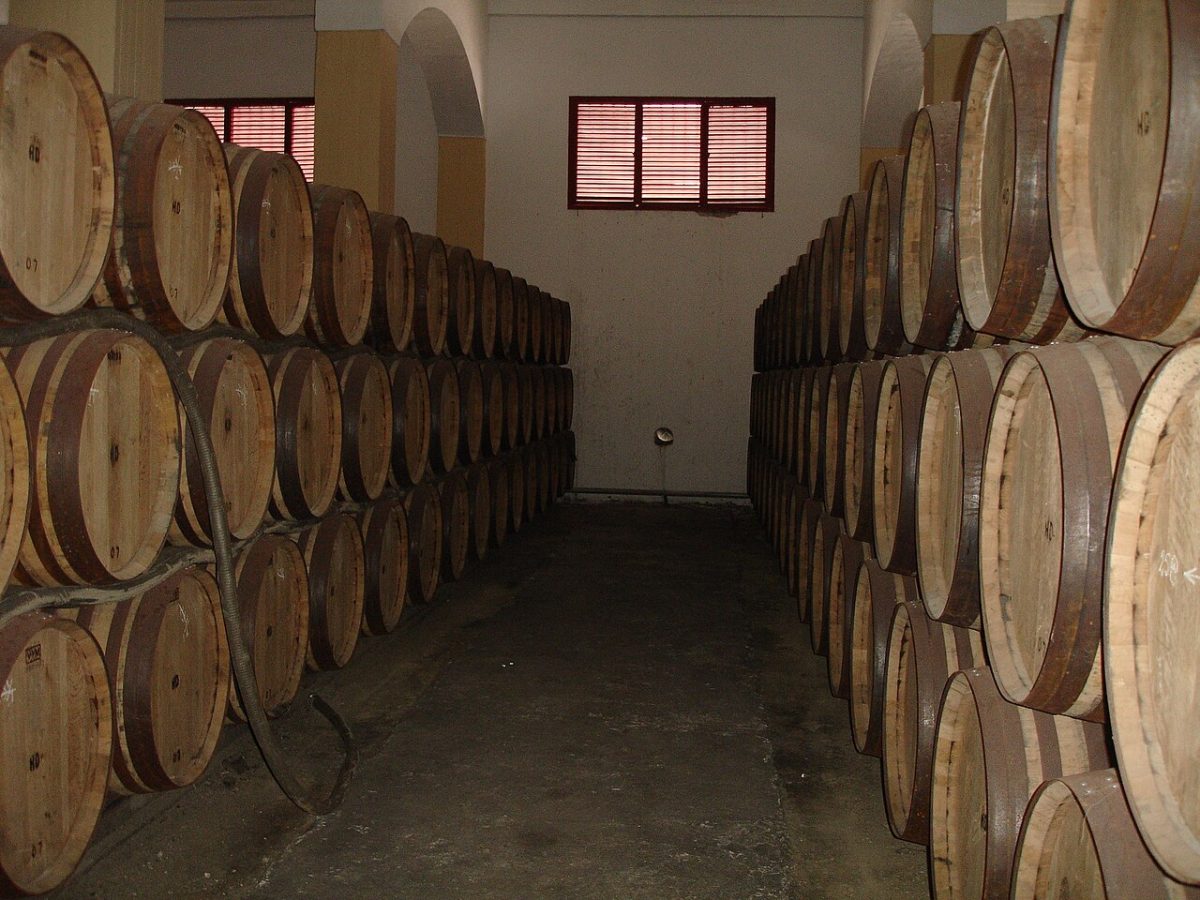
Of our 57 brandies, twenty-six come from Spain, and most of those from Jerez. Brandy de Jerez has its own protected designation and its own way of maturing. In the solera system the casks lie in rows on top of each other. Spirit is drawn from the bottom row, which is topped up from the row above, and so on. So there is always something old in the young.
Italy has eight on our shelves, Greece six, Germany five, Portugal three and the Czech Republic one. What all those bottles share is the wine base. What separates them is the region, the still and the cask.
What the label doesn't say
Two things are less strict than they look. The word brandy says nothing about age. VS, VSOP and XO are defined per region, and where no regulation exists they are trade terms that the house fills in itself.
And the alcohol percentage says little about what you get in the glass. On our shelf, brandy ranges from thirty to forty-five per cent. Below thirty-six per cent, the word brandy may not appear on the bottle as the legal name. Something else is then stated, and that is not a mistake but a different category.
Where to start
If you want to really compare them side by side, choose a cognac and a brandy that have spent about the same time in wood. Then the difference lies in the grape, the still and the cask, not in the age.
If you are unsure about a bottle we have, drop in or call 0570 541 278. We check for each bottle what the house says about origin and maturation, and where it says nothing, we tell you that too.
Keep browsing
The entire brandy shelf is on our brandy page, and with the shop's search engine you can browse everything. Houses we stock include Asbach, Torres, Cardenal Mendoza, Carlos I, Osborne, Lepanto, Macieira, Vecchia Romagna and Metaxa.
The cognacs are on the cognac page. How that area divides into six crus, you can read in the crus of cognac. How the double distillation works exactly is in how cognac is made, and what the letters on the label mean in what VS, VSOP, Napoléon and XO mean.