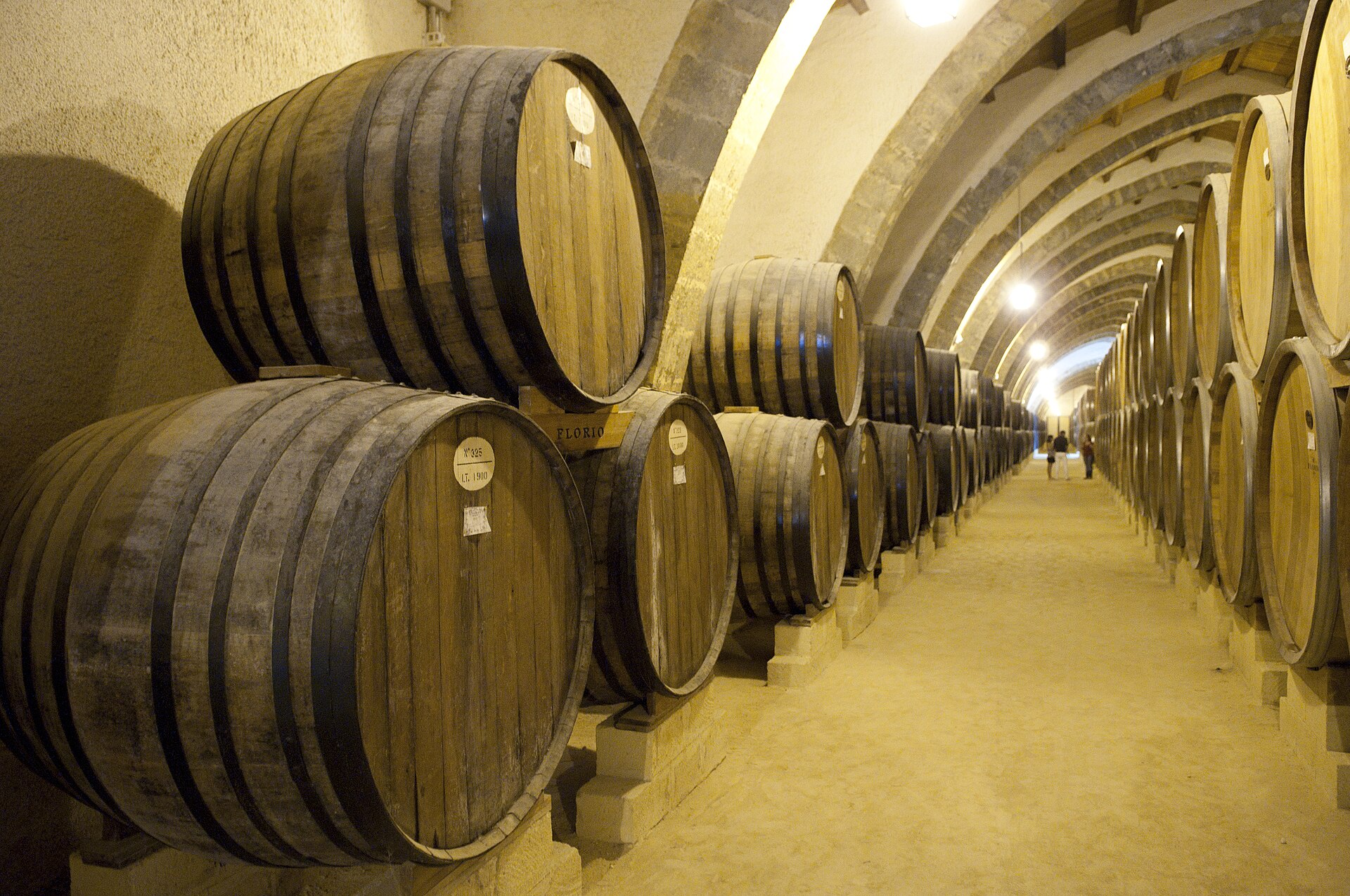
On our shelf with madeira and marsala there are twenty bottles. Ten of them are marsala, and they are certainly not all meant for the same purpose. Yet the question at the counter almost always comes in the same form: I need marsala for a recipe, which one should I get.
The answer hangs on two words on the label. One says how much sugar is in the bottle, the other how long the wine has been in cask. Anyone who keeps those two apart will not be left standing at the shelf for long.
What marsala is, and how it ended up in the pan
Marsala is fortified wine from the west of Sicily, named after the port town of Marsala. The wine received its own DOC in 1969, and the Italian law of 28 November 1984, number 851, sets out what may be sold under that name.
That it ever became an export wine is the work of an English merchant. John Woodhouse sailed into the harbour of Marsala, tasted the local perpetuum and had wine spirit added to it so that the wine would survive the journey to Liverpool. That very addition makes marsala useful in the kitchen. An opened bottle does not turn as quickly as ordinary wine, and in a hot pan it reduces to a sauce rather than to a puddle.
Secco, semisecco or dolce: sugar first
The first decision is about sugar, and it is stated in so many words on the label. The DOC has three classes: secco with at most 40 grams of residual sugar per litre, semisecco between 40 and 100 grams, and dolce with more than 100 grams.
Note what secco means here. Forty grams of sugar per litre is not dry in the wine world; a dry white wine is usually under four grams. A secco marsala is therefore not bone dry, merely the least sweet of the three. For the pan that is convenient: it brings flavour and some body without turning your sauce into a dessert.
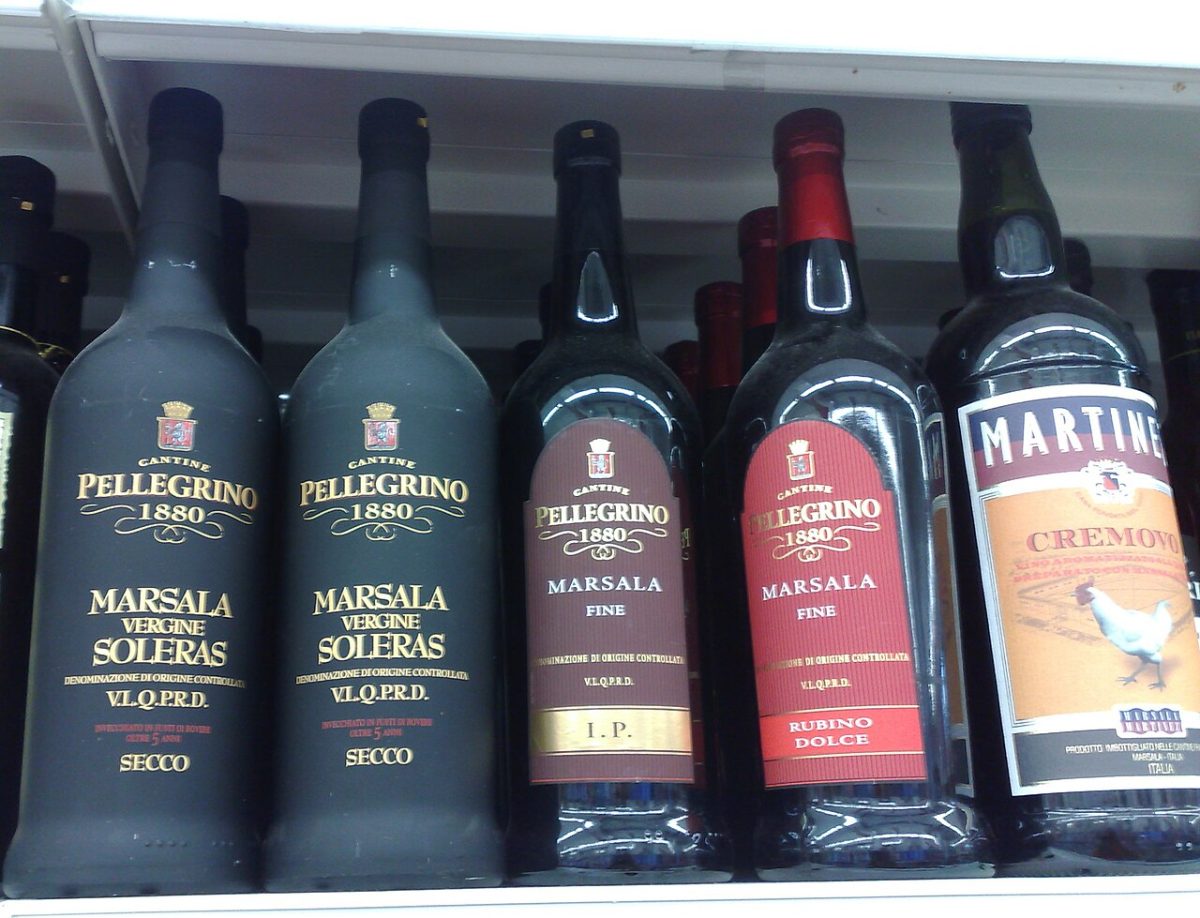
Fine, superiore or vergine: then the time
The second word is about ageing, and there are five levels.
- Fine: at least a year old, of which eight months on wood, and at least 17.5 percent alcohol.
- Superiore: two years, of which twenty months in wood, and 18 percent.
- Superiore Riserva: four years, of which forty-four months on wood.
- Vergine, also called Soleras: five years, fifty-six months of which in wood.
- Vergine Stravecchio: ten years, of which one hundred and sixteen months in wood.
There is another difference that you cannot read from the years. With fine and superiore the maker may adjust with concentrated must and with sifone, must to which alcohol has been added. With the amber-coloured ambra, mosto cotto, cooked-down must, may be added, and that is where the colour comes from. With vergine none of that is allowed. Only wine alcohol goes in. Vergine is therefore always dry, and it is the marsala that you drink rather than cook with.
The colour says something about the grape. Oro and ambra come from white grapes: Grillo, Catarratto, Ansonica and Damaschino. Rubino consists of at least seventy percent of the black Nero d’Avola, Perricone or Nerello Mascalese.
Which bottle for which dish
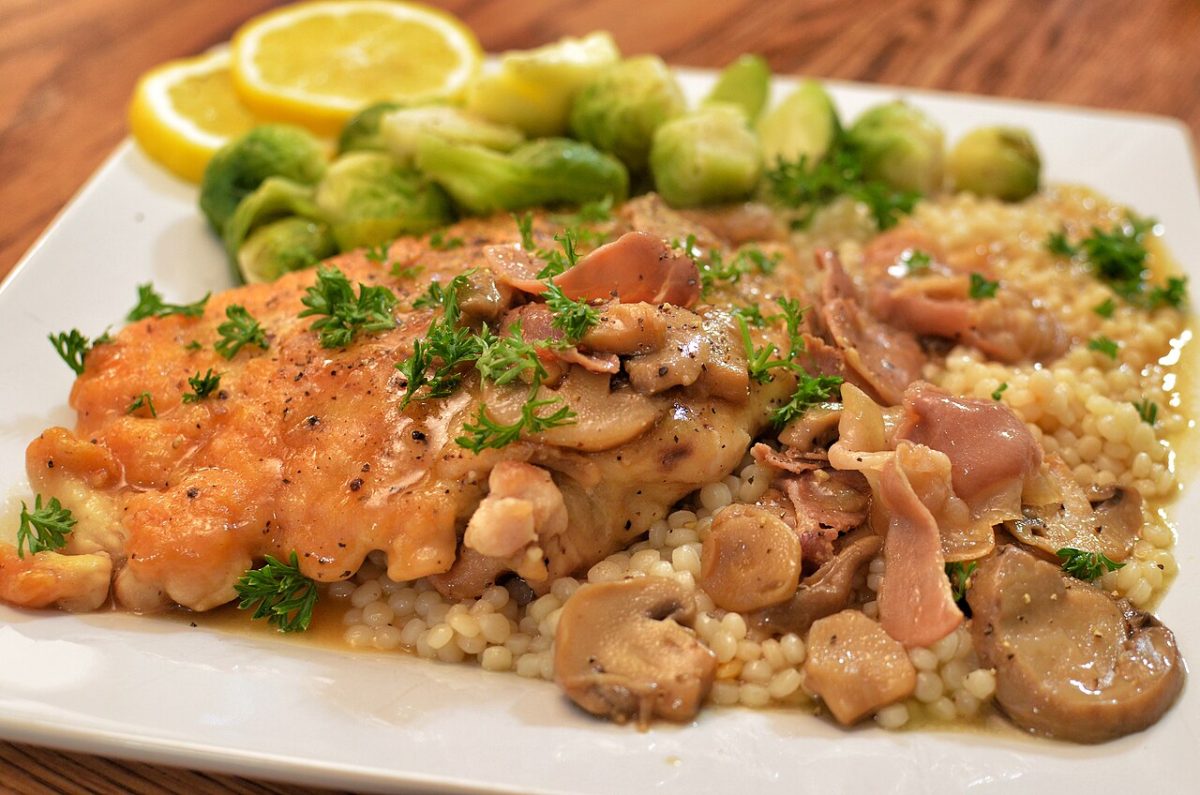
For savoury dishes, choose secco or semisecco, in the fine or superiore class. Veal escalopes, chicken with mushrooms, a risotto, a sauce with liver: there you want the nuttiness and the dried fruit of the marsala, not the sugar. Semisecco is the most forgiving choice, because a little residual sugar caramelises in the pan and gives the sauce a sheen. The Pellegrino Marsala Fine Semi Secco is the bottle our customers most often take home for this.
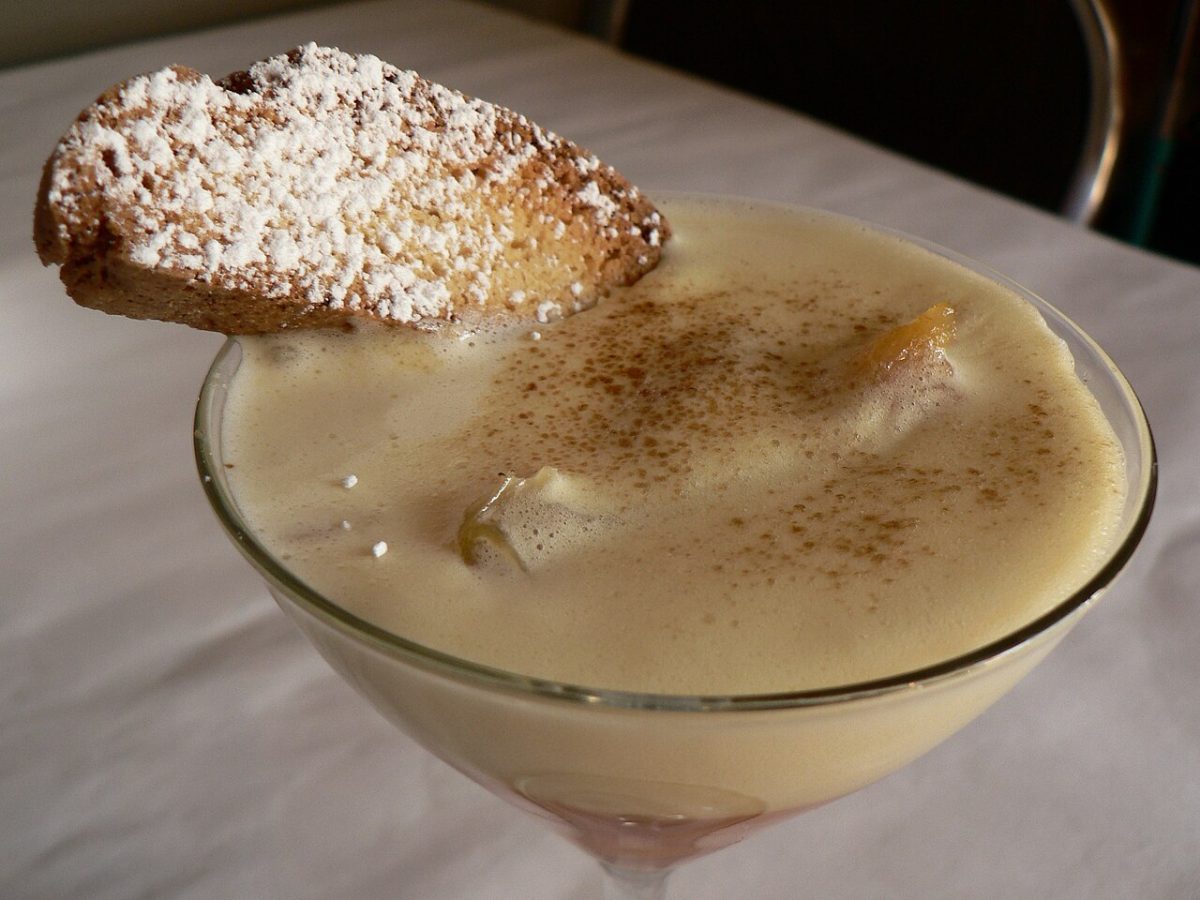
If you add dolce, you will notice it straight away. Above a hundred grams of sugar per litre, a reducing sauce turns syrupy and sweet, and that cannot be undone with salt or acid. Dolce belongs on the sweet side: zabaglione, a filling for cannoli, baked pears, or simply in a small glass next to the dessert.
Cremovo and the cooking bottle: two things that are not ordinary marsala
On the same shelf is cremovo, which is something other than the name suggests. Under European Regulation 251/2014, cremovo is not a wine but an aromatised wine product based on egg. It must consist of at least eighty percent marsala of protected origin, contains at least ten grams of egg yolk and two hundred grams of sugar per litre, and is between 14.5 and 22 percent alcohol. If it says cremovo zabaione, at least sixty grams of egg yolk per litre go into it.
Cremovo is therefore something to pour, not to cook with. Sear meat in it and you are left with sweet egg sauce.
The 10 centilitre kitchen bottle is the other exception, and that one really is meant for the pan. We stock it in two versions, dry and sweet, and for a single meal of veal escalopes one such bottle is enough. If you cook with marsala more often, a 75 centilitre bottle is more practical; fortified wine simply keeps longer after opening than ordinary wine, as we explained earlier in an opened bottle of vermouth.
What is on the shelf in Bathmen
Our twenty bottles of madeira and marsala come from three countries: ten from Italy, nine from Portugal and one from Spain. Of the ten marsalas, eight come from Pellegrino from the town of Marsala itself, and the other two are the cooking bottles. That puts fine, superiore and vergine all three on one shelf, and secco, semisecco and dolce too. The nine madeiras next to them have their own classification; we explained that in sercial, verdelho, bual and malmsey.
Marsala also turns up somewhere else in our shop. Twelve bottles in the range have rested in an emptied marsala cask: eleven whiskies and one rum. The Jameson Triple Triple is the best known of them.
Where to start
For most recipes a fine semisecco or a superiore is the right bottle, for a dessert a dolce, and for the glass a vergine. The whole shelf is on the wine & spirits search page, and online you will find them under the Fine Semi Secco and the Dry Vergine. If you are not sure, just call: +31 570 541 278.
Read more
More about fortified wine: the dry sherries told apart and rosso, bianco or dry vermouth. The whole wine selection is on our wine page.