The short answer to this question is on the question page What is the difference between white and brown rum?. Below you can read the whole story behind it.
Of the 423 rums we stock in Bathmen, 35 carry the word wit, blanc, blanco, white, silver or platino in the name, and 26 the word bruin, dark, black, negra or oscuro. In between sits a large middle field called goud, gold, oro or ambré.
Customers often assume that these colors form a ranking: white is young and simple, brown is old and heavy. That is only half true. The color of rum comes from three different sources, and one of them has nothing to do with age.
Everything comes out of the still colourless
What runs out of the column or the still at the end of distillation is clear as water. Always. Whether it is made from molasses or from fresh cane juice, whether it is distilled in a pot still or in a column: there is no colour in it.
All the colour you later see in the glass got there afterwards. That can happen in two ways: from the cask, or from a small bottle of caramel.
What the cask does
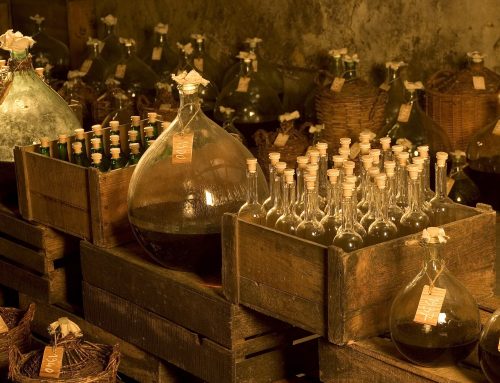
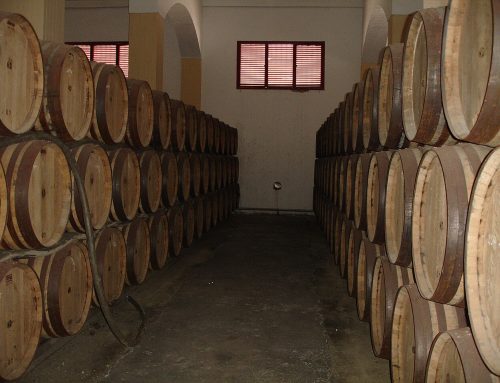
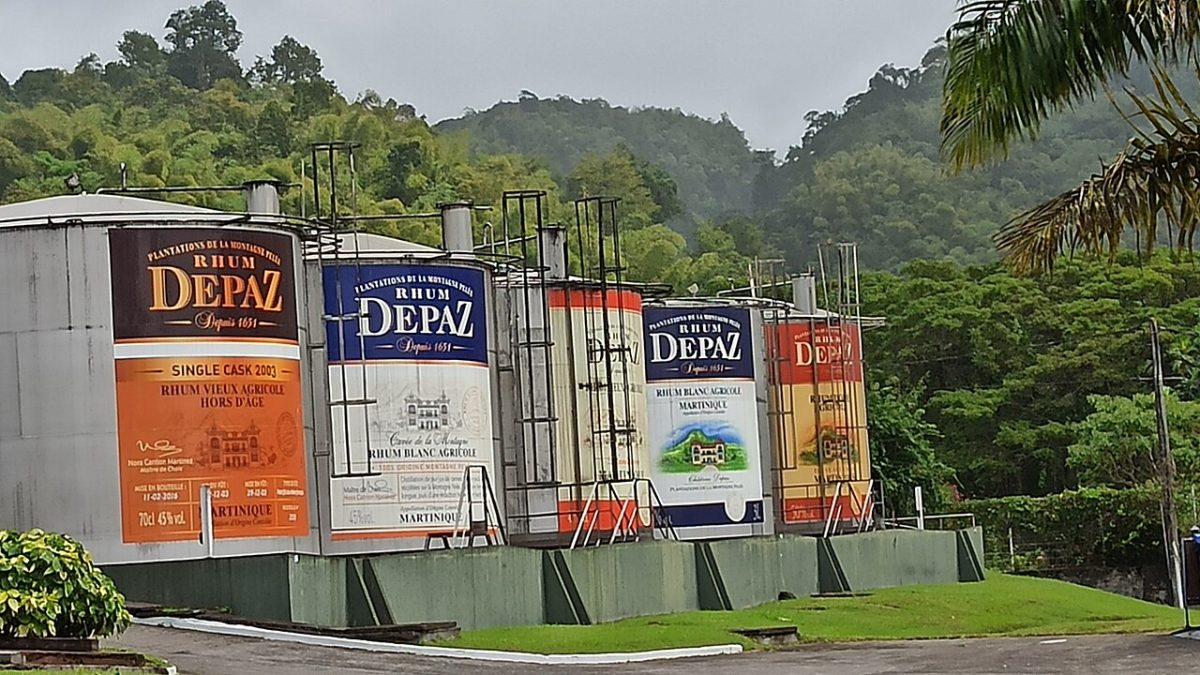
Rum almost always matures in oak casks that previously held something else, usually American whiskey casks. The wood releases colouring matter, and at the same time substances come out that change the taste. The two go hand in hand, but not at the same pace.
How fast that goes depends mainly on the climate. In the Caribbean the rum lies in a warm warehouse. The wood expands and contracts harder than in Scotland or the Netherlands, the exchange goes faster, and evaporation is many times what disappears in a cool warehouse. Five years of maturation in Barbados therefore gives more colour than five years in a European cellar.
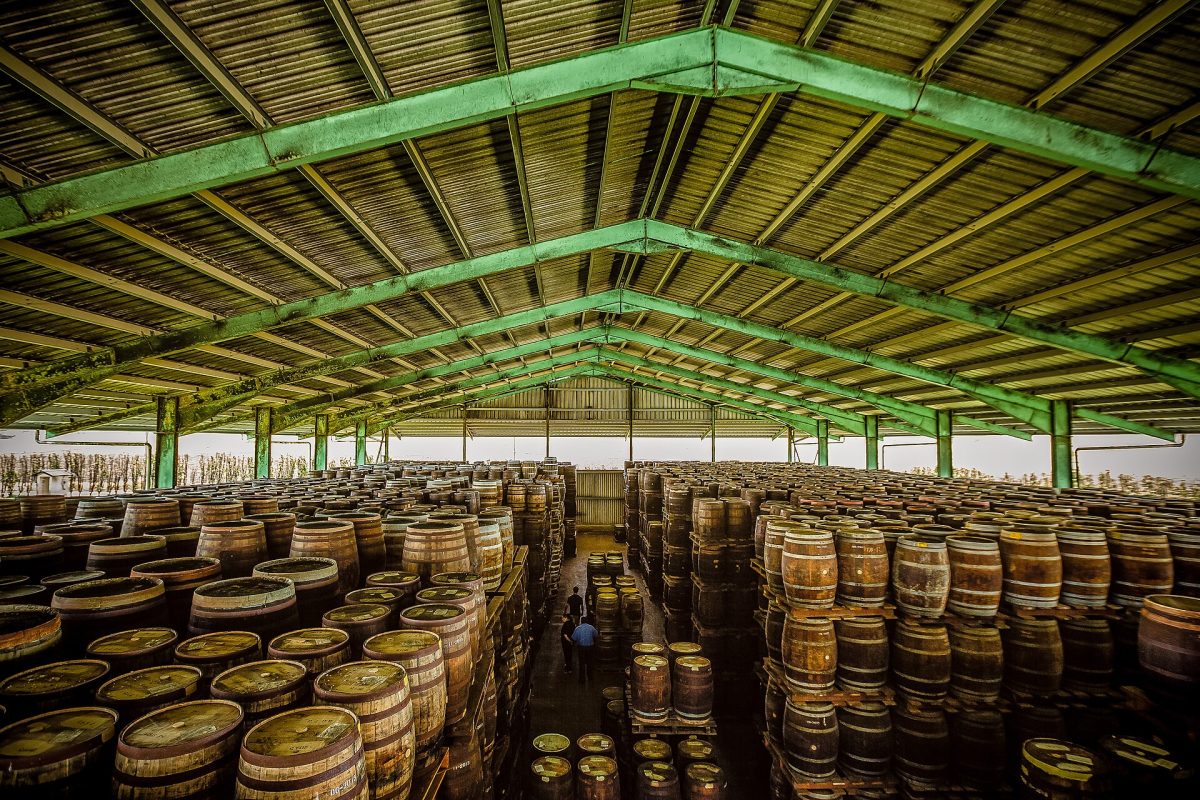
A second-fill cask is therefore not the same as a first-fill cask. A house that uses old, exhausted casks gets less color in the glass after eight years than a neighbor who buys fresh casks. Both rums are eight years old.
Goud, gold and ambré: the middle ground
Between white and dark lies the largest group, and precisely those words are not defined anywhere. Gold, oro, dorado, añejo and ambré mean in practice: it has spent time in wood, and we are not saying how long.
The Spanish-speaking houses do have their own ladder running through it. Añejo means aged, and many brands add their own steps with words such as reserva, gran reserva and extra añejo. That is house policy, not law. What a gran reserva means at one brand can be something quite different at the next.
Caramel is permitted and widely used
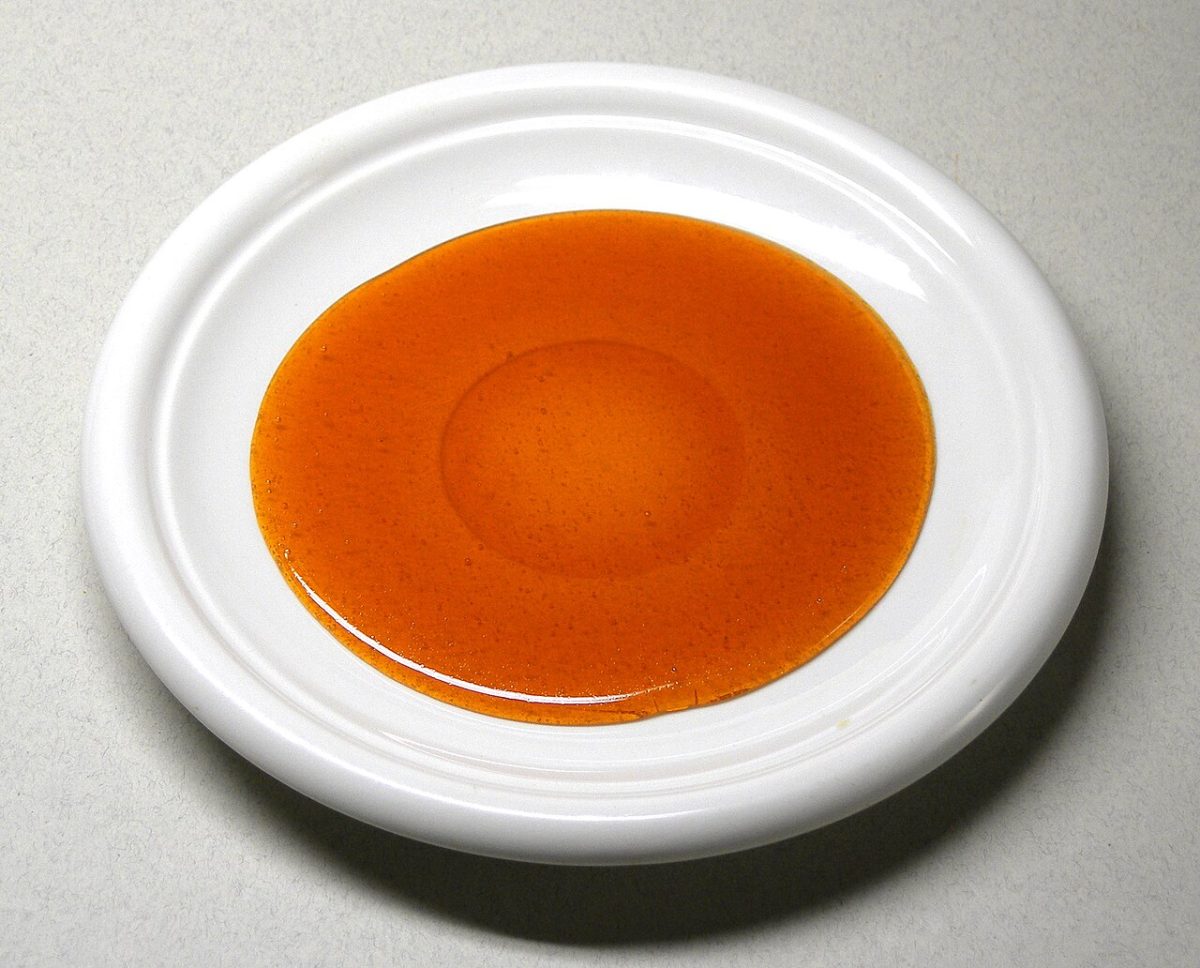
The third source is caramel colouring, E150a in the European ingredients list. That is sugar heated for so long that it becomes dark and bitter, and in small quantities its effect on flavour is negligible. For rum it is simply permitted.
The reason it is used is practical. Every batch turns out slightly different in colour, and a brand wants the bottle you buy today to look like the bottle of last year. A dash of caramel corrects that.
The consequence is that colour becomes an unreliable indicator. A dark rum can be three years old and heavily coloured, and a light rum can have spent fifteen years in an exhausted cask. There are houses that expressly state that they use no colouring. If that is not stated, you cannot know.
White rum is not necessarily unaged
This is where the biggest misconception lies. Part of the white rum on the market has indeed been matured in wood and then filtered through activated carbon. The colour is then removed, part of the flavour stays.
Besides that there is white rum that has indeed never seen a cask: agricole blanc, clairin, and the blancos that have rested in steel. These are not lighter in character, rather more fierce. The label rarely tells you which of the two you are holding.
What does tell you something: the added sugar
Besides colouring, in many countries sugar may also be added to rum, and that happens a great deal. In the trade this is called dosage. It makes a rum rounder and thicker, and it softens the sharpness of young distillate.
It is no disgrace and it does not get in the way, but it does explain why two rums of the same age can be so far apart. On Martinique, additions are prohibited under the appellation. In most other countries of origin they are not.
Where to start
The practical lesson is: do not be guided by the colour in the bottle. Look at the origin, at the age statement if there is one, and at the bottling strength. Of our 423 rums, 80 carry an age on the label. For the rest you have to go by other things.
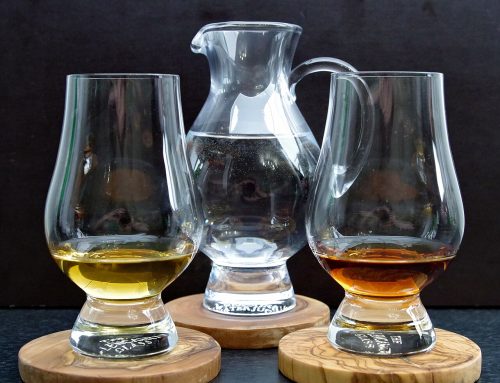
If you want to see the difference for yourself, put a white, a golden and a dark one next to each other and notice what else changes besides the colour. Drop by or call 0570 541 278, and we will explain it.
Keep browsing
The entire stock is on our rum page and in the search engine of the wine & spirits shop. Per house you can find what we carry, for example Bacardi, Ron Abuelo, El Dorado and Foursquare.
What happens in the steps before that is covered in what rum is made from. Which styles exist and how the countries relate to each other can be read in types of rum.