The shop on the Brink stocks 431 rums from 112 brands. So the question of how you drink rum cannot be settled with a single answer. A light Cuban ron from a column still is made for mixing. A heavy Jamaican pot still rum calls for a glass and nothing else.
Still, there is an approach that works with every bottle, and it always starts in the same place: taste it first as it comes from the bottle, and only then decide what to add. Below you can read what the glass does, what water and ice do, and when mixing is actually the sensible choice.
Start neat, and at room temperature
Pour two to three centilitres and let the glass stand for a moment. Rum that has just come out of a cold cupboard gives little away, because cold holds back the aroma compounds. At room temperature more is released, and within a few minutes you notice whether you are dealing with a dry, light rum or a full one.
Nose it calmly, with your mouth slightly open, and do not put your nose deep into the glass. Then take a small sip and let it rest for a moment. The first sip stings with almost every spirit; the second almost always turns out gentler. So never judge on the first.
Only once you know what is in the bottle does it make sense to add something. The other way round does not work: if you pour cola straight away, you never know what you have given up.
The glass does more than you think
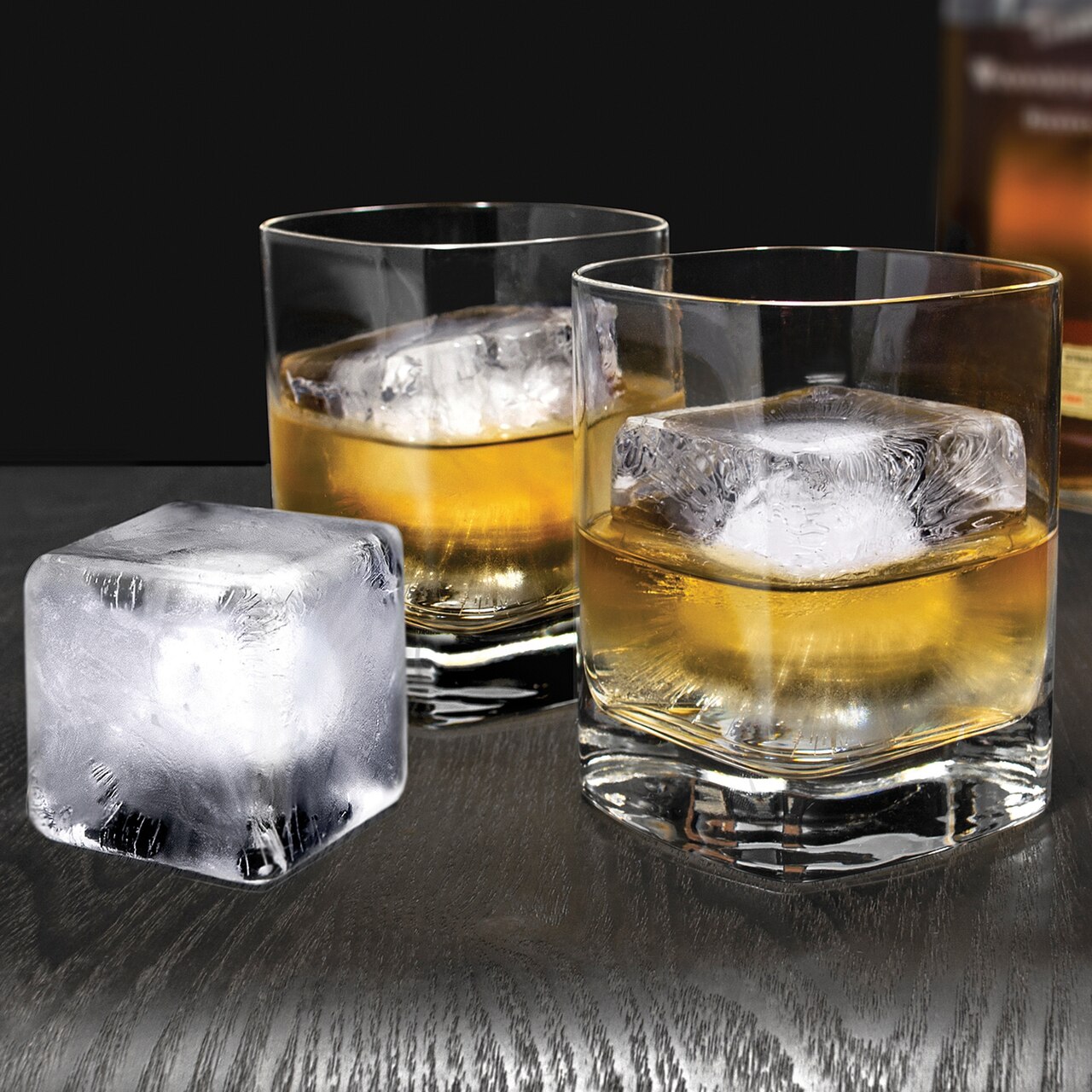
The tumbler with the thick base is the best-known rum glass. For rum on ice it is also the right glass: there is room for the block, and the wide opening lets the alcohol vapour escape instead of collecting under your nose.
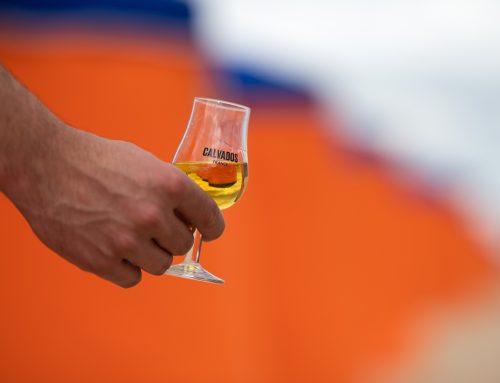
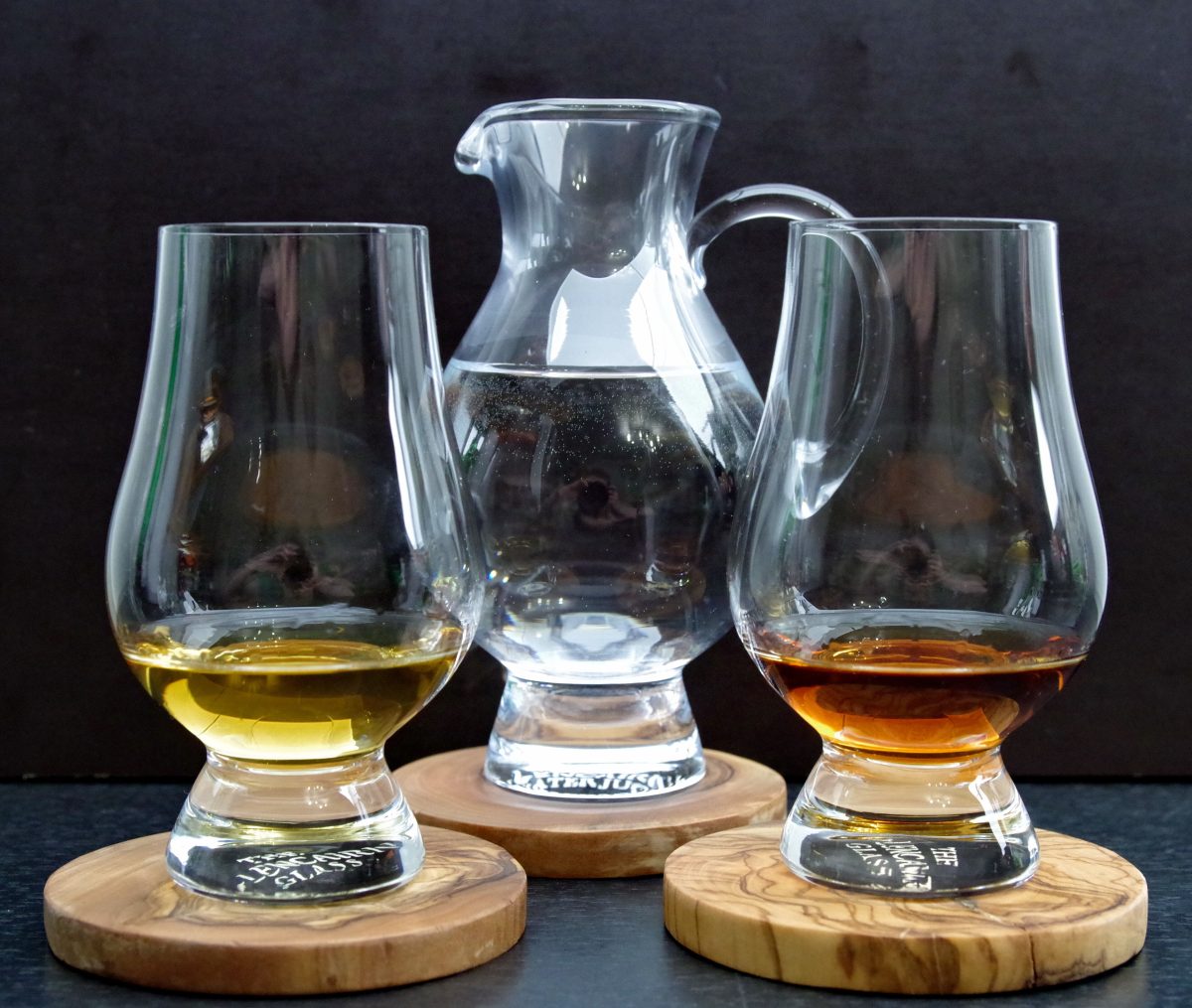
If you want to smell what is in the bottle, a tulip-shaped glass works better. The bowl gathers the aroma and the narrow rim directs it upward. It is the same glass that whisky drinkers use, and it does exactly the same job for rum; in tumbler, Glencairn or copita you can read what each model does.
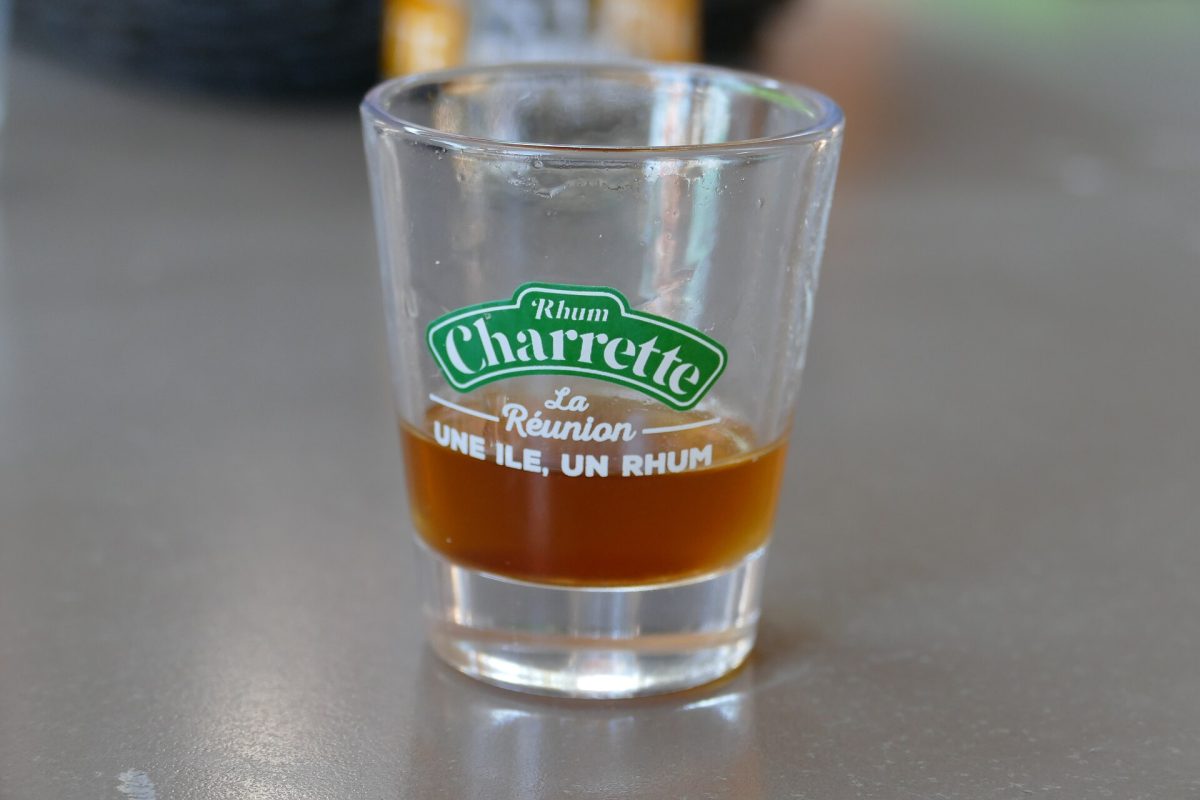
The small shot glass lets you smell nothing. That does not make it the wrong glass, but it is a choice: you drink the alcohol with it and not the rum.
Water and ice are two different interventions
A few drops of water lower the alcohol percentage just enough to release aromas that stay locked in at full strength. Start with two or three drops, taste, and repeat if the rum is not open enough yet. You can add water; you cannot take it out.
Ice does something different. It dilutes too, but above all it cools, and cold dampens the aroma. With a full, sweet rum that can be exactly the intention, and on a warm evening too. If you want to dilute without cooling quickly, take one large block instead of four small ones: less surface means slower melting.
With high-strength rum, water is not a luxury but a necessity. What designations such as overproof and navy strength mean is explained in overproof and navy strength.
Drinking it mixed is not second best
A large part of the rum shelf is made to be mixed. The light, dry style from Cuba and the rest of the Spanish school is deliberately kept clean in the column still, precisely so that lime, sugar and mint come through it.
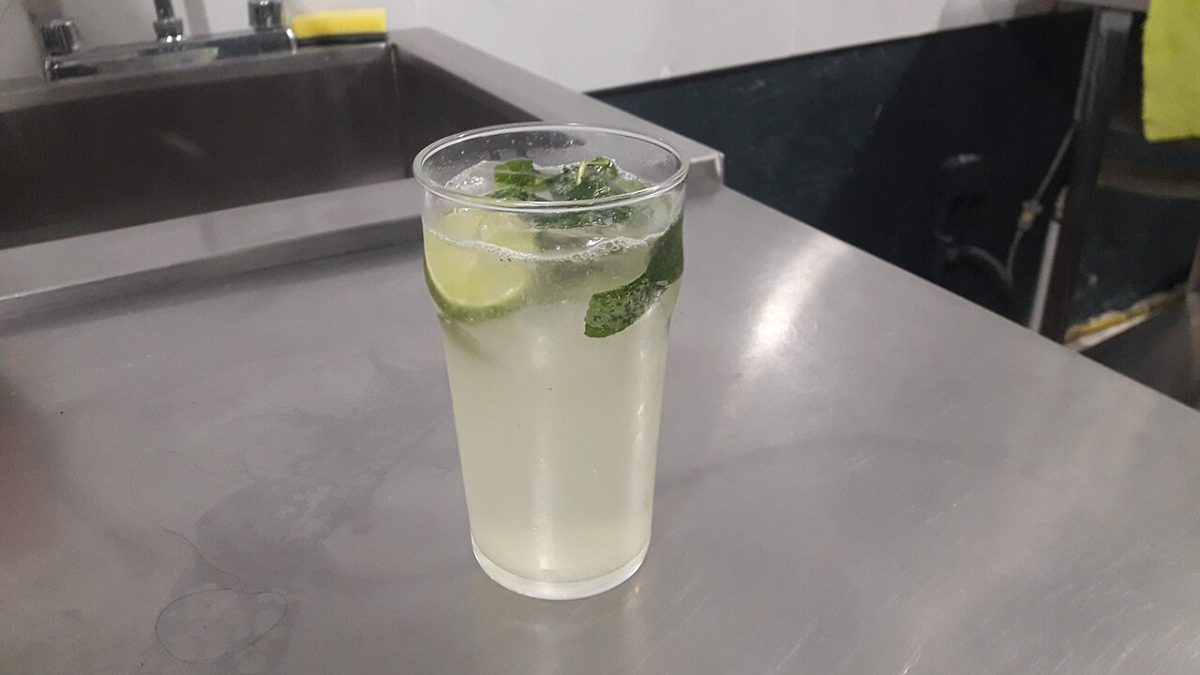
The classics each call for a different type. In a cuba libre with cola you need a rum with enough character of its own not to disappear. In a daiquiri or a mojito a white rum works better, because there is nothing to hide behind colour or sweetness. And a heavy Jamaican rum, which is almost too much neat, can fit perfectly in a punch with fruit juice.
Mixing is therefore no insult to a good bottle. Only with a rum that relies on its aroma is there little left after half a glass of cola.
What the label doesn't say
A rum bottle rarely says how it wants to be drunk, and that is because far less is laid down for rum than for whisky or cognac. Words like gold, dark, anejo and reserva are not protected styles. They say something about the intention of the house, not about a rule.
Two things are therefore more useful than the front label. The first is the country or the distillery, because that says more about the style than the colour; in white, gold and dark you can read where that colour really comes from. The second is whether sugar was added after maturation. Finishing with sugar is permitted under European rules and does not have to be on the label, and a sweetened rum drinks fuller than it seems on paper.
Anyone who wants to tell the styles apart before choosing will find them side by side in types of rum.
Where to start
You can see the difference between neat and mixed in one evening if you put two bottles side by side: a white rum meant for the shaker, and an aged one that is not. Add a glass of water, taste both neat first, and only mix afterwards.
If you are unsure which rum suits your way of drinking, walk in at the Brink or call us. Online you can search the whole shelf with the wine & spirits shop search engine, and ordering is possible in the Online shop, for example the Havana Club Anejo Especial.
Keep browsing
- The rum guide on bockje.nl, with the 431 rums from the shelf by country and by style
- Search the rum range
- What rum is made from: sugar cane, molasses, yeast and cask
- Rhum agricole: rum from fresh cane juice instead of molasses