Whisky · Explainer
What is a purifier on a whisky still?
A purifier is a small copper vessel in the lyne arm, between the still and the condenser. Heavier vapours condense in it and flow back to the still through a narrow pipe for redistillation. Only the lightest vapours pass through, which gives a lighter and cleaner distillate. The trade literature names seven Scottish distilleries with a purifier, out of more than 150 distilleries in Scotland.
In brief
The key figures
| What it is | Small copper vessel or chamber in the lyne arm |
|---|---|
| Town | Between the neck of the still and the condenser |
| How it works | Heavier vapours condense and flow back into the still |
| Effect | More reflux and more copper contact, so a lighter distillate |
| Two versions | Cooled with a water jacket, or uncooled |
| Number in Scotland | Seven distilleries named, out of more than 150 |
| Legal distillation limit | Below 94.8 percent alcohol (Scotch Whisky Regulations 2009) |
| What the law requires | Single malt in pot stills, no requirement regarding purifiers |
How does a purifier work on a whisky still?
A purifier increases reflux. Heavier vapours condense in the vessel below the lyne arm and flow back to the still through a narrow copper pipe, where they are distilled again.
The lyne arm is the copper pipe that connects the neck of the still to the condenser. The purifier intercepts the heaviest vapours before they reach the condenser, so that only the lightest vapour passes through. Scotchwhisky.com describes it as a small copper drum that the lyne arm runs through or into.
There are two versions. A cooled purifier has a water jacket with flowing water, which strengthens condensation. An uncooled purifier is in effect a pipe running from the lyne arm back to the still. The liquid that returns is called reflux.
What does a purifier do to the distillate?
The distillate becomes lighter and cleaner, because the heaviest fractions are held back and the vapour makes more contact with copper.
Ardbeg writes that the purifier on its spirit still gives more copper contact and more reflux, and links this to an interplay of fruity, floral, smoky and sweet notes. On that still, low wines of about 25 percent alcohol go to about 63.7 percent.
The effect depends on the rest of the process. Scotchwhisky.com notes for Glenlossie and Strathmill that the purifier in a grassy style actually gives an oily texture in the new distillate, and explicitly attributes that texture at Glenlossie to the purifiers.
Which Scottish distilleries have a purifier?
Difford’s Guide names seven distilleries with a purifier: Ardbeg, Glen Grant, Glenlossie, Glen Spey, Strathmill, Talisker and Tormore. Scotland has more than 150 whisky distilleries.
Glen Grant is the only one that uses purifiers on both the wash still and the spirit still. At Ardbeg the purifier sits on the spirit still; according to former management of the distillery it has been there as long as the records go back. At Talisker the lyne arm combines a large U-bend with a purifier pipe, after which the vapour rises on its way to the worm tubs.
The sources differ on the design. Whisky Science counts Glen Grant, Glen Spey and Strathmill among the water-cooled purifiers and Ardbeg, Glenlossie and Talisker among the uncooled ones. Difford’s Guide, by contrast, calls Glen Spey and Strathmill uncooled.
Does the law say anything about a purifier?
The Scotch Whisky Regulations 2009 are silent on purifiers. Article 3 requires that the distillate stays below 94.8 per cent alcohol and that single malt is distilled in pot stills.
The law regulates the outcome, not the equipment. Article 3 also prescribes that the distillate keeps an aroma and flavour that derive from the raw materials and production method used. Nothing is said about the shape of the still, the angle of the lyne arm or the presence of a purifier.
The Scotch Whisky Association confirms that single malt is distilled in copper pot stills and notes that the size and shape of the still influence the flavour, a taller still often giving a lighter distillate. That too is a description, not a rule.
Why do most distilleries not use a purifier?
A purifier only suits a house style that wants a lighter distillate. Anyone looking for a heavier distillate achieves the opposite with a descending lyne arm or a worm tub.
Reflux can be controlled in more than one way. Scotchwhisky.com explains that an ascending lyne arm lets the vapour condense in the pipe and run back, and that a steeper angle gives more reflux and therefore a lighter distillate. A descending lyne arm does the opposite: less reflux, and heavier oils that carry on to the condenser, sometimes with a nutty character.
A distillery that wants to keep its distillate heavy and oily therefore gains nothing from a purifier. Scotchwhisky.com also puts the lyne arm in proportion: it influences the character but does not determine it, and is a detail within the whole process.
How many whiskies from distilleries with a purifier are in stock in Bathmen?
In Bathmen there are 81 whiskies from distilleries with a purifier, spread over seven brands, all from Scotland, with an alcohol percentage of 40 to 61.1 percent.
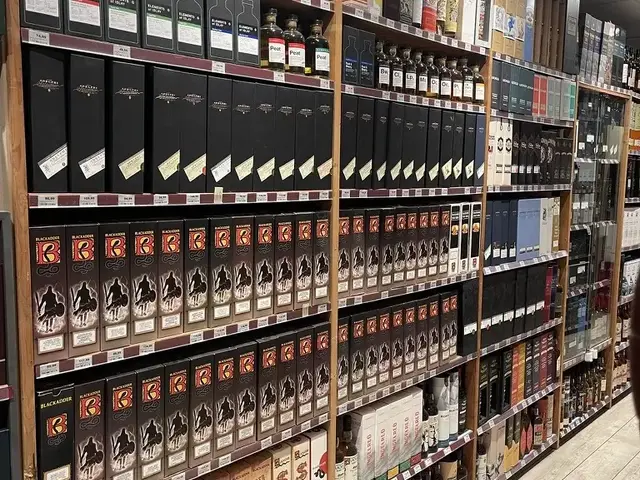
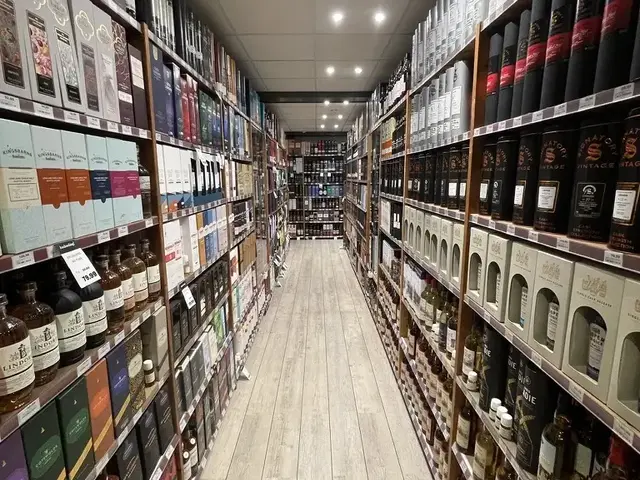
The distribution over the brands: Ardbeg 30, Talisker 25, Glenlossie 10, Tormore 10, Glen Grant 4, Glen Spey 1 and Strathmill 1. The whisky shelf on the Brink in Bathmen holds 4,026 different whiskies in total, so the purifier distilleries make up a small part of it.
All seven distilleries named by Difford’s Guide are on the shelf. Glen Spey and Strathmill each have only a single bottle, Ardbeg and Talisker the most.
From the shop in Bathmen
Which whiskies from distilleries with a purifier are on the shelf in Bathmen?
The shop in Bathmen has 81 whiskies from distilleries with a purifier, from 7 different brands. Prices range from € 15.99 to € 6,799.00. The alcohol percentage ranges from 40% to 61.1%.
- Ardbeg 10 Years Old 46% · 70 cl · Scotland
- Ardbeg 10 Years old Islay single malt whisky geschenk + 2 glazen 40% · 70 cl · Scotland
- ARDBEG 17 Years Old 40% · Scotland
- Ardbeg 17 Years Old The Legend Returns 40% · 70 cl · Scotland
- Ardbeg 19 Years Old Traigh Bhan 46.2% · 70 cl · Scotland
- Ardbeg 24 Years old Vintage 2000 Y2K Islay single malt whisky 47.8% · 70 cl · Scotland
- Ardbeg 25 Years Old 46% · 70 cl · Scotland
- Ardbeg 26 Years Old 1996 The Ultimate Private Single Cask #20 50% · 70 cl · Scotland
- Ardbeg 5 Years Wee Beastie 47.4% · 70 cl · Scotland
- Ardbeg 8 Years For Discussion 50.8% · 70 cl · Scotland
Related questions
Wat is een racked warehouse?What is a saladin box in malting?What is a sherry butt?
Short answer
Short answers to related questions
- Is a purifier the same as a condenser?
- No. At the end of the lyne arm a condenser turns all the vapour into liquid that goes to the spirit safe. A purifier, on the other hand, sends part of the vapour back to the still as liquid, before the condenser even comes into view.
- Is a purifier on the wash still or on the spirit still?
- That differs per distillery. Ardbeg has one on the spirit still. Glen Grant, according to Difford’s Guide, is the only one that uses purifiers on both stills.
- Can a purifier work together with a worm tub?
- Yes. At Talisker the vapour first runs through a U-bend with a purifier pipe and then rises on its way to the worm tubs, according to Whisky Magazine.
- Which purifier distillery has the most bottles in Bathmen?
- Ardbeg, with 30 of the 81 bottles from distilleries with a purifier. Talisker follows with 25.
- Does a purifier make a whisky legally different?
- No. The Scotch Whisky Regulations 2009 only state that the distillate stays below 94.8 percent alcohol and that single malt comes from pot stills. Purifiers are not mentioned.
The reasoning
Sources
- Secrets of the lyne arm, Scotchwhisky.com, Ask the Professor (accessed 2026-11-08)
- Glenlossie, Whiskypedia, Scotchwhisky.com (accessed 2026-11-08)
- Round the Bend, Whisky Magazine (accessed 8 November 2026)
- Single Malt Scotch Whisky Production 7: Distillation, Difford's Guide (accessed 2026-11-08)
- Scottish pot still variations, Whisky Science (accessed 8 November 2026)
- Distillation, Ardbeg Distillery (accessed 2026-11-08)
- Scotch Series 35: Purifiers, Islay Whisky Academy (accessed 8 November 2026)
- The Scotch Whisky Regulations 2009, regulation 3, legislation.gov.uk (accessed 2026-11-08)
- Single Malt Scotch Whisky, Scotch Whisky Association (accessed 8 November 2026)
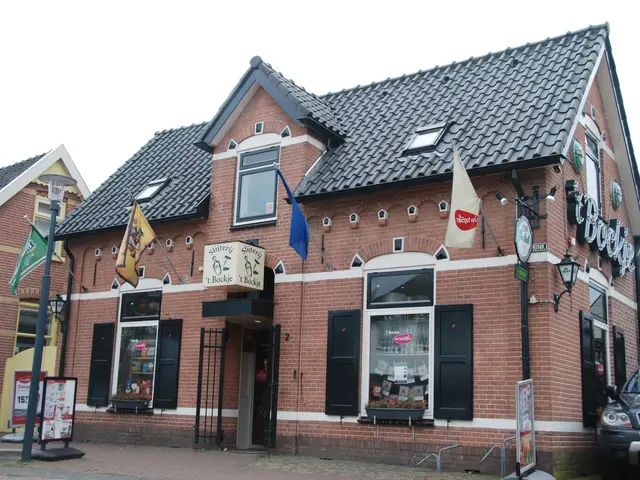
This page was written and checked by ’t Bockje Bathmen, wine & spirits shop at Brink 2 in Bathmen. Last updated on 8 November 2026.
Verkoop van alcohol onder de 18 jaar is verboden. NIX18.
 Whisky
 Beer
 Wine
 Spirits
 Aperitifs and specialities
 Alcohol-free
 Glasses and more
 Partnerships
 Whisky
 Wine
 Beer
 Gin
 Rum
 Liqueur
 Jenever
 Cognac
 For your own group
 Call
 Email
 Visit us
 Opening hours