Whisky · Explainer
What rules apply to Japanese whisky?
According to the 2021 labelling standard of the trade association JSLMA, Japanese whisky must be fermented, distilled and matured for at least three years in Japan, in wooden casks of no more than 700 litres. Malt is mandatory and the water comes from Japan. Bottling takes place in Japan at at least 40 percent by volume. The standard has applied to members since 1 April 2024 and is not law.
In brief
The key figures
| Standard | Standards for Labeling Japanese Whisky |
|---|---|
| Status | Industry agreement of the JSLMA, not a law |
| Adopted and in force | 12 February 2021, valid from 1 April 2021 |
| Transition period | Up to and including 31 March 2024 |
| Raw materials | Malt mandatory, water sourced in Japan |
| Fermenting and distilling | In a distillery in Japan, distillate below 95 percent |
| Ageing | At least 3 years in Japan, wooden cask of at most 700 liters |
| Bottling | In Japan, at least 40 percent alcohol by volume |
What may be called Japanese whisky?
Only whisky that, according to the standard of the Japan Spirits & Liqueurs Makers Association, has been fermented, distilled, matured and bottled entirely in Japan may be called Japanese whisky.
The standard is called Standards for Labeling Japanese Whisky and sets out for each step what has to happen. The mash always uses malt, optionally supplemented with other grains, and the water must be sourced in Japan. Saccharification, fermentation and distillation take place in a distillery in Japan, with the distillate staying below 95 percent alcohol.
After that the distillate goes into a wooden cask of at most 700 litres and matures for at least three years in Japan, counted from the filling of that cask. Bottling also takes place in Japan, at a minimum of 40 percent by volume. Plain caramel as a colouring is permitted.
The standard also governs the wording on the label. Japanese and whisky must stand together, with no other words in between. Designations such as type or style are not permitted for bottles that do not meet the requirements.
Why was there no clear limit before 2021?
The Japanese liquor tax law does define what whisky is, but does not require Japanese origin, so for years foreign distillate bottled in Japan came onto the market as Japanese whisky.
The trade association names that problem itself in its explanation of February 2021. It writes that products were being sold as Japanese whisky that consisted only of imported foreign whisky. And that abroad, products were being sold as whisky that did not meet the Japanese legal definition of whisky. According to the organisation, buyers thereby lost track.
The same explanation also gives the background. Japanese makers learned the trade from Scottish distillers, but in Japan there is hardly any trade in whisky stocks between producers. Japanese houses therefore developed their own methods, bought distilleries abroad and used imported whisky in their blends.
Is the standard for Japanese whisky a law?
No, the standard is a private agreement of the trade association JSLMA and binds only its members, because the Japanese government does not enforce it.
The JSLMA set the standard on 12 February 2021 and put it into effect on 1 April 2021. For bottles already on sale on 31 March 2021, a transition period applied until 31 March 2024. Since 1 April 2024, the standard has therefore applied to the members' entire range.
The organisation was founded in July 1953 with the approval of the Minister of Finance and sets voluntary labelling standards for spirits and liqueurs. That gives it authority in the trade, but no legal power. A producer who is not a member can ignore the standard.
The two largest Japanese producers, Suntory and Nikka, supported the standard when it was introduced. That explains why most of the range now meets it.
Which Japanese whiskies are on the shelf in Bathmen?
In our shop at Brink 2 in Bathmen there are 127 bottles from Japan, from 36 brands, within a whisky range of 4,017 different bottles.
The biggest Japanese brands on the shelf are Mars Komagatake with 11 bottles, Mars with 10, Chichibu with 9, Nikka with 8, Yamazaki with 7 and Hakushu with 6. Next come Akashi, Akkeshi, Kanosuke, Kura and Togouchi with 5 bottles each, and Suntory with 4.
Not every bottle from Japan meets the standard for Japanese whisky. Some bottlings contain imported whisky and are therefore simply labelled whisky or blended whisky. If you want to know what you are holding, ask us in the shop. We will go through the label with you and tell you where the bottle comes from.
Wij verkopen geen alcohol aan personen onder de 18 jaar. NIX18.
How can you tell whether a bottle meets the standard?
Since 2025, members of the JSLMA can put an official emblem on the label, with the letters JW and the words Japanese Whisky and JSLMA around it.
The organisation unveiled that emblem on 26 March 2025. It is drawn as the head of a whisky cask, with JW in the middle. The JSLMA applied for a trademark registration in Japan and wants to do the same in other countries. Members only put it on bottles that meet the labelling standard.
If the emblem is missing, that says nothing in itself. A bottle can meet all the requirements without carrying the sign, and non-members do not use it in any case. So look above all at whether the words Japanese Whisky appear as a whole on the label, and whether the bottle names the distillery, the maturation and the place of bottling.
From the shop in Bathmen
Which Japanese whiskies are on the shelf in Bathmen?
In the shop in Bathmen there are 127 Japanese whiskies from 36 different brands. Prices range from € 29.99 to € 1,999.99. The alcohol percentage ranges from 34% to 64.7%.
- Adelphi Limited Chichibu Distillery 6 Years Old 2018 #9197 56.1% · 70 cl · Japan
- Adelphi Selection The Akkeshi 3 Years Old 2018 #1004 57.7% · 70 cl · Japan
- Akashi Blended Sherry Cask Strength 40% · 70 cl · Japan
- Akashi Single Malt 5 Years Old Sherry cask 50% · 50 cl · Japan
- Akashi White Oak NAS 40% · 50 cl · Japan
- Akashi White Oak Single Malt Japanse Whisky 46% · 50 cl · Japan
- Akkeshi Daikan Blended Whisky 48% · 70 cl · Japan
- Akkeshi New Born Fondations 3 Mizunara Cask 20cl 55% · 20 cl · Japan
- Akkeshi Shosho Blended Whisky 48% · 70 cl · Japan
- Akkeshi Usui 48% · 70 cl · Japan
Related questions
Which whisky do you use for an old fashioned?Which whisky do you use for Irish coffee?Which whisky do you give as a gift?
Short answer
Short answers to related questions
- Is Japanese whisky the same as whisky from Japan?
- No. Whisky from Japan can contain imported distillate, whereas the designation Japanese whisky is reserved, under the JSLMA standard, for whisky that has been fermented, distilled, matured and bottled in Japan.
- How long must Japanese whisky mature?
- At least three years, counted from filling the cask. That maturation must take place in Japan.
- Which casks may a Japanese whisky use?
- Wooden casks with a capacity of no more than 700 litres. The standard prescribes neither a type of wood nor a previous filling.
- Is colouring allowed in Japanese whisky?
- Yes, plain caramel is permitted under the standard. The standard does not mention other colourings.
The reasoning
Sources
- Standards for Labeling Japanese Whisky, Japan Spirits & Liqueurs Makers Association (accessed 3 November 2026)
- Regarding standards for labeling Japanese whisky, Japan Spirits & Liqueurs Makers Association (accessed 2026-11-03)
- Law and Self-Regulatory Code, Japan Spirits & Liqueurs Makers Association (accessed 2026-11-03)
- Japanese Whisky Finally Gets A Definition, But It's Complicated, Whisky Advocate (accessed 2026-11-03)
- Japan Spirits & Liqueurs Makers Association (JSLMA) Reinforces Standards for Labeling Japanese Whisky With New Logo, Japan Spirits & Liqueurs Makers Association via Business Wire (accessed 2026-11-03)
This page was written and checked by ’t Bockje Bathmen, wine & spirits shop at the Brink 2 in Bathmen. Last updated on 3 November 2026.
Verkoop van alcohol onder de 18 jaar is verboden. NIX18.
 Whisky
 Beer
 Wine
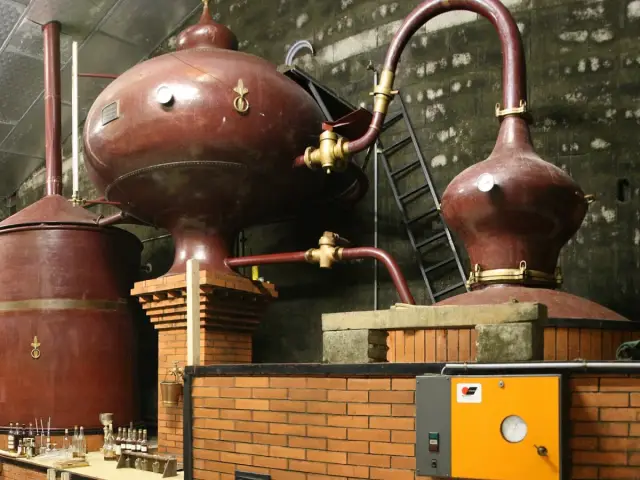 Spirits
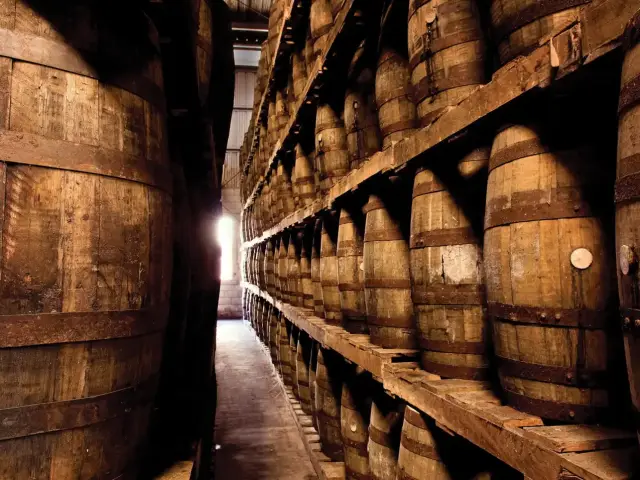 Aperitifs and specialities
 Alcohol-free
 Glasses and more
 Partnerships