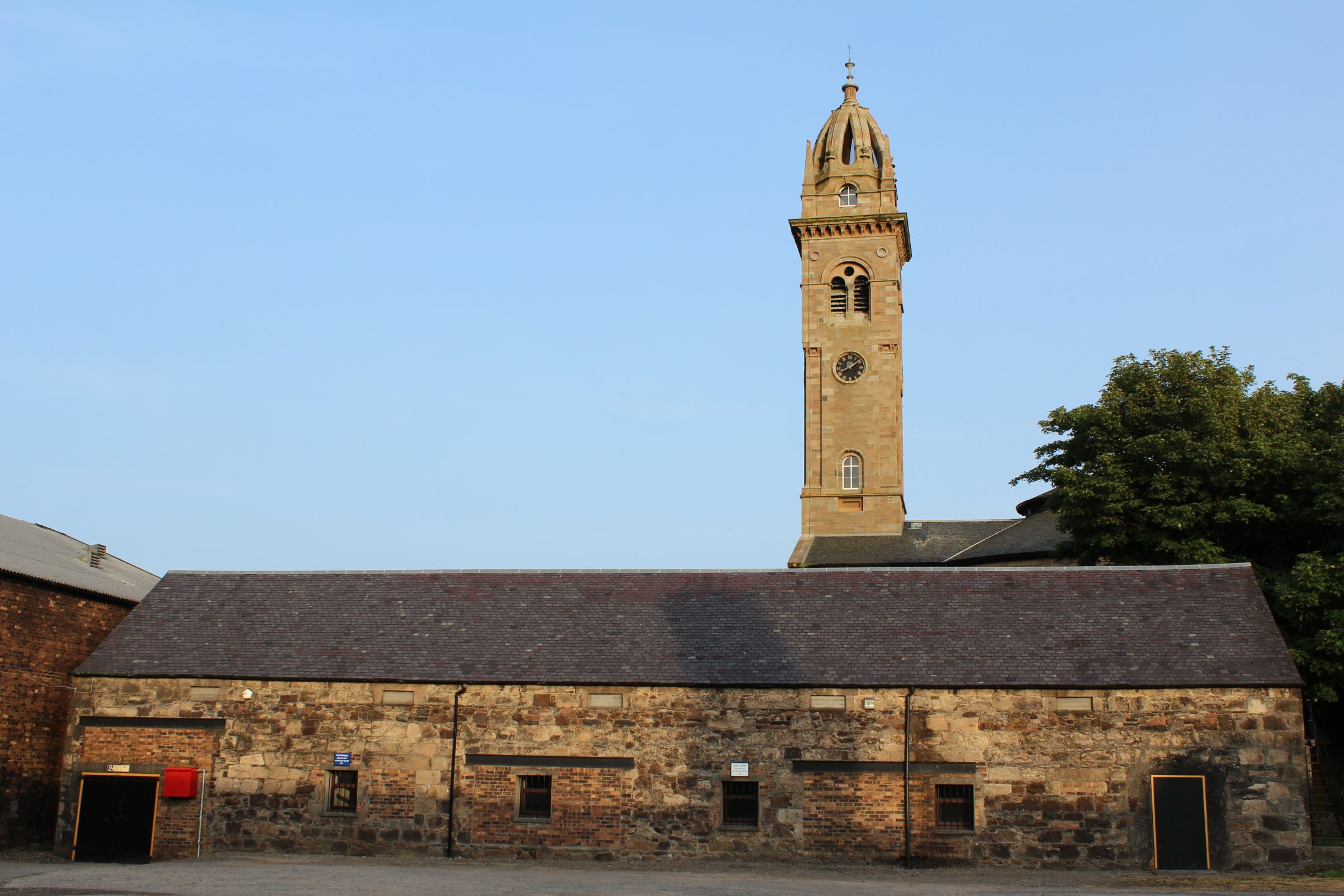
Campbeltown accounts for 68 of the 3,784 whiskies we have in Bathmen. That makes it the smallest Scottish region on our shelf, far behind Speyside with 696 and Islay with 478. Yet that handful of bottles gets more questions than many a big brand.
That is because Campbeltown is something no other Scotch whisky region is: a small town with regional status. Not a land region, not an island, but a single place at the end of a peninsula, which may put its own name on the label. How that came about is a story of rise, collapse and a few people who would not let it disappear.
The whisky capital that almost disappeared
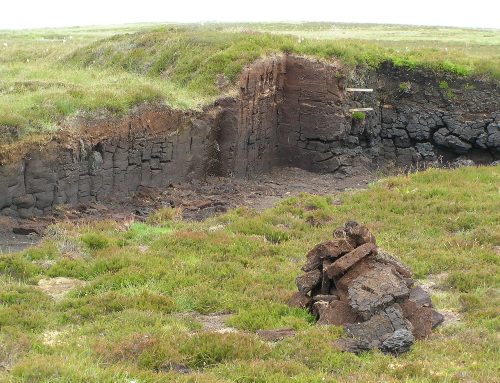
Campbeltown lies on Kintyre, the long peninsula pointing south from the west of Scotland. By land it is quite a drive; by water it was close to Ireland, to Glasgow and to the coal mines. In the nineteenth century that was exactly the right place for whisky. There was barley, there was peat, there was coal nearby and there was a harbour for shipping casks.
In 1835 there were almost thirty distilleries in that one little town. Campbeltown was called the whisky capital of the world, and in those years that was no exaggeration. Anyone walking there could smell it.
Then came the 1920s. American Prohibition knocked out the most important market, the coal mine near the town ran out and demand for the heavy Campbeltown style fell. One distillery after another closed. Of nearly thirty, only two were eventually left.
Two, and only since 2004 three again.
That is exactly the question that occupied the town for years. A whisky region with two working distilleries, is that still a region? Campbeltown has kept its status, and the arrival of a third in 2004 helped. How small the area has remained, you can see on our own shelf: 68 bottles from Campbeltown against 696 from Speyside.
Springbank, which does everything on its own site
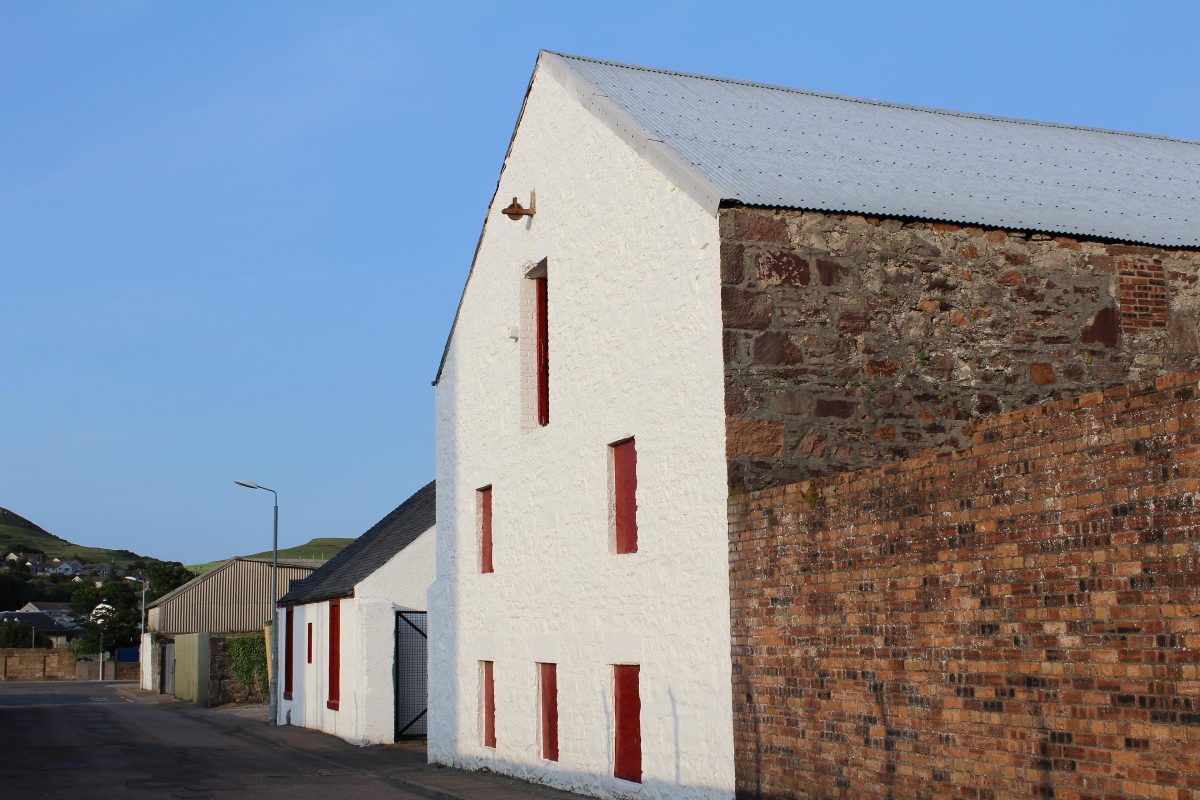
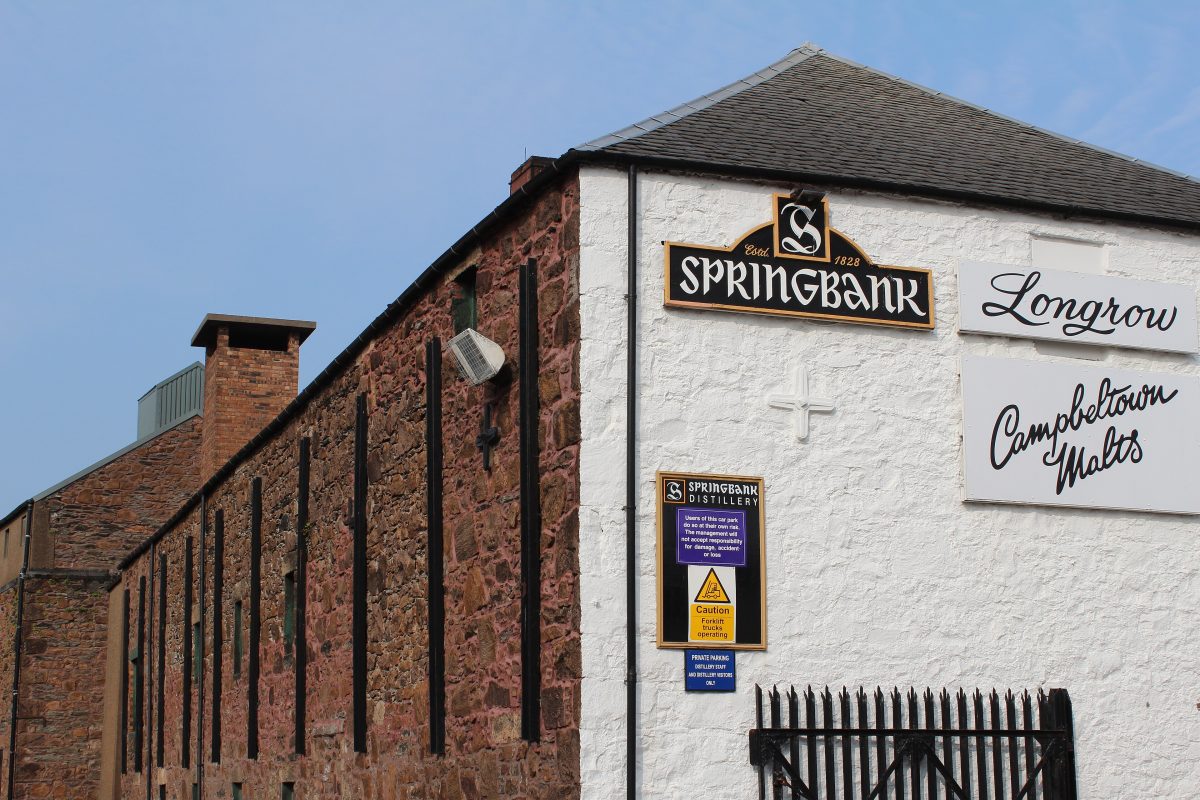
The distillery that carried the region through the lean years is Springbank, in operation since 1828 and still owned by the same family. It is the only Scottish distillery that keeps the entire process on its own site: malting, distilling, maturing and bottling all take place within the same gates.
That sounds obvious, but it is not. In Scotland virtually every distillery buys its malt ready-made from a large maltings, and bottling usually happens elsewhere, sometimes hundreds of kilometres away. Springbank still malts its own barley on a floor, turned by hand, and fills the bottles at the same address.
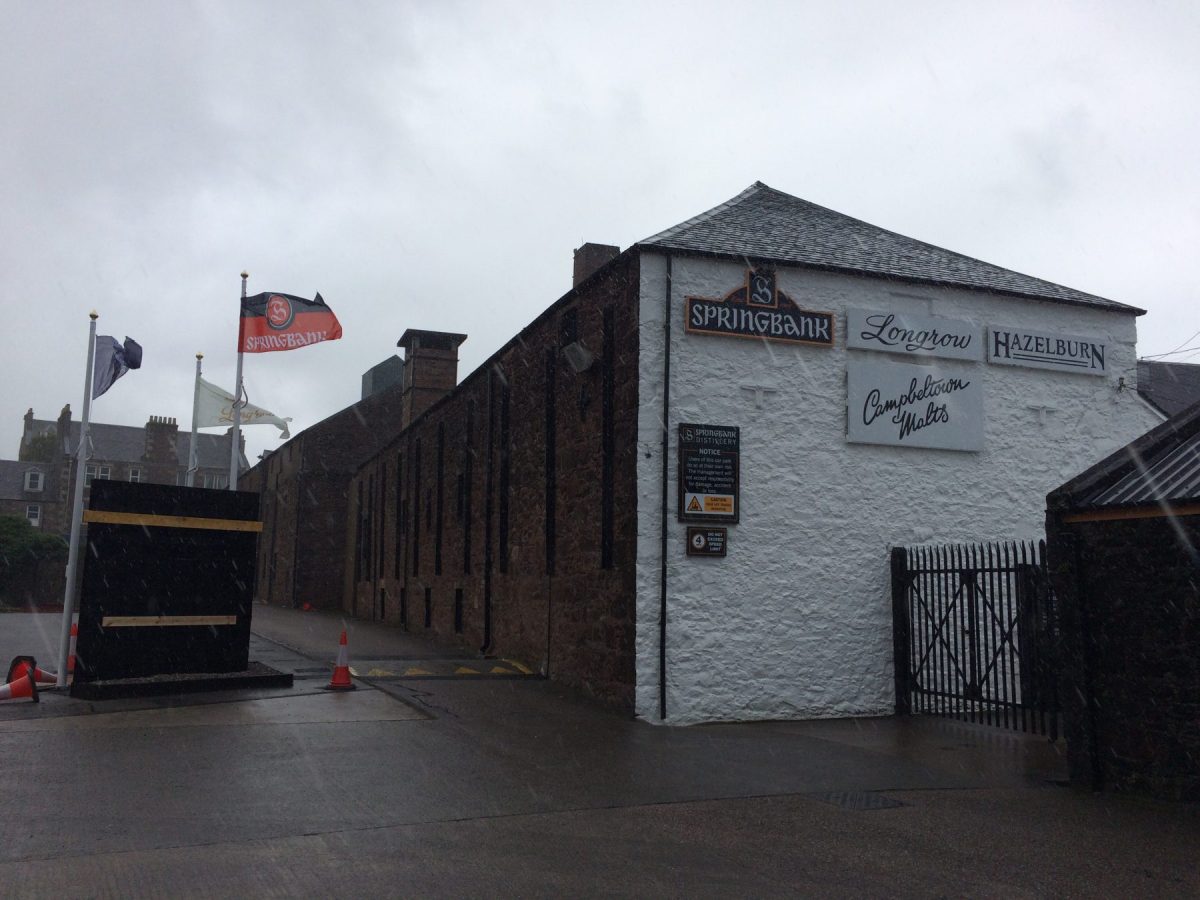
The result is that little is made. What is made goes all over the world, and a shop gets only a handful of bottles from many bottlings. That is why you rarely see a full shelf of Campbeltown, even at our shop.
Three names from one stillhouse
Anyone who puts the labels side by side sees three brand names coming from the same still house: Springbank, Longrow and Hazelburn. The same barley, the same water, the same stills. The difference lies in two dials: how often it is distilled, and how much peat smoke was used when drying the barley.
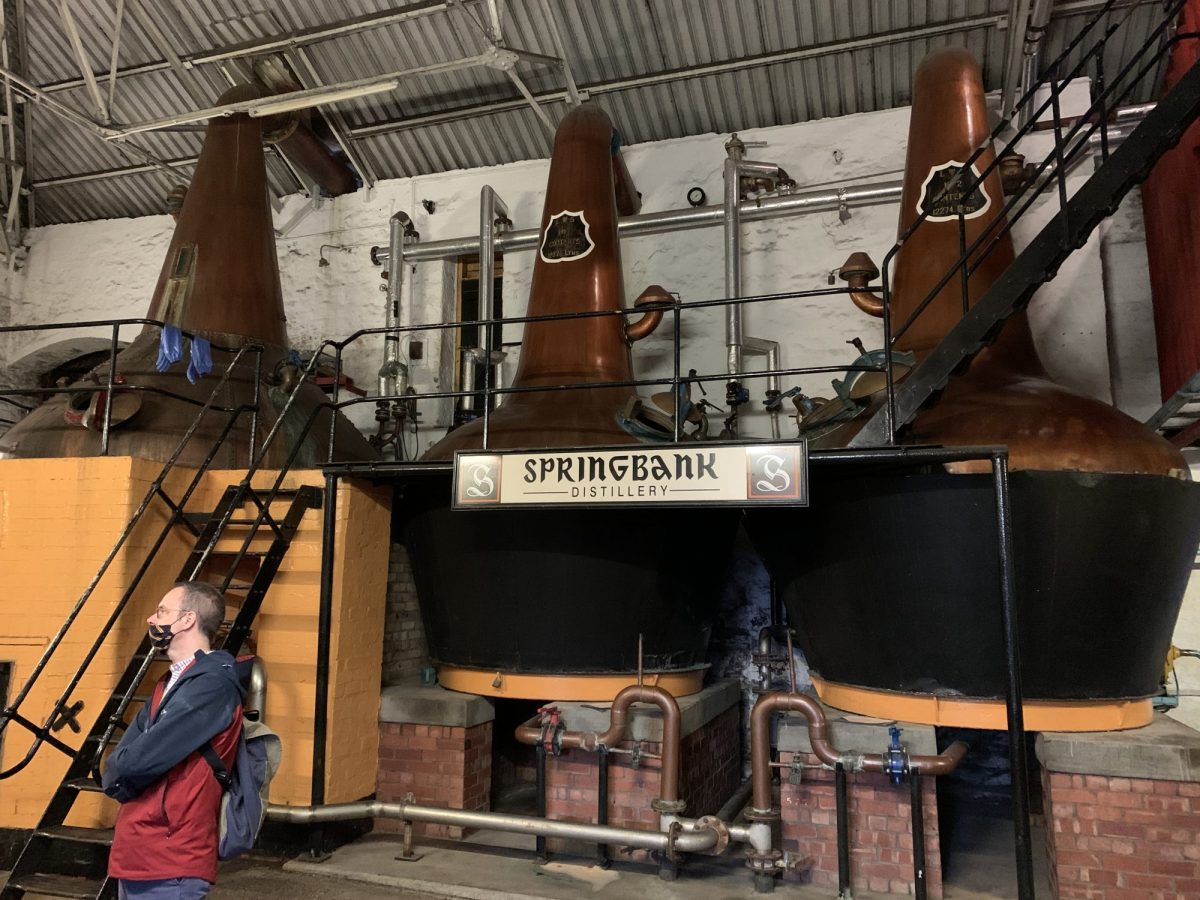
Springbank itself goes through the stills two and a half times and is lightly peated, around twelve to fifteen ppm. That two and a half is no figure of speech: part of the liquid goes an extra round. Longrow goes twice and is heavily peated, around fifty ppm, and has been made since 1973. Hazelburn goes three times and is entirely unpeated; it is the youngest of the three and has been distilled since 1997.
Triple distillation is unusual in Scotland and yields a lighter spirit. The name Hazelburn, incidentally, is borrowed from one of the distilleries that the town lost in the 1920s. Springbank kept the name alive for this style.
Glengyle back in operation, and Glen Scotia as the third
Glengyle was built in 1872 by William Mitchell, who had left Springbank after a disagreement with his brother. Production stopped in 1925, and the building stood idle for three quarters of a century. In 2000 Hedley G. Wright, a descendant of the founder, set up Mitchell’s Glengyle. After four years of renovation, the first new spirit ran on 25 March 2004.
The whisky is called Kilkerran, not Glengyle, because the name Glengyle was already registered as a trademark for a blended malt. The malt comes from the floor maltings of neighbour Springbank and is around fifteen ppm; for the Heavily Peated a more heavily peated malt is used.
The third is Glen Scotia, founded in 1832 as Scotia Distillery by Stewart, Galbraith & Co. That house weathered the difficult century on its own and was taken over by the Loch Lomond Group in 1994. In 2021 the twenty-five-year-old was named Best in Show in San Francisco.
Where to start
Campbeltown is not a region where you start with a full shelf, because there isn't one. It is rather a region where you come across a bottle and then take it home. The core bottlings are the wisest starting point: at Kilkerran the twelve-year-old, at Glen Scotia the Double Cask or the ten-year-old.
Of the 68 Campbeltown bottles we have in stock, a good number are one-offs: hand-filled bottles from the distillery itself, festival editions and single casks from independent bottlers. If you don't know which way to go, drop by or call 0570 541 278. That's what we are here for.
Keep browsing
All Scottish bottles are together on our page whisky from Scotland, where you can filter by region. For a broader look use the whisky guide or the register of all whisky brands, and for targeted searching use the search engine of the wine & spirits shop.
For each house you will find the background and the range: Springbank, Longrow, Hazelburn, Kilkerran and Glen Scotia.
If you want to see the other side of Scotland, the region that is in fact teeming with distillers, read Speyside whisky: why nowhere else has so many distillers.