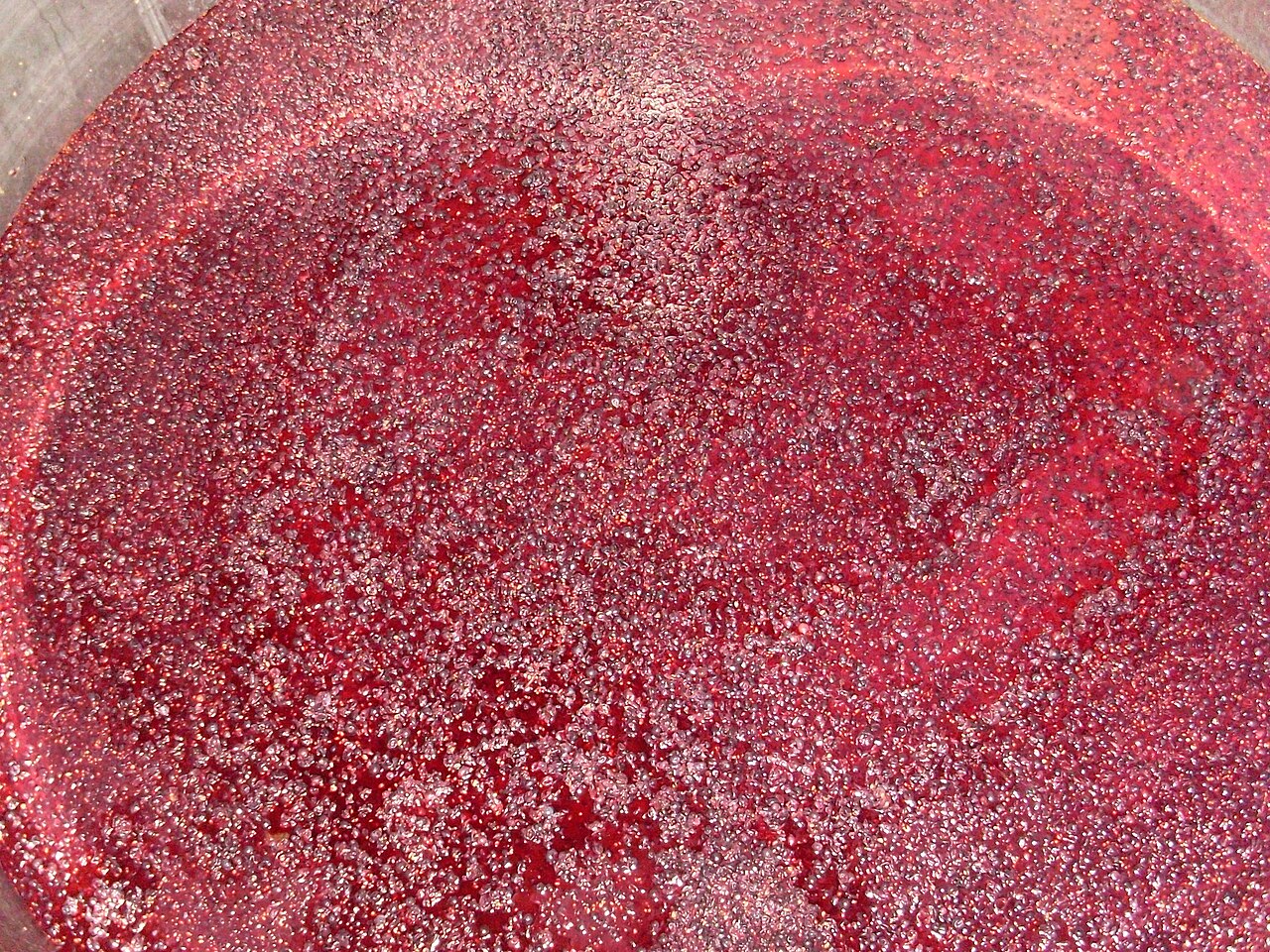
Almost every wine label carries the same line: contains sulphites. Sometimes in small letters on the back, sometimes in four languages one below the other. At the counter a question regularly follows. What is it, why is it in there, and why is it stated so emphatically?
We stock 1,082 wines from 407 wineries from 21 countries, and on almost every bottle of them that line appears. Not because winemakers have something to hide, but because the European labelling rules prescribe it as soon as more than ten milligrams per litre is in it. Below you can read what sulphite does in the cellar, how much may be in it according to the rules, and what that line on the label does and does not say.
What sulphite does in the cellar
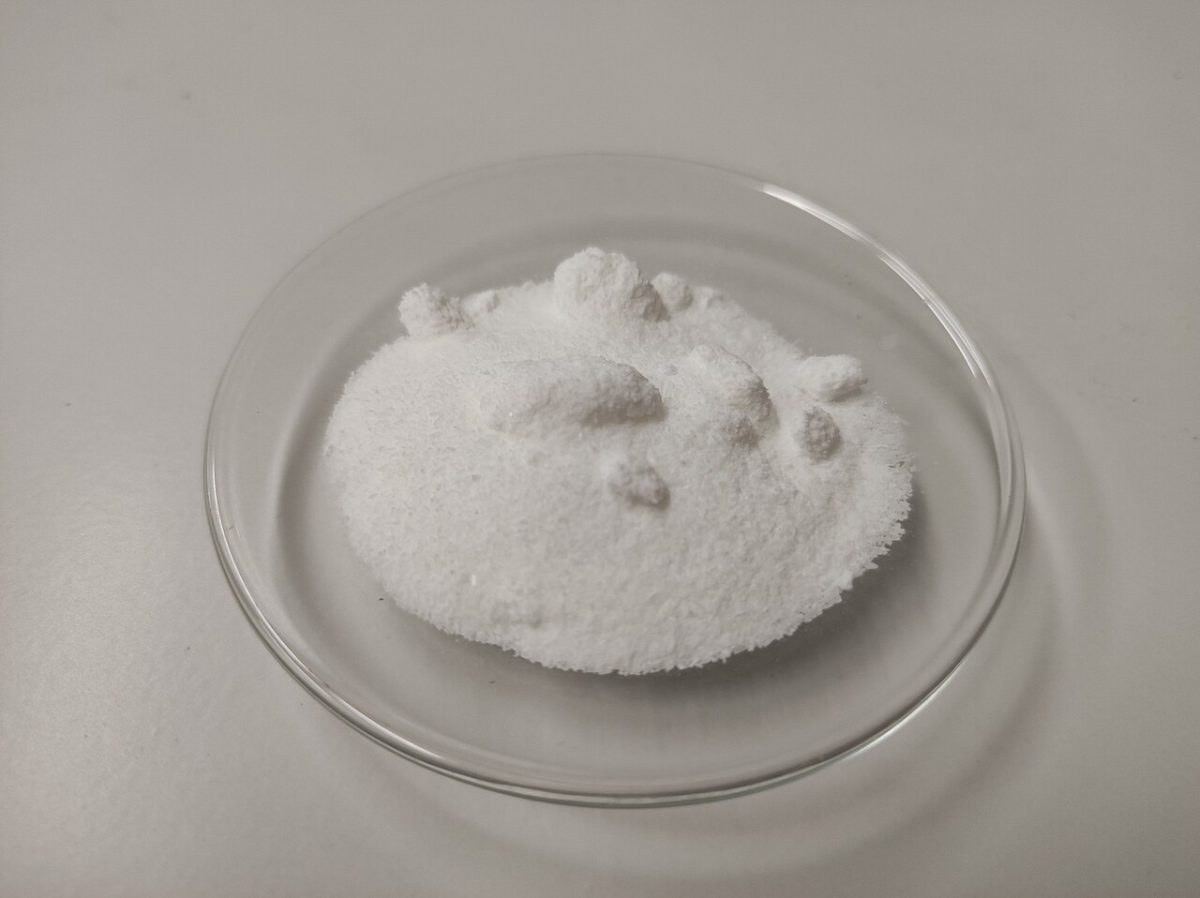
Sulphite is a collective name. It concerns sulphur dioxide and its salts, which can appear on a label as E220 to E228. Winemakers weigh it out as a white powder, dissolve it in water and add it to the must or to the wine, or they work with a solution or with the gas itself.
It does two things at once. It captures oxygen so that the wine does not oxidise, and it inhibits yeasts and bacteria that do not belong in the wine. It also binds acetaldehyde, the substance that forms when wine has been exposed to air after all and that makes a wine smell flat and old. Without something performing those tasks, a bottle changes colour and aroma on its way to the customer, and eventually it turns to vinegar.
That is why it is often used even before fermentation: as soon as the grapes are crushed, the juice is exposed to air and to everything that came in on the skins.
Every wine contains sulphite, even when nothing is added
This is the part that surprises most people. Sulphite forms naturally during fermentation. The yeast produces it itself, around ten to thirty milligrams per litre for many yeast strains, and in exceptional cases this rises to around a hundred. So it is not possible to make wine that contains no trace of sulphite at all.
Completely sulphite-free wine therefore does not exist, and a label that promises it is wrong. What does exist is wine without added sulphite: the producer has added nothing themselves and relies on a clean cellar, cool working and fast bottling. Such wines exist, they are usually more vulnerable in transport and in heat, and they call for cool storage.
Why it has to be on the label
The statement does not come from the wine world but from food legislation. Sulphite is on the European list of substances that must be declared on the label if they are present in a food, laid down in regulation 1169/2011. The threshold is ten milligrams per kilo or per litre in the end product, expressed as sulphur dioxide, and it applies to all foods, not just wine.
Because fermentation by itself already produces more than those ten milligrams, virtually every wine reaches the threshold. That is why the line appears on almost every bottle, even from makers who have added nothing. It is therefore a statement that belongs to the allergen rules, not a verdict on the wine, nor an indication of the amount. Whether someone is sensitive to sulphite is not something we can advise on: we stand behind the counter, and that is a question for your GP.
How much is allowed in, and how much is needed
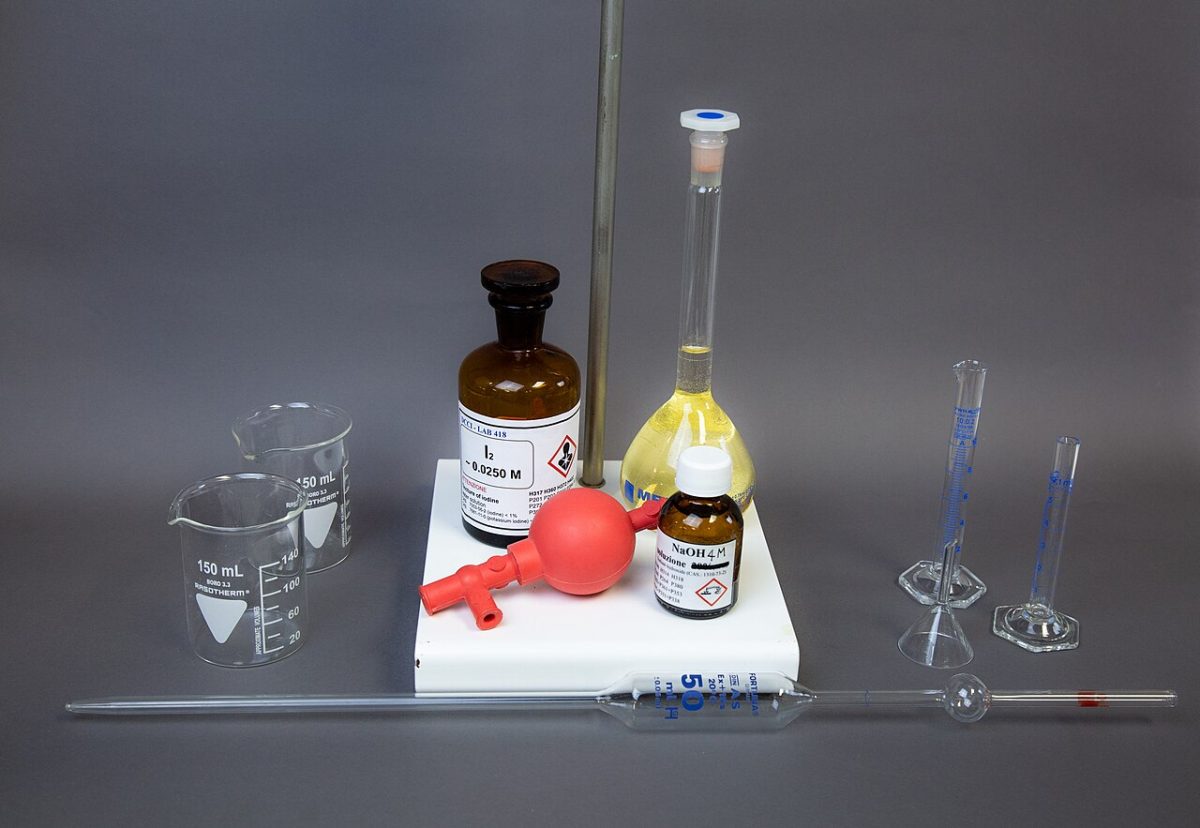
The upper limits are set out in European wine regulation 2019/934. For dry wine, 150 milligrams per litre applies for red and 200 milligrams per litre for white and rosé. If there are five grams of residual sugar per litre or more, those limits rise to 200 and 250 milligrams, and for wine with more than forty-five grams of sugar per litre 300 milligrams is permitted. In years with exceptional weather conditions, a competent authority may allow a further fifty milligrams on top.
That sweet wine may contain more is not arbitrary. Sugar left after fermentation is food for yeast and bacteria, and a sweet wine in the bottle must be protected against refermentation. For organic wine the limits are actually lower: 100 milligrams per litre for red and 150 for white and rosé, as long as it contains less than two grams of residual sugar. For other organic wines the limit is thirty milligrams lower than for the conventional counterpart. Organic therefore means a lower ceiling, not zero.
A ceiling is not a guideline. In a cellar a hundred years ago, sulphite was often the only tool against spoilage: no refrigeration, barrels that were hard to get clean, grapes arriving warm. In a modern cellar, grapes are brought in cool and processed quickly, the tanks are smooth and easy to clean, the temperature can be controlled during fermentation, and the empty space above the wine is filled with a gas instead of air. Each of those steps takes work away from the sulphite.
What the label does not say
The line on the bottle tells you less than people think. It does not say how much sulphite is in it, and that figure is not required anywhere. A bottle with twelve milligrams per litre and a bottle with a hundred and forty both get exactly the same sentence on the label.
If the statement is not there, the wine contains less than ten milligrams per litre. That does happen, but it is rare. And a bottle that advertises itself as without added sulphites is something different from a bottle without sulphites: the difference lies in the word added.
Where to start
The rules differ by style. A dry white wine such as the Farina Soave Classico falls under the 200 milligrams, while a sweet wine such as the Xavier Roger Petite Douceur falls under a more generous limit, precisely because of the sugar that remains in it. Below are four bottles from four different houses, from dry white to sparkling rosé.
Explore the wine cabinet further
A wine that smells flat is not the same as a corked wine. How you tell those two apart is in our piece on cork taint in wine. And what happens once the cork is out and the bottle has stood open for a few days, you can read in how long an opened bottle of wine stays good.
If you would like to browse the range yourself, you can do so in the search engine of the wine & spirits shop or in the wine database, where all bottles are listed by country, region and grape.
If you have a question about what is on a label, feel free to call or drop in. We are on the Brink in Bathmen and are happy to look into it with you.