The short answer to this question is on the question page What is the difference between jonge and oude jenever?. Below you can read the full story behind it.
Most of the questions we get about jenever come down to the same thing: what exactly is the difference between young and old jenever, and where does corenwijn fit in between? The answer is shorter than people expect. It comes down to one ingredient, and that is called moutwijn.
We have one hundred and eighty-eight jenevers. Of these, twenty-seven carry the word young, fifty-eight the word old and twenty-one the name corenwijn. Below, the three styles are set side by side, followed per style by a brief note on what you can expect.
The three styles side by side
| Young jenever | Old jenever | Corenwijn | |
|---|---|---|---|
| Malt wine | maximum 15% | at least 15% | at least 51% |
| Other alcohol | from any agricultural product | from any agricultural product | made 100% from grain |
| Sugar | a maximum of 10 grams per litre | maximum 20 grams per litre | maximum 20 grams per litre |
| Alcohol minimum | 35% | 35% | 38% |
| Colour | colourless | pale yellow or light brown | colourless, light yellow or light brown |
| Juniper | no requirement | must be perceptible | only natural flavourings |
| Maturation on wood | not required | not required | not required |
| On our shelf | 27 bottles | 58 bottles | 21 bottles |
All three names are protected. Jonge jenever and oude jenever are listed under their own names on the European list of protected designations, and that applies only to the Netherlands and Belgium. Jenever itself may also be made in small parts of northern France and north-western Germany, and nowhere else.
Young jenever, in brief
Jong is not an age. It is the name given after the Second World War to the new, lighter style that relies largely on neutral alcohol from a column still. At most fifteen percent malt wine, at most ten grams of sugar, colourless.
Because there is no requirement that the juniper berry must be tasted, young jenever sometimes comes closer to vodka than to the classic image of jenever. It is the style for drinking cold, for a shot alongside a beer, and for mixing.
Oude jenever, in brief
Oude is not an age either. It is the same limit of fifteen percent malt wine, but seen from the other side: at least fifteen instead of at most fifteen. Here the juniper must be perceptible, and the colour may be pale yellow or light brown.
This is the broadest category, and not by chance also the largest in our cabinet. Between a bottle at exactly fifteen per cent and a bottle with forty per cent malt wine and ten years of wood lies a world of difference, and both are called oude jenever.
Corenwijn at a glance
In corenwijn, malt wine is the main component: at least fifty-one percent. Whatever else goes in must come entirely from grain, and the minimum alcohol percentage is three points higher. It is the style closest to the genever from before the column still.
The name is written in three ways. Korenwijn with a K is the generic name. Corenwyn with a C is a brand name of one house. You will also come across Koornwyn. It is the same rule and the same drink.
What the table does not tell you
We must be honest here, because the table gives a false sense of certainty. Three things are not in it.
The first: almost everything in those columns is lower limits or upper limits, not recipes. Fifteen percent malt wine is a minimum for oude jenever, and nobody says anything about the maximum. Two bottles that are both called oude jenever can therefore be composed completely differently.
The second: colour says nothing. Oude jenever and korenwijn may be given extra colour with caramel. Light brown can therefore mean wood and it can mean colouring, and from the bottle you cannot tell.
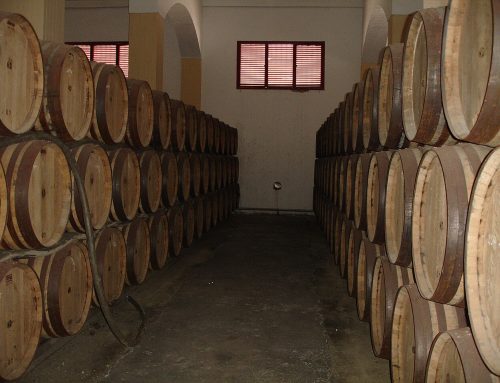
The third: maturation in wood is not compulsory for any of the three. If the label says nothing about a number of years or a type of cask, there is probably nothing to say about it. If it does, that is the house’s choice and not a legal requirement.
One more word to watch out for: graanjenever
Besides young, old and corenwijn, you will find the word graanjenever on our bottles. That is not a fourth style but an extra promise: all the alcohol in the bottle comes from grain, including the neutral alcohol. So you can have young graanjenever and old graanjenever.
Plain grain jenever without jonge or oude on the label is permitted from thirty percent alcohol. If jonge or oude is stated, the minimum is thirty-five percent.
How to set them side by side
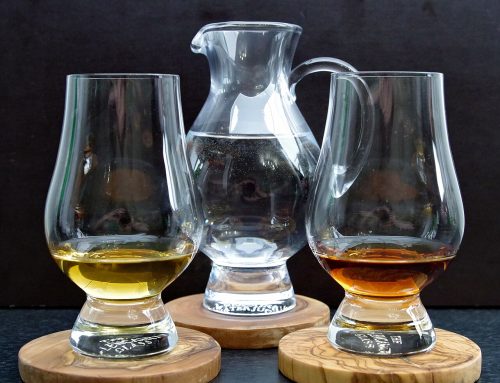
If you want to taste the difference in one evening, take three glasses: a young jenever, an old jenever and a corenwijn. Pour all three at room temperature, the young one too, because cold hides the difference.
You will notice that the jump from young to old is smaller than that from old to corenwijn. That matches the numbers: between young and old there is a single limit of fifteen percent, between old and corenwijn the difference in malt wine can rise to tens of percent.
Where to start
Start with three bottles from three houses, and keep them close in price and size, so that you compare what you want to compare. If you are not sure which, drop by or call 0570 541 278, and we will set up a selection for you.
Keep browsing
All hundred and eighty-eight bottles are on our jenever page, and you can search through them in the wine & spirits shop search engine. Per style we go deeper into young jenever, old jenever and malt wine and corenwijn.
The houses with the most bottles at our shop: Zuidam, Hooghoudt, Rutte, Bols, Kalkwijck, Filliers, Bokma and Wenneker. For the sweetened side of spirits, read Old Tom gin: the sweetened style and what the sugar does.
The blueprint behind all three styles is described in How jenever is distilled: malt wine, juniper berries and re-addition.
Alongside these three are the fruit jenevers: bessenjenever, citroenbrandewijn and vruchtenjenever.