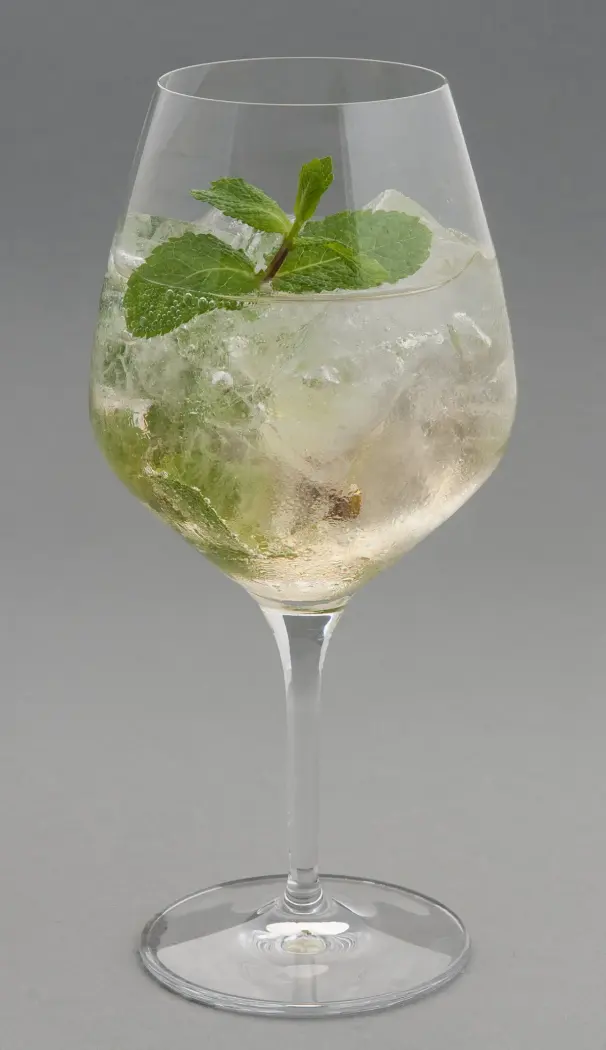
Hugo
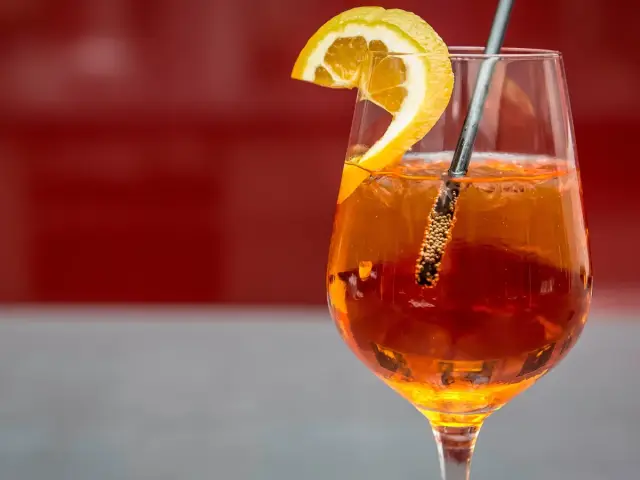
According to the producer of St-Germain, you make a Hugo with 40 ml elderflower liqueur, 60 ml dry prosecco and 60 ml sparkling water, in a large wine glass filled to the brim with ice. Stir briefly, without bruising the mint, and garnish with a sprig of mint and a wedge of lime. The drink comes from South Tyrol, where it is made with syrup. In the shop on the Brink in Bathmen there are currently 15 bottles of prosecco.
What you need
Glass: Large wine glass with room for plenty of ice. 1 cocktail
| 40 ml | Elderflower liqueur |
|---|---|
| 60 ml | Prosecco (dry) |
| 60 ml | Sparkling water |
| glass filled to the brim | Ice cubes |
| 1 sprig, or optionally 8 to 10 loose leaves | Mint |
| 1 wedge | Lime |
| to taste, see the section on syrup | Elderflower syrup (alternative to the liqueur) |
How to make it
- If you want more mint in the glass, first gently stir 8 to 10 mint leaves through the elderflower liqueur, without bruising them.
- Fill a large wine glass to the brim with ice cubes.
- Pour the prosecco and the sparkling water over the ice.
- Add the elderflower liqueur.
- Stir briefly and gently.
- Garnish with a sprig of mint and a wedge of lime; according to the producer, do not squeeze the lime.
Garnish: Sprig of mint and a lime wedge
How do you make a Hugo?
You make a Hugo by pouring elderflower, prosecco and sparkling water over plenty of ice, with mint and lime as garnish. The producer of St-Germain uses 40 ml liqueur, 60 ml prosecco and 60 ml sparkling water, in a large wine glass filled to the rim with ice.
The order is simple: first the ice, then the prosecco and the sparkling water, then the liqueur, and then a brief stir. If you want more mint, gently stir 8 to 10 leaves through the liqueur beforehand. Do not bruise the mint, because according to the producer the drink can turn bitter from it. The wedge of lime goes in as a garnish and is not squeezed.
The trade magazine Falstaff gives a recipe that is closer to the South Tyrolean bar: 15 cl prosecco, 2 cl syrup, a splash of sparkling water, mint, ice and half a lemon that you squeeze over the glass.
Which wine do you use for a Hugo?
For a Hugo, use prosecco. Both the producer of St-Germain and the trade magazine Falstaff mention prosecco, and St-Germain recommends a dry prosecco. According to the Consorzio di Tutela della DOC Prosecco, Prosecco DOC is made from at least 85 percent Glera, a grape that has traditionally grown in Veneto and originates from the village of Prosecco near Trieste. The production area covers the provinces of Treviso, Venice, Vicenza, Padua, Belluno, Gorizia, Pordenone, Trieste and Udine.
Can you also use another sparkling wine? Yes, St-Germain speaks of sparkling wine in general in the recipe. A Hugo with still white wine is sometimes asked about (wine hugo, white wine hugo), but then you miss the fizz of the prosecco. If you still want to use white wine, choose a dry white wine and top up with a little more sparkling water.
The drinks for this recipe at ’t Bockje
Elderflower liqueur 6 in the shop


Prosecco (dry) 15 in the shop


Elderflower syrup or elderflower liqueur?
Both are possible: in South Tyrol syrup is used, the producer of St-Germain uses liqueur. The recipe on the tourism portal suedtirol.com calls for three tenths elderflower syrup and seven tenths prosecco, topped up with sparkling water if desired. According to the trade magazine Class, the inventor Roland Gruber originally did not even use elderflower, but lemon balm syrup from an organic farmer in the neighbourhood.
The most important difference is the alcohol: liqueur adds alcohol, syrup does not. If you work with syrup, start with a small splash, like the 2 cl from Falstaff's recipe, and taste before adding more. With liqueur, stick to the 40 ml of St-Germain.
Can you make a non-alcoholic Hugo?
Yes, you make a non-alcoholic Hugo by replacing both the prosecco and the liqueur. Use elderflower syrup instead of the liqueur, which itself contains no alcohol, and replace the prosecco with extra sparkling water or with a non-alcoholic sparkling wine.
Please note: simply adding more sparkling water to a regular Hugo does not make it alcohol-free, it only lowers the alcohol content per glass. For an alcohol-free Hugo, all alcoholic components must go.
The rest stays the same: a large wine glass full of ice, a few mint leaves that you do not bruise, and a wedge of lime or a slice of lemon. Start with a small splash of syrup and top up with sparkling water until the ratio is to your liking. That way you get the same shape and the same glass as the ordinary Hugo, without alcohol.
Where does the Hugo come from?
The Hugo comes from Naturns (Naturno) in South Tyrol, in the north of Italy. According to the trade magazine Class, bartender Roland Gruber came up with the drink in June 2005 in his wine and cocktail bar San Zeno. The trade magazine Falstaff confirms that Gruber was mixing new creations there in 2005.
The name has no special meaning. Gruber tells Falstaff that the name came out of a brainstorm with friends: the Hugo could just as well have been called Otto, it was simply the craziest name they could think of.
The original was made with lemon balm syrup. Nowadays elderflower is the usual flavour: the tourism portal suedtirol.com calls elderflower syrup the main ingredient of the drink and now calls the Hugo the trendy drink of South Tyrol.
Which prosecco and elderflower liqueur does ’t Bockje stock?
't Bockje now has 15 bottles of prosecco, plus elderflower liqueur for the Hugo. For the liqueur you can choose from, among others, St-Germain Elderflower, the liqueur from the producer's own recipe, Bols Elderflower, De Kuyper Elderflower and Fiorente Elderflower Liqueur.
For the prosecco you could think of Bellussi Prosecco Brut DOC, Freixenet Prosecco DOC or Farina Prosecco Spumante Extra Dry. If you want a Prosecco Superiore, there is Bellussi Prosecco Superiore Valdobbiadene DOCG. If you are making just one or two glasses, a small bottle such as Bottega Prosecco Piccolo is handy.
Not sure which bottle goes with your Hugo? Feel free to call or drop by ’t Bockje at Brink 2 in Bathmen.
What customers also ask
Can a Hugo be made with white wine?
It can be done, but the sources use prosecco or sparkling wine. With still white wine you miss the fizz; top up with a little more sparkling water then.
What is the difference between a Hugo and an Aperol spritz?
Both are spritzes with prosecco, sparkling water and ice. The Hugo uses elderflower, mint and lime, the Aperol spritz Aperol and orange.
Does the lime in a Hugo have to be squeezed out?
According to St-Germain, no: the lime wedge is a garnish. In Falstaff's recipe, half a lemon is squeezed in.
Why is the drink called Hugo?
According to its creator Roland Gruber, the name came out of a brainstorm with friends. It could just as well have been Otto.
Keep browsing
Sources
- Hugo Spritz, St-Germain, stgermainliqueur.com/cocktails/hugo-spritz (accessed 15 October 2026)
- Der Hugo: Trendcocktail made in Südtirol, Falstaff, falstaff.com/en/news/der-hugo-trendcocktail-made-in-suedtirol (accessed 15 October 2026)
- Neo classic: the story behind the Hugo, Class Bar Magazine, classbarmag.com/news/fullstory.php/aid/2056/Neo_classic:_the_story_behind_the_Hugo.html (accessed 15 October 2026)
- Hugo, suedtirol.com, suedtirol.com/genuss/spezialitaeten/hugo (accessed 15 October 2026)
- Consorzio Tutela Prosecco DOC, Consorzio di Tutela della DOC Prosecco, prosecco.wine/en/ (accessed 15 October 2026)
- The whole Glera grape variety, minute by minute, Consorzio di Tutela della DOC Prosecco, prosecco.wine/en/whole-glera-grape-variety-minute-minute/ (accessed 15 October 2026)
The shop is at Brink 2 in Bathmen. Open Tuesday to Friday from 09.00 to 18.00 and Saturday from 09.00 to 17.00. For advice, call 0570 541 278 or email info@bockje.nl.
Wij verkopen geen alcohol aan personen onder de 18 jaar. NIX18.
 Whisky
 Beer
 Wine
 Spirits
 Aperitifs and specialities
 Alcohol-free
 Glasses and more
 Partnerships