Beer · Explainer
How is beer made?
Beer is made from water, malt, hops and yeast. The malt goes into the mash tun with warm water, where enzymes convert starch into sugars at 62 to 67 degrees Celsius. The separated wort boils for 60 to 90 minutes with hops. Then yeast converts the sugars into alcohol: bottom-fermenting at 8 to 11 degrees, top-fermenting at 18 to 23 degrees. Finally the beer matures.
In brief
The key figures
| Raw materials | Malt, hops, brewing water and yeast; plus other starch- and sugar-containing raw materials |
|---|---|
| Legal malt share | At least 60 percent of the extract content of the wort from barley or wheat malt |
| Mash temperature | 62 to 67 degrees Celsius; around 65 degrees the enzymes are most active |
| Boiling time of the wort with hops | 60 to 90 minutes |
| Fermentation temperature, top-fermented | 18 to 23 degrees Celsius |
| Fermentation temperature, bottom-fermented | 8 to 11 degrees Celsius |
| Maturing after the primary fermentation | A few days to a few weeks |
| Water consumption | On average 4 litres of water per litre of beer at Dutch brewers |
What steps does the brewing of beer consist of?
Brewing follows a fixed chain: malting, mashing, separating the wort, boiling with hops, cooling, fermenting, maturing and filling.
- Malting. Barley is steeped, left to germinate and then dried. The darker the malt, the darker the beer.
- Mashing. The ground malt goes into the mash tun with warm water. Enzymes convert the starch into sugars.
- Separating the wort. The sweet liquid, the wort, is separated from the spent grain.
- Boiling with hops. The wort comes to the boil and is given hops for the aroma.
- Cooling. The boiled wort is quickly cooled to fermentation temperature.
- Fermentation. Yeast converts the sugars into alcohol and carbon dioxide.
- Maturing. The beer matures for a few days to a few weeks.
- Filling. After that the beer goes into bottles, kegs or cans.
Which raw materials may go into beer?
The Warenwetbesluit Gereserveerde aanduidingen permits malt, other starch- and sugar-containing raw materials, hops, brewing water and yeast.
The law sets a hard limit on the malt share: at least 60 percent of the extract content of the wort must come from barley or wheat malt before fermentation. The brewing water must meet the requirements for drinking water; the mineral composition and the acidity may be adjusted for the brewing process.
Fruit, fruit juices and flavourings are only permitted for beers that are not pils. According to the same decree, the designation bier may only be used for a drink obtained after alcoholic fermentation of wort.
Why is the mashing temperature so narrow?
At 62 to 67 degrees Celsius the enzymes from the malt break the starch down into fermentable sugars; around 65 degrees the starch gelatinises and the amylases are at their most active.
With decoction mashing the brewer starts lower, around 35 to 40 degrees, and raises the temperature in two or three steps to 65 degrees. Starch sources other than malt gelatinise between 55 and 65 degrees.
After mashing, the grain bed is rinsed with water at about 70 degrees. In a lauter tun, separating the wort takes about two and a half hours.
How long does the wort boil with hops?
The wort boils for 60 to 90 minutes with hops.
During that boil the hops go into the wort and give the beer its aroma. Right after boiling, the wort is cooled quickly so the yeast can be added.
What is the difference between bottom-fermented and top-fermented beer?
Bottom-fermenting yeast works at 8 to 11 degrees Celsius and sinks to the bottom of the fermentation vessel; top-fermenting yeast works at 18 to 23 degrees and floats on top.
Pils is a bottom-fermented beer. After the main fermentation the beer matures for a few days to a few weeks before it is ready. Traditional European lagers are held at 8 to 10 degrees throughout fermentation.
The shop at the Brink in Bathmen stocks 1,071 beers. For 616 of them the beer style is recorded, including 39 pils, 96 blond, 80 seasonal beer, 60 tripel, 53 IPA, 29 wit and 21 weizen. If you are looking for a particular style, you are welcome to drop by or call.
How much water does a litre of beer take?
Dutch brewers use on average 4 litres of water per litre of beer.
That is 19 percent less than in 2005.
Bier blijft een alcoholhoudende drank. Wij verkopen geen alcohol aan klanten onder de 18 jaar: NIX18.
From the shop in Bathmen
Which Dutch beer can be found in Bathmen?
The shop in Bathmen stocks 547 bottles of beer from Dutch breweries, from 104 different brands. Prices range from € 0.90 to € 199.99. The alcohol percentage ranges from 0.2% to 33%.
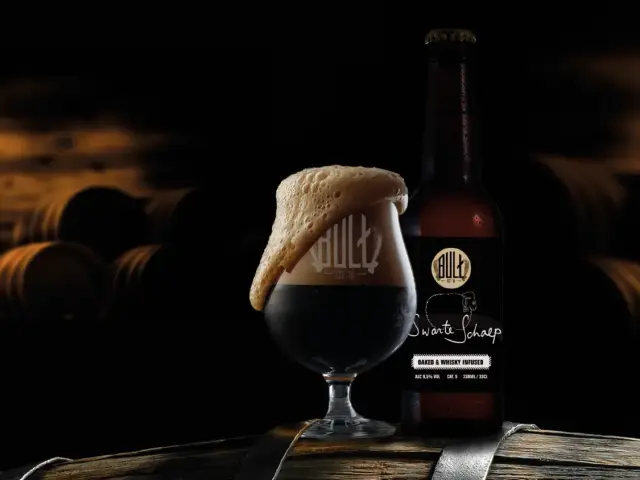
- 't Zwarte Schoap Bliejschoap! Tripel 8.7% · 33 cl · Netherlands
- 't Zwarte Schoap Blond Gezelschoap 5.6% · 33 cl · Netherlands
- 't Zwarte Schoap De Verschoappeling Pale Dubbel Bock 8.4% · 33 cl · Netherlands
- 't Zwarte Schoap Het Lam Oaked Quadrupel 10% · 33 cl · Netherlands
- 't Zwarte Schoap Het Lam Oaked Quadrupel 10% · 75 cl · Netherlands
- 't Zwarte Schoap Niej Schoap! IPA 6% · 33 cl · Netherlands
- 't Zwarte Schoap Vriendschoap Dunkelweizen 5.2% · 33 cl · Netherlands
- Alfa Edel Pils 5% · 720 cl · Netherlands
- Amstel Bright 5% · 27 cl · Netherlands
- Azvex CraftMaster Glass Netherlands
Related questions
How much alcohol is in beer?How many beer styles are there?How many bottles of drink do you need for a party?
Short answer
Short answers to related questions
- What is wort?
- Wort is the sweet liquid that is separated from the spent grain after mashing. Only after alcoholic fermentation of wort may a drink be called beer.
- Is pils bottom-fermented or top-fermented?
- Pils is bottom-fermented. The yeast works at low temperature, around 8 to 11 degrees Celsius, and sinks to the bottom of the fermentation vessel.
- May there be fruit in beer?
- Under the Warenwetbesluit Gereserveerde aanduidingen, fruit, fruit juices and flavourings are only allowed in beers that are not pils.
- Why is there hop in beer?
- Hops go into the wort during boiling and give the beer its aroma. The law names hops as one of the permitted raw materials.
- How much water goes into a litre of beer?
- Dutch brewers use on average 4 litres of water per litre of beer, 19 percent less than in 2005.
The reasoning
Sources
- Hoe wordt bier gemaakt, Nederlandse Brouwers (accessed 2026-11-04)
- Water, Nederlandse Brouwers (accessed 2026-11-04)
- Warenwetbesluit Gereserveerde aanduidingen, artikel 7b, Overheid.nl, wetten.overheid.nl (accessed 2026-11-04)
- Beer: Mixing the mash, Encyclopaedia Britannica (accessed 2026-11-04)
- Fermentation Controls: Temperature, White Labs (accessed 2026-11-04)
This page was written and checked by ’t Bockje Bathmen, wine & spirits shop at Brink 2 in Bathmen. Last updated on 4 November 2026.
Verkoop van alcohol onder de 18 jaar is verboden. NIX18.
 Whisky
 Beer
 Wine
 Spirits
 Aperitifs and specialities
 Alcohol-free
 Glasses and more
 Partnerships