The short answer to this question is on the question page What is the difference between advocaat and egg liqueur?. Below you can read the whole story behind it.
We keep advocaat separate from the liqueurs, with ten bottles in that section. Six brands: four Dutch, one Belgian and one Italian. And almost every week we are asked whether advocaat and egg liqueur are the same thing.
The answer is more surprising than you might think. On the label they are one and the same word. And yet that section holds three kinds of products that really do differ, only the line runs somewhere other than most people think.
Legally, advocaat and egg liqueur are one category
In European Regulation 2019/787, category 39 bears the name egg liqueur or advocaat or avocat or advokat. Four words for exactly the same drink. A maker may choose which word to put on the bottle, and that is a question of language, not of product.
The requirements are strict, though. The drink must be made from quality egg yolk, egg white and sugar or honey. It must contain at least 150 grams of sugar or honey per litre, expressed as invert sugar. And there must be at least 140 grams of pure egg yolk per litre of finished product.
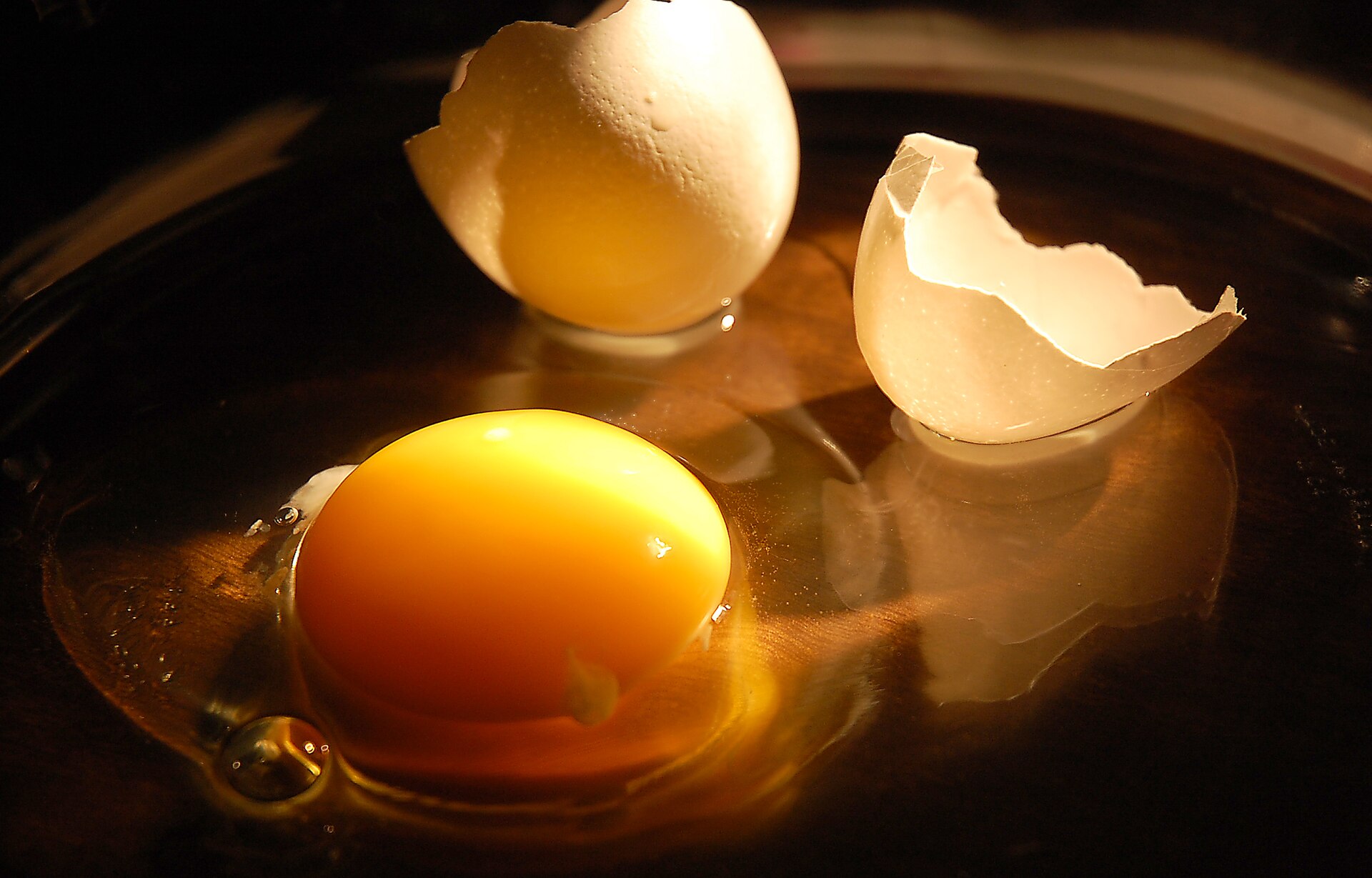
That last figure is the heart of the matter. A hundred and forty grams of egg yolk per litre is a lot. A hen's egg yields roughly fifteen to twenty grams of yolk, so you are quickly at around eight egg yolks per litre before you even start on the rest.
The real dividing line is called liqueur with egg
Directly below advocaat, the same regulation lists category 40: liqueur with egg. That is the designation most people mean when they say egg liqueur, and that is where the difference that does matter lies.
Liqueur with egg has the same sugar requirement of 150 grams per litre. But the minimum egg yolk content is 70 grams per litre, exactly half. The minimum alcohol content is one percent higher, at fifteen instead of fourteen. And the flavouring rule is stricter: for liqueur with egg only foodstuffs, natural flavouring substances and flavouring preparations may be used, while category 39 also allows ordinary flavouring substances.
In short: half as much egg, slightly more alcohol, slightly stricter rules on flavourings. Two bottles that look alike and both taste of egg can therefore fall into different categories. What tips the balance is the amount of yolk, and that is not stated in figures on the label. The legal name is.
Thick and thin: the same egg, a different part of it
There is also a distinction that is not in the law at all but is the most noticeable in practice. Thick advocaat is made with only the yolks and is so firm that you eat it with a spoon. Thin advocaat is made with the whole egg, including the white, and can be poured.
Both fall into the same category, because the regulation simply names egg white as a permitted ingredient. The thin version has traditionally been made mainly for export, because eating it with a spoon has caught on little outside the Netherlands.
With us, that difference stands side by side on the shelf. The thin version we stock is at 17.2 percent, the thick versions are at 14 percent. That is no coincidence, and that is where the next number comes in.

Why it so often says exactly 14 percent
For advocaat the regulation prescribes a minimum alcohol content of fourteen percent by volume. That is lower than for virtually all other liqueurs, where fifteen is the lower limit.
That one percent has big consequences in the Netherlands. The Alcohol Act classes drinks of fifteen percent by volume or more as spirits, and spirits may only be sold to private customers by a wine and spirits shop. Everything below that is a low-alcohol drink and may also be sold in the supermarket.
Advocaat at fourteen percent therefore falls just on the right side of that line. Of the ten bottles in our advocaat section, seven are at exactly fourteen percent. That is not a choice of taste but a sales choice.
What falls outside the category
In the same section there is a bottle at eight percent. That is below the fourteen percent the regulation requires, so it may not carry the name advocaat. It is an egg drink, and that is exactly what it says on it.
That group is bigger in the Netherlands than you might think. There are egg drinks with less brandy, usually without yellow colouring and therefore lighter in colour. We keep them in the same section because you use them in the same way, but legally they are something else.
And there is another difference that is visible on the label. Egg drinks with little alcohol are highly perishable from a microbiological point of view, and must therefore carry a use-by date beginning with use by. An ordinary liqueur above ten percent does not need to carry a date at all.
So how do you recognise it on the bottle itself? Look for the legal name, which is separate from the brand name and usually in small print on the front or back label. If it says advocaat, advokaat or egg liqueur, the requirement of 140 grams of egg yolk per litre applies. If it says liqueur with egg, it is half that. If it says egg drink, or only a brand name with a percentage below fourteen, the bottle falls outside both categories.
Where to start
If you want the spoon version, look at the thick versions at fourteen percent. If you want something you can pour or drizzle over something, the thin version is more practical. And if you are looking for something in the same corner but without egg, you end up with the cream liqueurs, of which we stock 34.
Drop by in Bathmen or call 0570 541 278 if you want to know exactly what is in stock now.
Keep browsing
The whole group is together on our page advocaat, with background and range per house: Warninks, Cooymans, Zwarte Kip and Filliers. The cream liqueurs can be found under liqueur, with Baileys, Dooley’s and Amarula. You can search yourself with the search engine for our range.
We wrote about the fifteen percent limit that advocaat stays just below in Liqueur or likorette. How long such a bottle stays good after opening is in How long an opened bottle of liqueur stays good.
How long such a bottle keeps is explained in how long advocaat stays good.