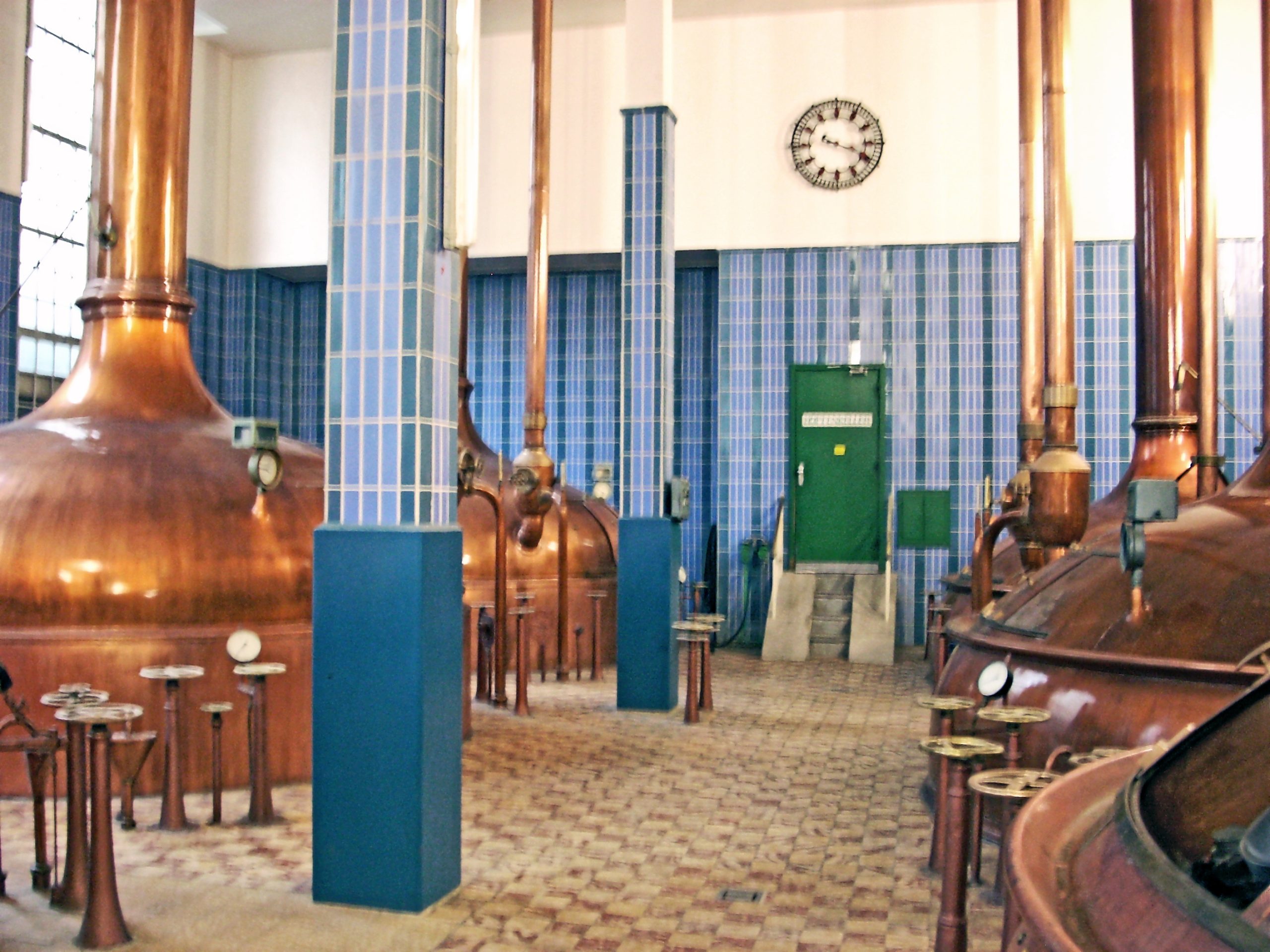
There are 892 beers in our shop in Bathmen, and behind almost all of them lies the same sequence of steps. Water, grain, hops and yeast. What separates a pilsner from a tripel is each time a choice within that sequence.
There are nine steps: malting, milling, mashing, filtering, boiling, cooling, fermenting, conditioning and bottling. A whisky distiller does the first half of those in exactly the same way. Only at fermentation do the two trades part ways.
Malting and milling: the grain becomes sugar
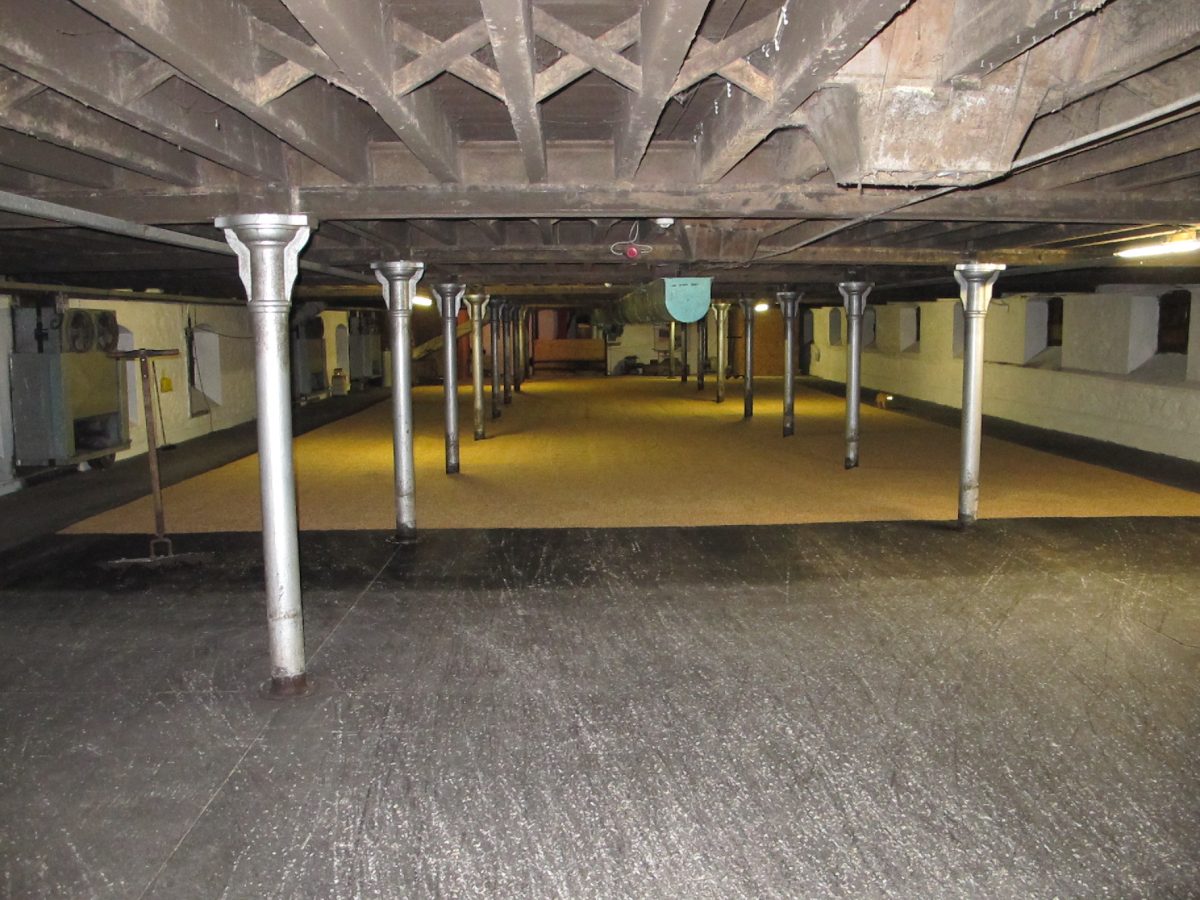
Barley is full of starch, and yeast can do nothing with it. The starch must first become sugar, and the grain takes care of that itself as soon as it thinks it may start growing. So the barley is steeped, spread out and left alone until it germinates. This releases the enzymes that can break down the starch.
Once there is enough enzyme, germination is stopped by drying the grain in a kiln. The temperature determines the colour and a large part of the flavour. Low-temperature drying gives pale pilsner malt, which retains so much enzyme that it can also carry other grain along. Warmer gives Munich and caramel malt, with bread and toffee notes. Proper roasting gives chocolate malt and black malt, from which a stout gets its colour and its coffee side. A single mash often contains three or four types mixed together.
The malt then passes through a mill. That is more delicate than it sounds: the grain must break open, but the husk must stay as intact as possible. Those husks will soon form the filter bed that the liquid has to flow through. If you grind too fine, nothing flows through any more and the whole brewery comes to a standstill.
Mashing and filtering: from mash to wort
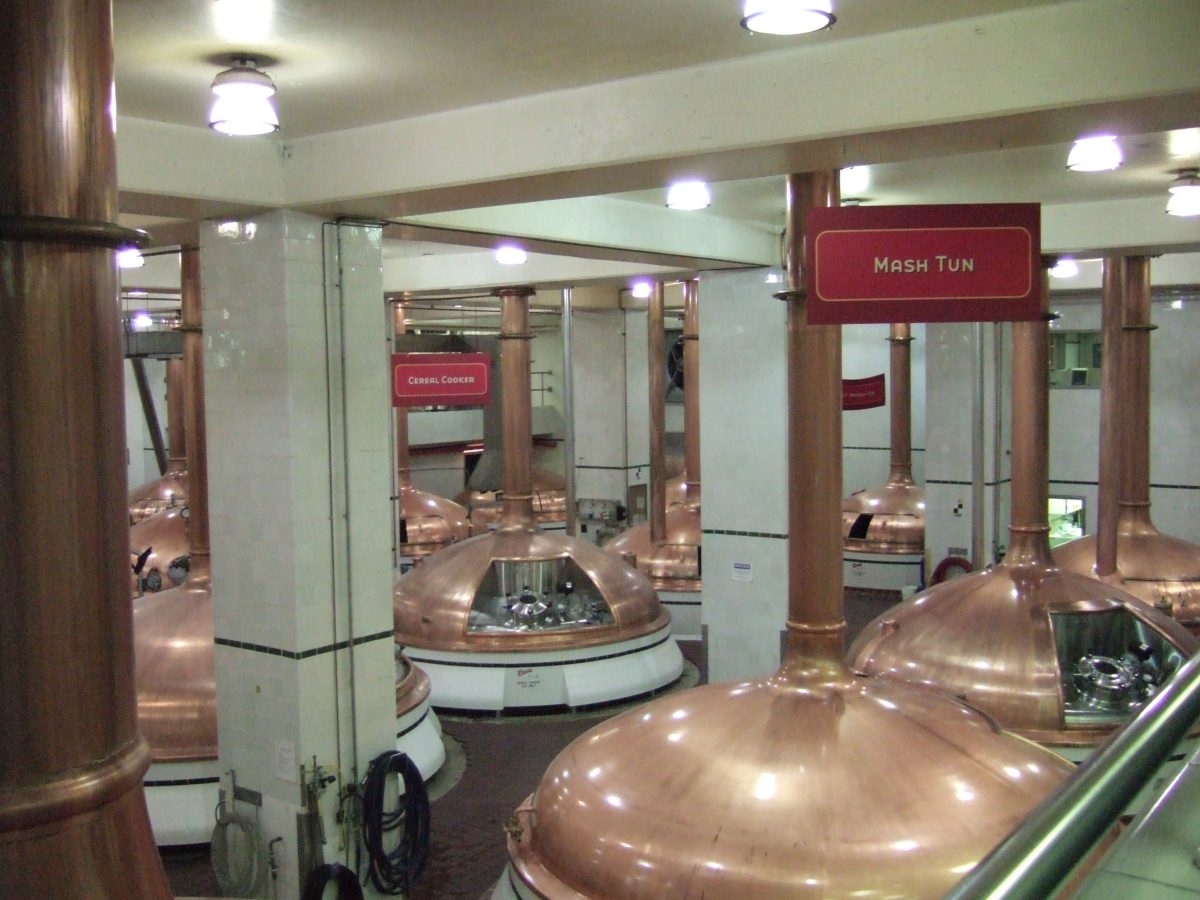
The crushed malt goes into the mash tun with hot water. What results is called the mash, and in it the enzymes do their work. They are picky about temperature, and that is the most important knob of the whole brew day. Around sixty-three degrees they mostly make sugars that the yeast can eat completely, and the beer becomes dry and relatively stronger. Around seventy-two degrees more sugars remain that the yeast cannot get at, and the beer becomes fuller and softer with less alcohol. The same malt, the same water, a different beer.
Once the starch has been converted, the liquid is separated from the solids. The mash settles into a bed of husks, and the clear liquid runs through it. Hot rinse water extracts the last sugar. What remains is spent grain, and that goes to the cattle. What you are left with is called wort: sweet, unhopped and still without alcohol.
Boiling with hops: bitterness, clarity and shelf life
The wort is boiled for an hour to an hour and a half. That does four things at once. The enzymes are stopped, so the sugar profile no longer shifts. Everything living is killed. Protein flocculates and settles, which makes the beer clearer. And the hops get the chance to do their work.
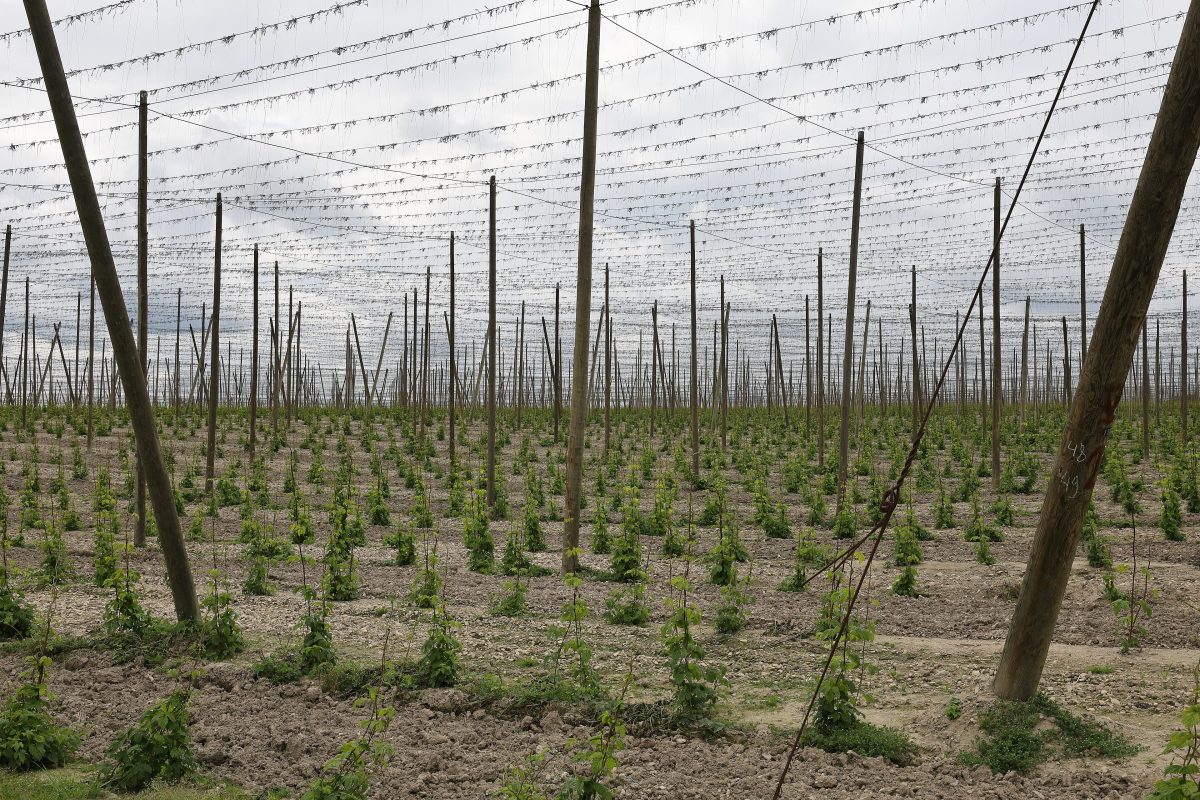
The bitter compounds in hops only dissolve when they boil. Hops that go into the kettle at the start lose their aroma in the boil and leave bitterness behind. Hops added only at the end keep their aroma and give hardly any bitterness. And hops added much later, in the cold beer, give only aroma. That last step is called dry hopping, and it is where the citrus, resin or tropical fruit aroma of a modern IPA comes from without the beer becoming undrinkably bitter.
Cooling and fermenting: top or bottom
After boiling, the wort must be cooled as quickly as possible. Warm sugar water is attractive to everything floating in the air, so the shorter that moment lasts, the better. A plate chiller brings it from boiling temperature to fermentation temperature in a few minutes.
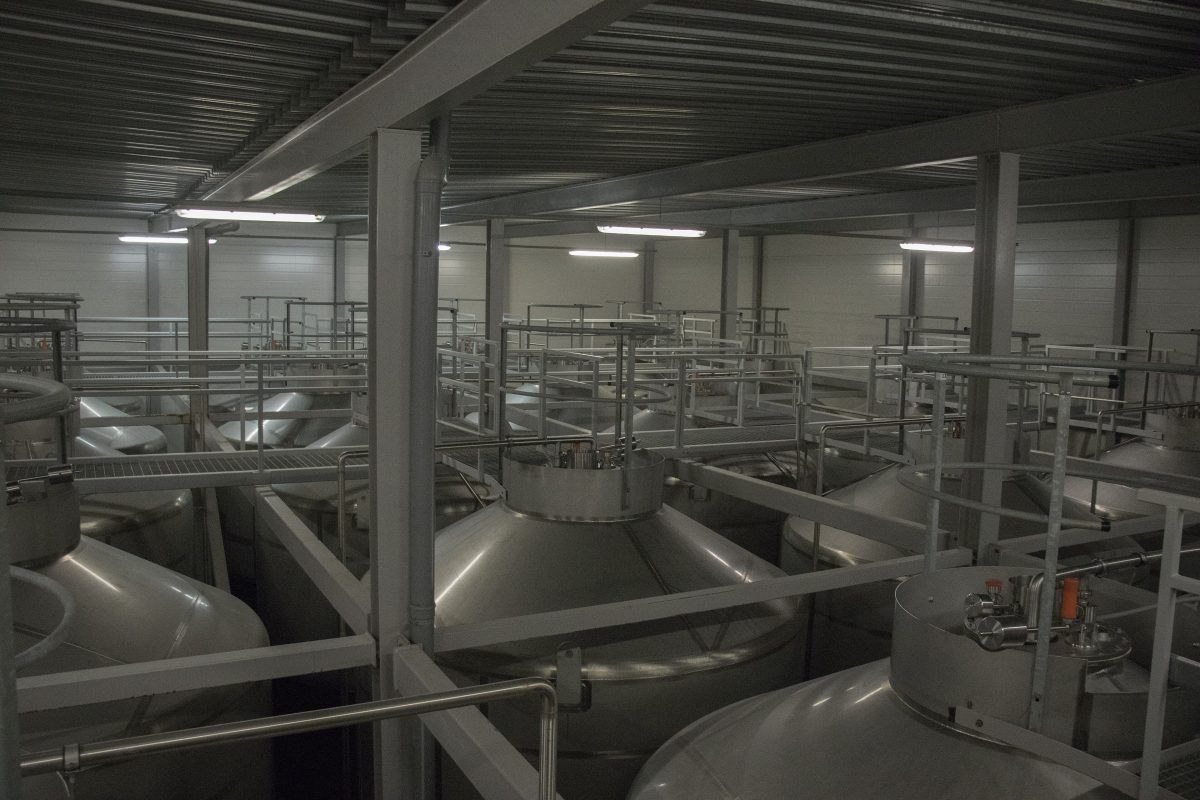
Then comes the choice that divides beer into two families. Top fermentation uses a yeast that is active at eighteen to twenty-four degrees and stays at the top of the beer. Besides alcohol, this yeast also makes esters and phenols: the banana, pear, clove and pepper you find in tripel, witbier, saison and stout. Bottom fermentation uses a different yeast type, at eight to fourteen degrees, which sinks to the bottom and makes far fewer of those substances. What you then taste is mostly the malt and the hop itself. Pils and lager come from there.
This is where the whisky path goes a different way. A distiller also ferments his wash, but without hops, and what comes out goes into the still. A brewer does not distil: for him the fermented liquid is the end product.
Lagering and bottling: where the beer comes to rest
After the main fermentation the beer is ready but not yet finished. It is kept cold, for days to months. During that time the yeast cleans up some of its own by-products, including the substance that would otherwise smell of butter. Yeast, protein and hop particles settle out, and the beer becomes clearer and rounder. With pilsner this takes longest, and that is also where the word lager comes from.
Then the carbonation. That can be held under pressure, or the beer gets a little sugar and yeast at bottling and makes its own bubbles in the bottle. The latter is called bottle refermentation: a layer of yeast stays behind at the bottom, and the beer keeps changing as long as it stands. Finally, it is either filtered and pasteurised or not. Anyone who skips that keeps a beer that is cloudier and stays good for a shorter time, but that stays alive.
Where to start
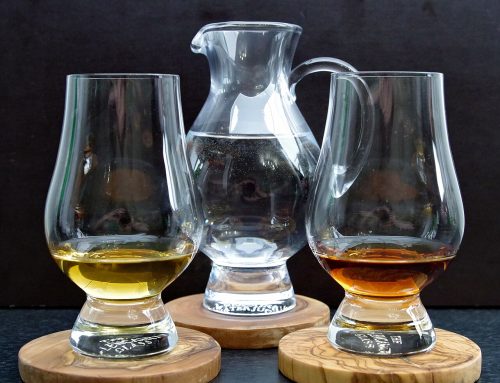
You notice this most clearly when you put beers side by side that differ on a single point. A pilsner next to a tripel shows the difference between bottom and top fermentation. A dry-hopped IPA shows what hops do after the boil. And a stout shows what a hot kiln does to malt. Visit us at Brink 2 in Bathmen or call +31 570 541 278, and we will set out a line-up for you.
Keep browsing
Our entire beer range is on the beer page and all the breweries we stock on beer breweries. By style you can go to pils, IPA and stout. You can search yourself via the search function of the wine & spirits shop. What those style names mean exactly is explained in beer styles in a row, and how the same first steps turn out for whisky you can read in how whisky is made.
What finally comes out of all those steps is in beer styles at a glance: from Tripel to Stout.