The short answer to this question can be found on the question page What is sloe gin?. Below you can read the whole story behind it.
Our shelves in Bathmen hold 482 gins. Six of them are called sloe gin, and precisely those six are, strictly speaking, not gin. That is not carelessness on the part of whoever wrote the label. It is how the European rules have it, and there is a logic behind it that you will grasp immediately once you know what the stuff is made from.
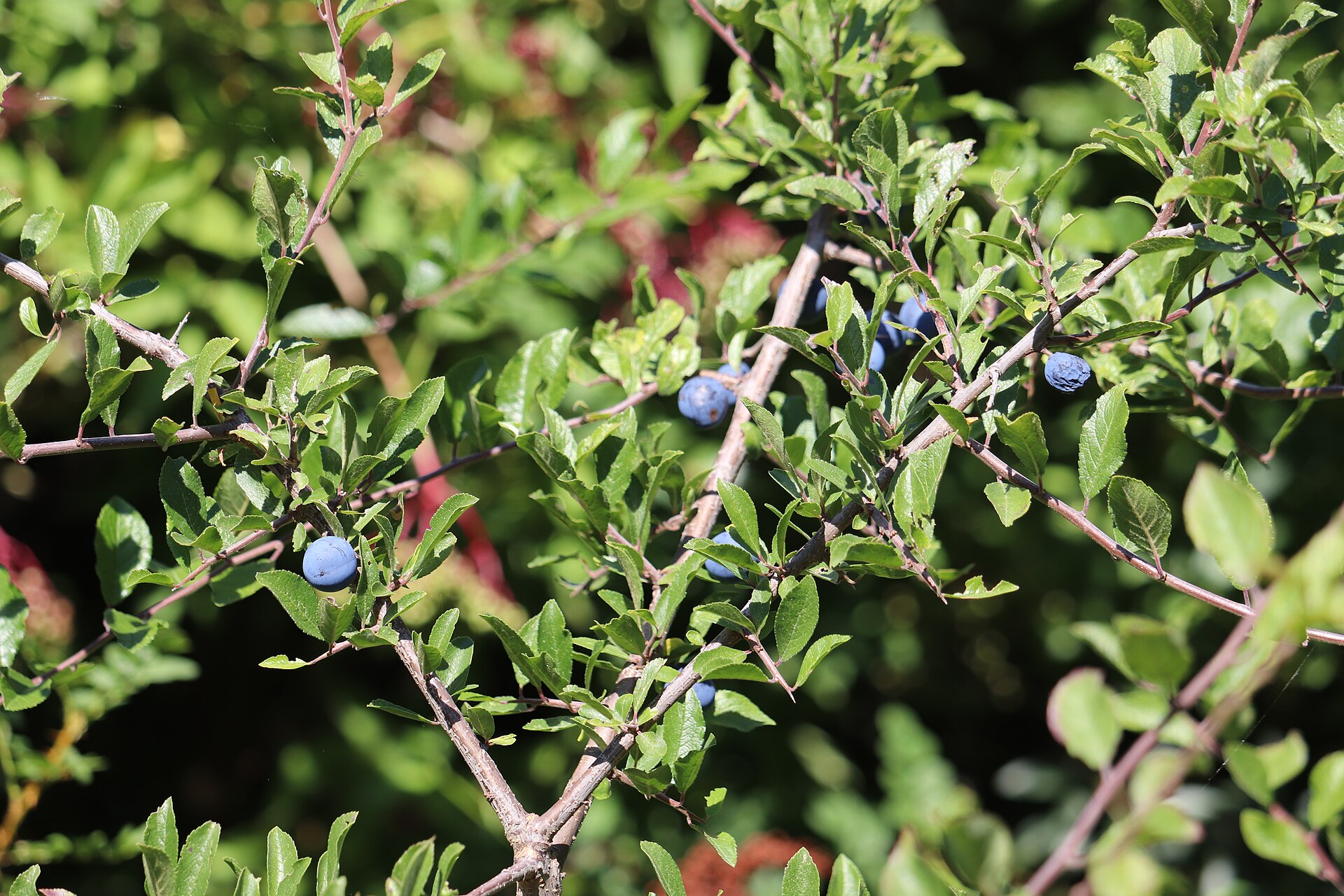
Sloe gin comes from the blackthorn, a thorny shrub that grows everywhere in north-west Europe along field edges and railway embankments. In the Netherlands it is called sleedoorn, in England blackthorn, and the fruit there is called sloe. What is made from it afterwards is mainly a matter of patience.
What a sloe berry is
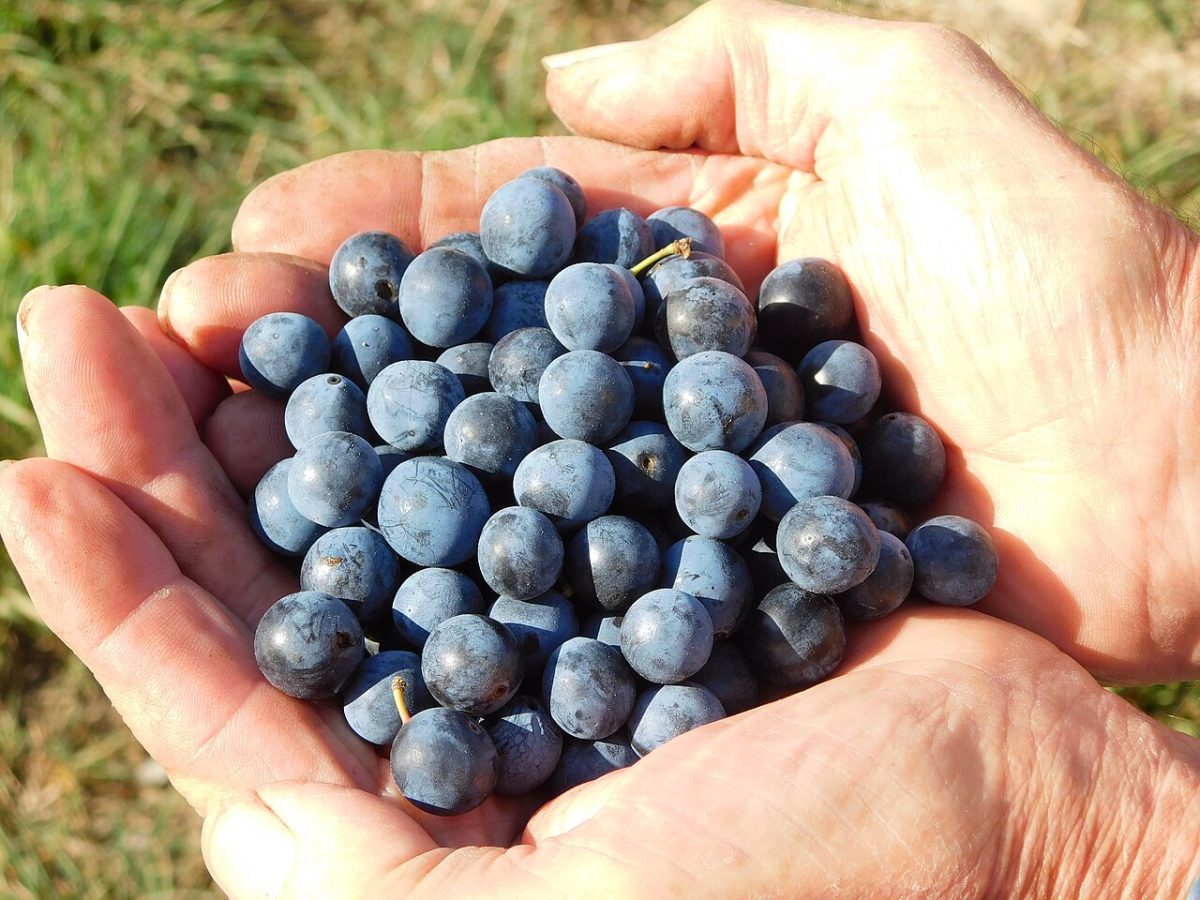
The blackthorn (Prunus spinosa) is related to the plum. The fruits are blue-black, about the size of a marble, with a grey waxy bloom and a hard stone in the middle. They look edible, and they are, but anyone who has bitten into one once does not do it a second time. Sloes are full of tannins. Your mouth puckers instantly.
That is precisely why they end up in the drink and not in the fruit bowl. The tannins and the acidity give the liqueur backbone, and the sugar added makes the whole drinkable. Without sugar there is nothing to it.
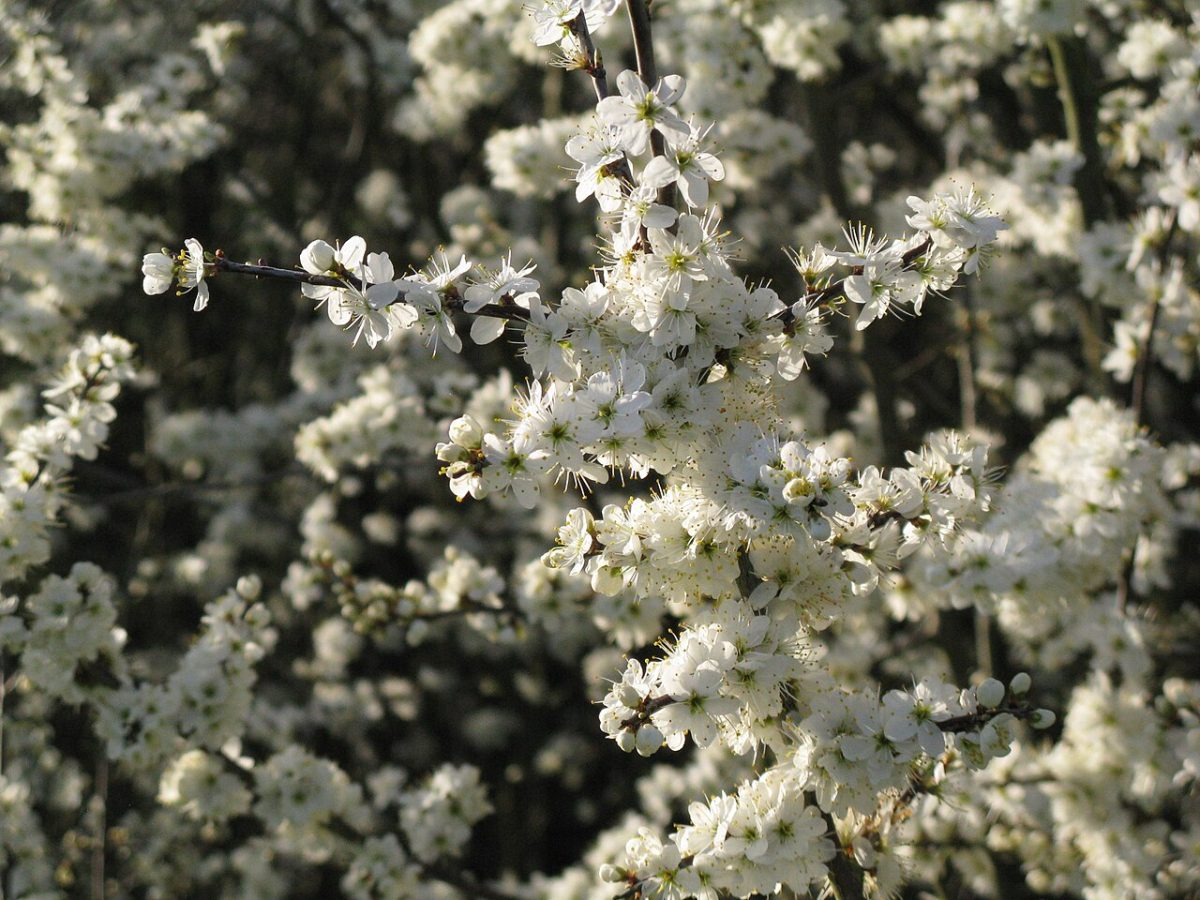
The shrub itself flowers early. The white blossom appears before the leaves come out, often as early as March, which makes a flowering blackthorn hedge recognisable from a distance as a white stripe in an otherwise still bare landscape.
Why it is legally a liqueur
The European regulation on spirit drinks puts gin in a category of its own. To be called gin, a bottle must contain at least 37.5 percent alcohol. That applies to gin, distilled gin and London gin, without exception.
Sloe gin achieves that nowhere. Our six bottles sit between 26 and 30 percent. They thereby fall under the liqueurs, and for liqueur the lower limit is 15 percent with a mandatory minimum of sugar. For sloe gin the legislator has on top of that set a lower limit of its own of 25 percent.
The interesting thing is that sloe gin is the only product legally allowed to carry the word gin on the label without having to add liqueur. Every other gin-based liqueur must call itself a liqueur. Sloe gin is the exception, for the simple reason that the name had existed for so long that taking it away would only have caused confusion.
How it is made: steeping, not distilling
Here lies the real difference from gin. Gin is distilled. The juniper berries and the other botanicals go into the still, and what comes out is clear. Sloe gin is not distilled. The berries are steeped cold in gin and stay there for weeks to months.
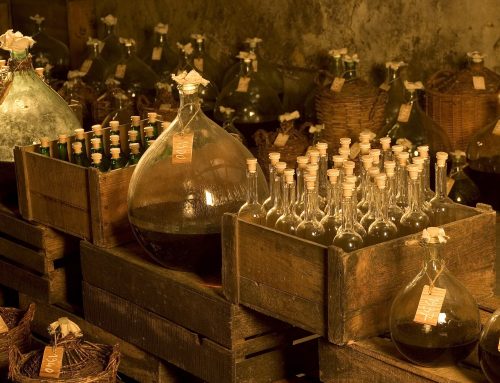
This is called maceration. The alcohol extracts colour, acidity, tannin and aroma from the flesh and from the stone. During that time the liquid turns from clear to deep ruby red. Then the sugar is added, and there is usually a further resting period before it is filtered and bottled.
Those who make it at home first prick the berries, or put them in the freezer overnight to get the same effect as the night frost outside. The skin has to be open, otherwise nothing comes out. After that it is a matter of waiting. Some makers leave the berries in for a year.
What the label doesn't say
For gin, what is allowed is laid down fairly precisely. For sloe gin, much less so. The regulation requires that sloes are used and that the whole is based on gin, but it says nothing about the proportions.
That means there can be big differences between two bottles of sloe gin. One maker uses a solid portion of berries in a real gin and lets it steep for a long time. The other works with less fruit, more sugar and a shorter steeping time. You rarely see that difference on the label.
What is actually useful to you: the alcohol percentage and the mention of the gin it is based on. A sloe gin of 26 percent is more diluted than one of 30. And a maker who uses their own gin for it usually says so.
Where the six come from
Our six sloe gins come from five countries. Two from England, from Hayman’s and from Berkshire Botanical. One from Scotland, from Pickering’s in Edinburgh. One from Germany, from Rammstein. One from France, from Nusbaumer in Alsace. And one from the Netherlands, from Rutte in Dordrecht.
That England supplies two of them is no coincidence. Sloe gin belongs to autumn there just as the first Hollandse Nieuwe herring belongs to spring here. It goes along into the hunting fields, in a hip flask, and is drunk without further ado.
What to do with it
Neat and lightly chilled is the most common way. A small glass, no ice, nothing with it.
Diluting works too. With sparkling water or tonic it becomes lighter and the acidity comes more to the fore. With sparkling wine you get a drink that is called a sloe royale in England. And in cocktails sloe gin regularly replaces sweet vermouth, because it plays roughly the same role: colour, sweetness and a touch of bitterness at once.
What you should not do is use it as if it were gin. In a gin and tonic with fifty millilitres of sloe gin you mainly taste sugar, and the botanicals that matter in gin are subordinate to the fruit in this product.
Where to start
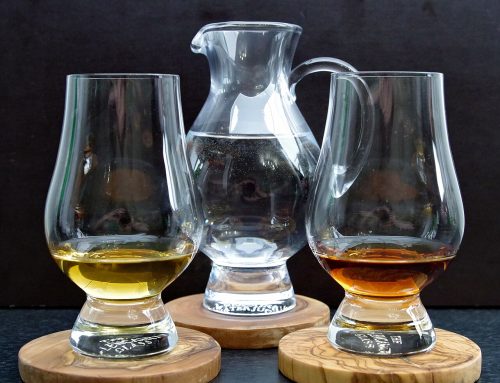
If you want to taste the difference from regular gin, put a sloe gin next to the gin from the same maker. Hayman’s and Rutte both make a dry gin and a sloe gin, and that comparison shows in a few sips what maceration does to a drink.
Keep browsing
On the gin page all 482 bottles are together, with the Dutch makers and the English ones grouped separately. Because sloe gin is legally a liqueur, you will also find related bottles under the liqueurs.
If you are searching by characteristic rather than by brand, you can search the entire gin range via the wine and spirits shop’s search engine. If you cannot work it out, give us a call. This is quicker to explain on the phone than on a screen.