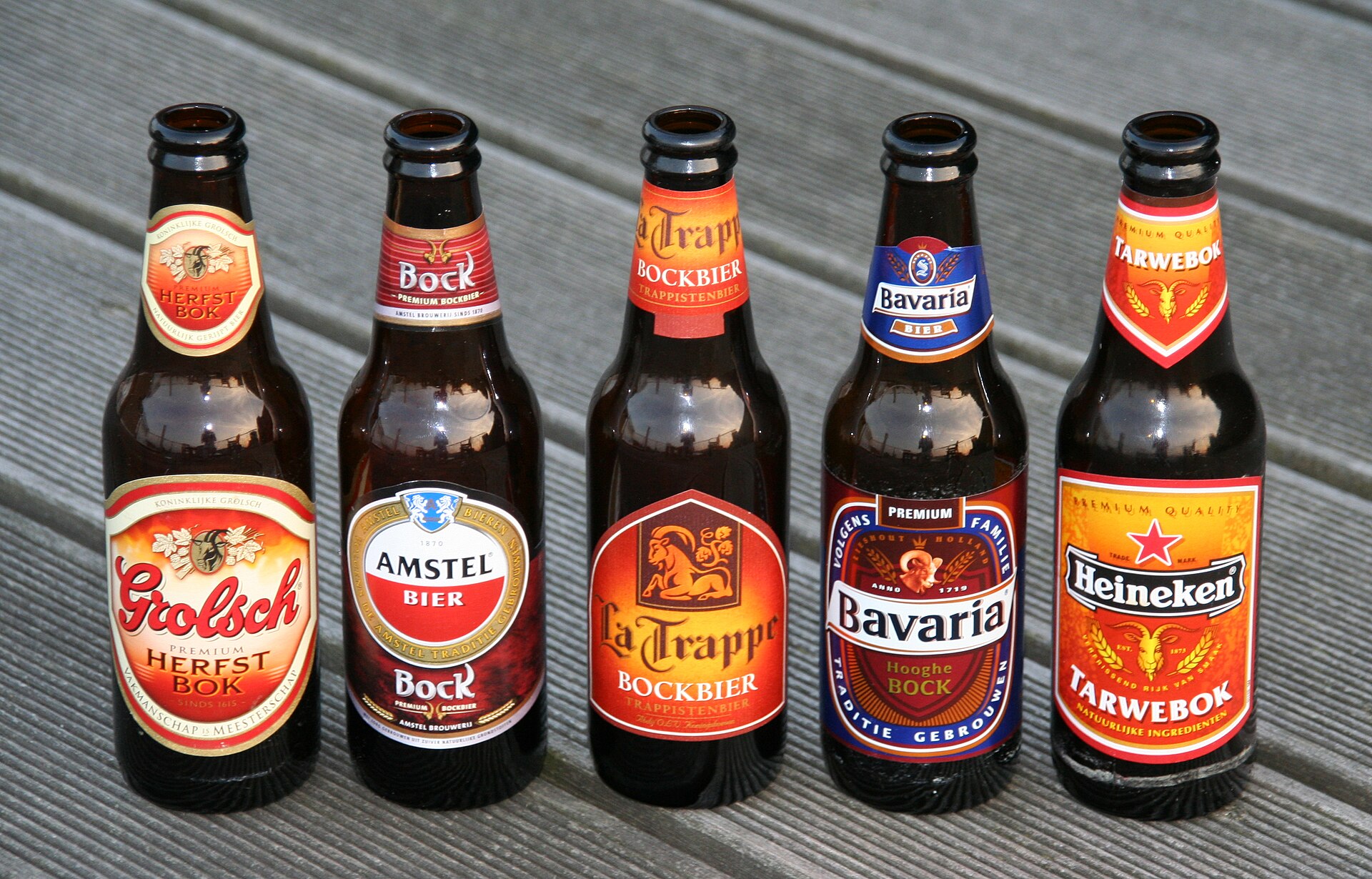
At the end of September something changes in the beer shelf on the Brink. Bottles with a buck, a goat or a ram on the label move to the front, and the question at the counter changes with them. What exactly is bock beer, and why is it there for only a few months?
Of the 1,054 beers we stock in Bathmen, sixty-eight are bock beer, from forty-seven different breweries. Except for four bottles, they are all Dutch beers; the rest come from Belgium and Spain. Enough to give a more precise answer than “dark autumn beer”.
Bock beer is about strength, not colour
Bock beer on its own says nothing about the flavour and nothing about the colour. It says something about what is in the wort before the yeast gets to work. That content is called original gravity and is expressed in degrees Plato: the share of dissolved substances, mainly sugars from the malt, in the liquid that the brewer sends to the fermentation vessel. The higher that number, the more there is to ferment and the fuller the beer becomes.
The beer lovers’ association PINT uses an original gravity of sixteen to eighteen degrees for bokbier. That is well above that of a pilsner. What the yeast eventually makes of it varies by brewery, but most Dutch herfstbokken come out at around 6.5 per cent. The distinguishing feature is therefore the fullness of the beer, not a number on the label.
Originally bock is bottom-fermented: yeast that works at the bottom of the vessel, at low temperature, just as with pilsner. That is not a law. Biernet names Hertog Jan as the first top-fermented bock beer, in 1982, and since then Dutch brewers have made it in both forms.
The name comes from Einbeck, the beer does not
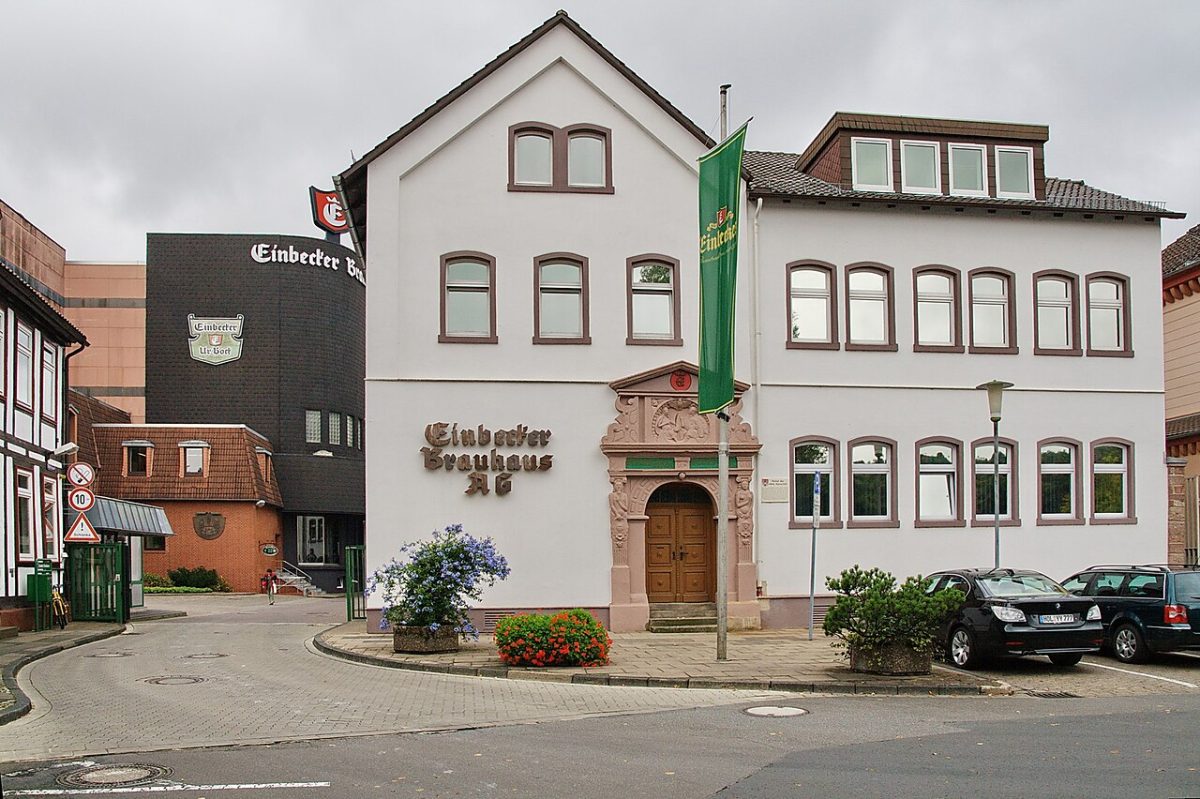
Einbeck is a town in Lower Saxony that made its name with beer in the late Middle Ages. The common explanation is that “Einbecker” was corrupted in Bavarian mouths to “ein Bock”. The goat that appears on hundreds of labels is therefore a pun that came later and not the source of the name. There is a third explanation in circulation, which attributes it to the constellation Capricorn, the period in which the beer was traditionally brewed.
In its piece on bock beer myths, PINT makes a few firm remarks about the Einbeck story. The original beer from Einbeck was a hopped, top-fermented wheat beer, whereas today’s bock beer is a bottom-fermented barley beer. There is a world of difference between the two. The story of a Bavarian ducal wedding in 1545, after which Munich supposedly adopted the Einbeck recipe, is also wrong on several points: that wedding was in Münden and not in München, and the brewer who plays a leading role in it was not a fully trained master brewer from Einbeck. In other words, modern bock beer is not an imitation Einbecker. Only the name has travelled along.
Why bock beer is actually a spring beer
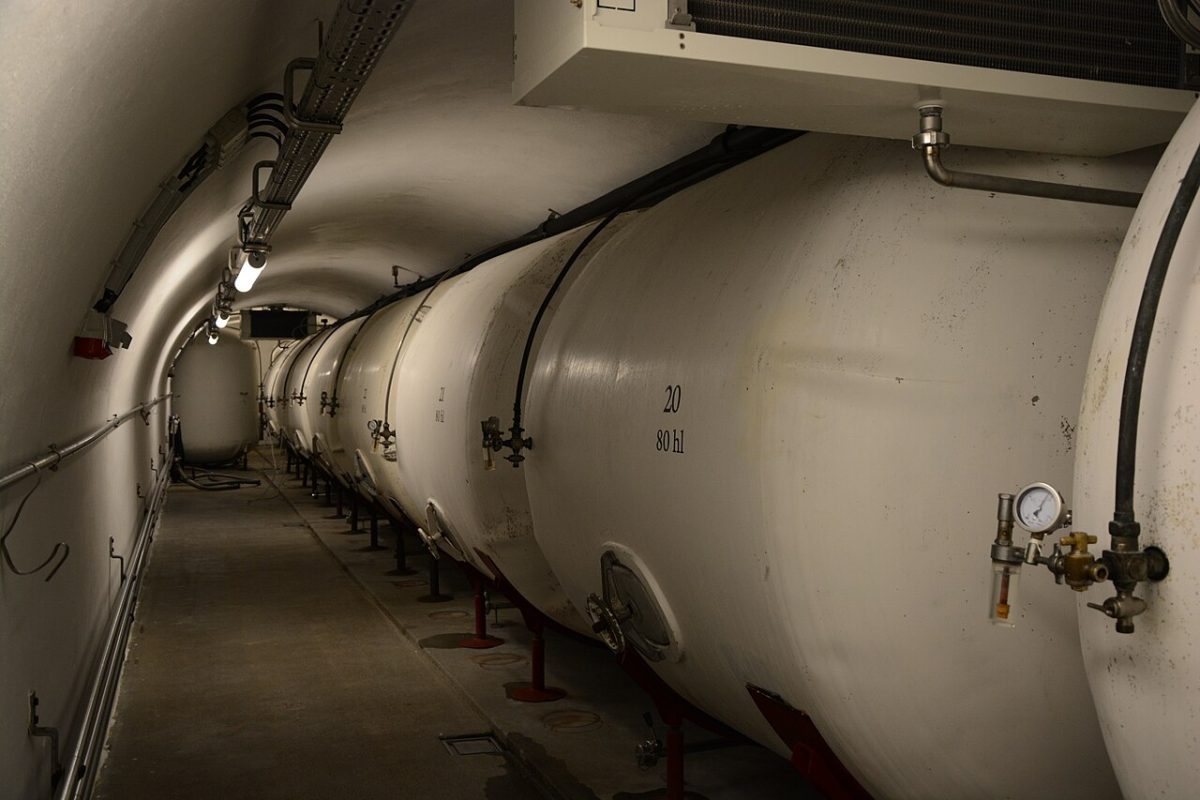
Before the refrigeration machine existed, a brewer could only make bottom-fermented beer in the cold months. A fixed calendar went with that. PINT describes it like this: bock beer was brewed at the earliest in mid-November and at the latest in mid-December, and was ready in February or March. That is the May or spring bock, and it is the oldest form of the beer.
Autumn bock is a later discovery, made possible because brewing technique improved and the season no longer mattered. That bock beer belongs to autumn is therefore a Dutch habit and not a law of nature. In Germany bock beer does not even legally count as a seasonal beer. Anyone who drinks a spring bock in May is therefore drinking the original version.
Dark, golden or concentrated: the kinds of bock
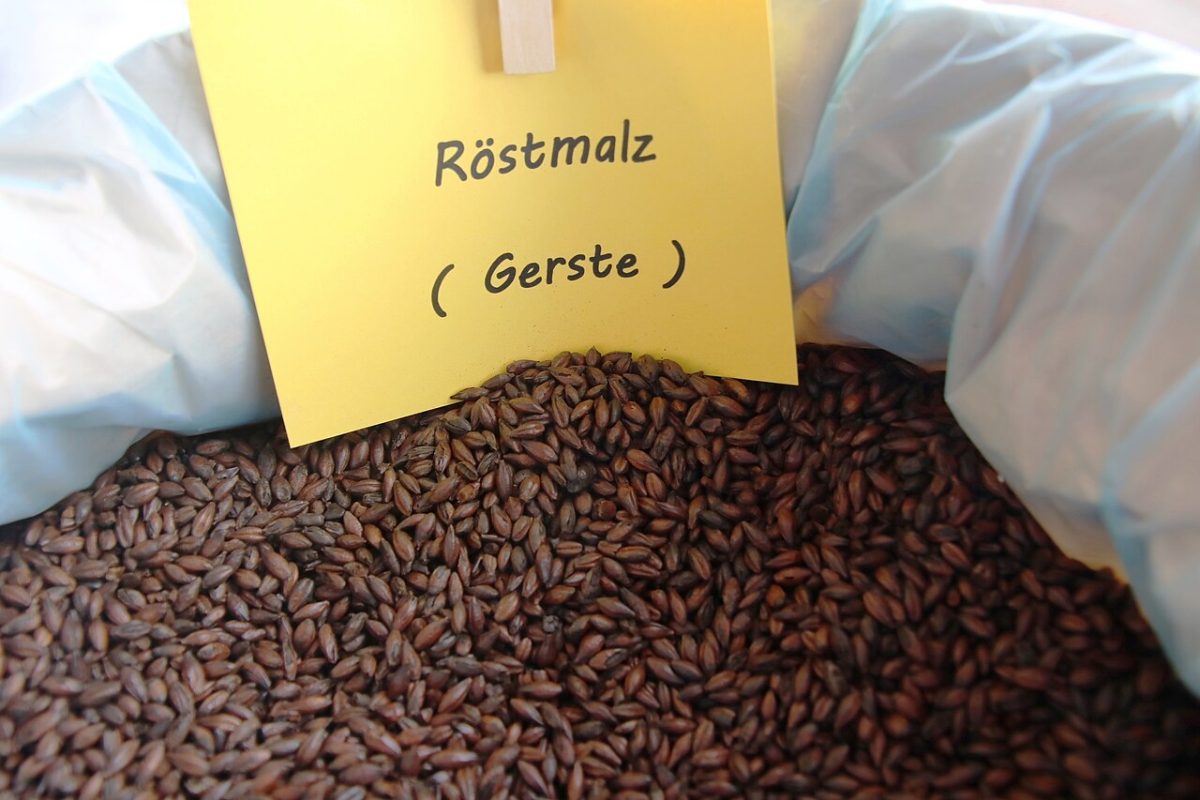
Herfstbok (autumn bock) is the best-known type in the Netherlands: dark, from ruby red to almost black, with caramel malt and roasted malt in the grist. Lentebok (spring bock) is golden yellow to amber and brewed with lighter malt. Zomerbok (summer bock) is lighter still, winterbok heavier. There are also doppelbock, weizenbock with wheat in it, and eisbock, in which the beer is frozen and the ice removed so that what remains is more concentrated.
You can see that spread in our own list. There are six doppelbocks, four eisbocks and three weizenbocks, alongside three beers with herfstbock in the name and two with lentebok. Grolsch is the only brewery in our range that carries both a winter bock and a summer bock. You will find the full list in the wine & spirits search engine.
What the label doesn't say
For a long time, a lower limit was fixed in the Netherlands in the Bierverordening of the Productschap Dranken, which classified beers by original gravity. That product board was abolished on 1 January 2015 and the regulation disappeared with it. What may legally be called beer is now set out in the Warenwetbesluit Gereserveerde aanduidingen.
In practice, the word bok is used broadly these days. We have a bock on the shelf that has lain on rum casks, a speculoos bock and a liquorice bock. There is nothing wrong with that, but it does mean the name tells you less than it used to. The same goes for the season: the big breweries had an agreement that autumn bock would only be sold from the first week of October, and that agreement has been dropped. The first bottles are on the shelf by mid-September.
Where to start
Start with a classic Dutch autumn bock, so that you know what the conversation is about. Put a doppelbock next to it to notice what a higher original gravity does to the fullness. And buy a spring bock in spring, because that is the quickest way to discover that bock is not a colour.
Serve bokbier less cold than pilsner; straight from the fridge little of the malt aroma remains. A glass with a belly helps with that, and you can read why the shape of the glass matters in our piece on Dutch beer glasses.
Read more
- The beer shelves of ’t Bockje: 1,054 beers from 248 breweries, searchable by style and brewery.
- Beer styles at a glance, in which bock stands next to tripel, stout and the rest.
- Beer gifts, for anyone who wants to give a few bock beers side by side.
Sources: PINT, Myths about bock beer; Biernet on bock beer and autumn bock; the own range list of ’t Bockje Bathmen.