The short answer to this question is on the question page How do you put together a beer package as a gift yourself?. Below you can read the whole story behind it.
Putting together a beer pack yourself sounds simple. Six bottles in a box and done. In practice you often end up with six times almost the same thing, or six beers that overpower each other on the table. In Bathmen we have 892 different beers in stock, from 248 breweries in twenty countries, and the question asked most often at the counter is not which beer is tasty. It is which beers work side by side.
There is an answer to that. It comes down to three things: the order in which you open them, the spread across styles, and one bottle that deliberately stands out. Below is how we build a package, with the styles you will find on our shelf.
Start with the recipient, not with the shelf
The first question is not which beers are good, but who the package is meant for. Someone who has been drinking specialty beer for years gets nothing out of a box of four tripels they already know. Someone who mainly drinks lager drops out at a package that starts at ten percent alcohol.
For a beginner, a pack that starts close to the familiar and slowly moves away from it works well: a witbier, a blond, a weizen, and only then a tripel. For someone further along, it can be the other way round: a saison, a sour, a cask-aged quadrupel. We have 93 tripels, 89 blond beers, 50 IPAs, 35 bock beers, 32 weizen beers, 30 quadrupels and 21 stouts in stock, so there is plenty of room in both directions.
If you really don't know, take the safe route and include one bottle that stands out. A package in which five bottles go down well and one becomes a talking point is a success.
Build the set up as an evening, not as a row
A package is rarely drunk in one go, but the order in which the bottles are placed does determine how someone picks them. So go from light to heavy, and from fresh to sweet. Anyone who starts with a ten-percent quadrupel will taste nothing of the witbier afterwards.
A workable structure for six bottles: first something light and fresh, then something hoppy, then something malty, then something heavy from the yeast, and finally something dark. The fifth and sixth bottles are the place for the outlier.
Add a note with the order. That sounds excessive, but it is the difference between six separate bottles and a tasting.
Six styles that hold their own side by side
This combination almost always works, because each style does something different and none of the six drowns out the rest:
- Witbier for the opening. Cloudy, slightly sour, brewed with wheat alongside barley. Often with coriander and orange peel in the kettle.
- Weizen comes second. Also a wheat beer, but German in style and with a yeast that gives banana and clove notes instead of spices from the kettle.
- IPA for the bitter side. Here the difference lies in the hops, and that is exactly where you will see the greatest variation from brewery to brewery.
- Blond or tripel for the malty, bottle-conditioned side. With a tripel, extra sugar and yeast go into the bottle, which makes the carbonation sharper.
- Bock or dubbel as a dark intermediate step. Roasted malt, little hop, and usually under seven percent.
- Quadrupel or stout to finish. Heavy, dark, and the bottle you can keep the longest.
If you want to know exactly what differs between those styles in the kettle, it is explained step by step in our article on how beer is brewed. For the Belgian side of the story, with Trappist and abbey beers, there is a separate piece on Belgian beer.
Put in one bottle that stands out
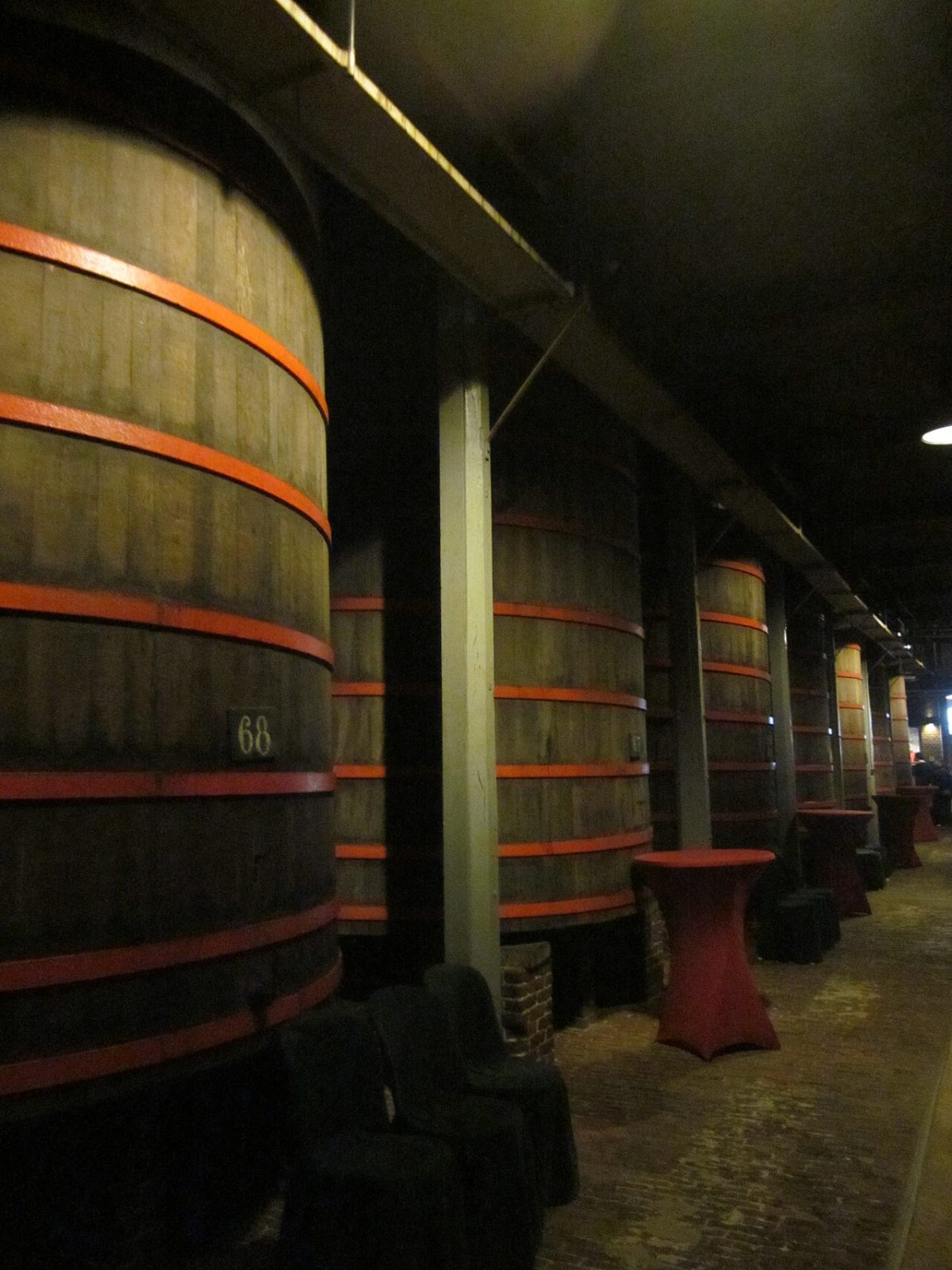
The package only becomes interesting through the bottle that does not fit in it. Usually that is something sour. A kriek, an oud bruin from Flanders or a sour: beers that mature in wooden foeders and pick up their acidity there from yeasts and bacteria that live in that wood. We have eight krieks in stock, all Belgian.
That sourness takes getting used to for many people, and that is exactly why it works. Put that bottle in fifth place, after the heavy beers, and not at the front. We explain the difference between a Dutch and a Flemish oud bruin in the piece on oud bruin.
How many bottles, and which sizes
Six bottles is the size most gift boxes are built around. Four also works; nine gets heavy to carry. Stick to one format, because a box with four 33-centilitre bottles and two of 75 sits crooked and looks untidy.
Of our beers, 531 come in 33 centilitres, 112 in 75 centilitres and 77 in 30 centilitres. So 33 is the size in which you have the most choice. The large 75-centilitre bottles are intended more for sharing, and that is also where most of the barrel-aged work is.
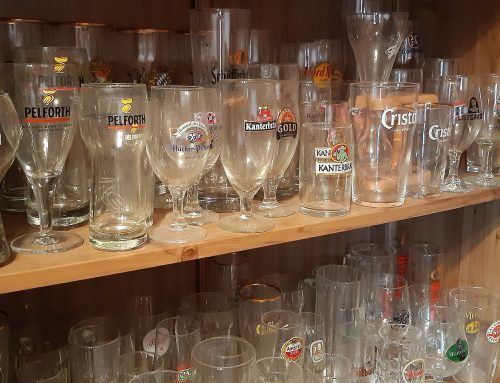
Think about the glass. A tripel in a pilsner glass loses half of its aroma. Which glass goes with which beer is in our article on Dutch beer glasses.
What you had better not put in the same box
Three things often go wrong. First: six beers from the same brewery. That is a brand pack, not a tasting, and the difference between the bottles becomes small. Choose six houses instead.
Second: everything above eight percent. Four strong beers in a row cannot be tasted, however good they are. Keep at least half below seven percent.
Third: alcohol-free as an afterthought. If someone receiving a pack is not drinking, or drinking less, this year, make it a full-fledged pack. We have 35 beers of half a percent or less on our shelves, and you can read how they are made in the article on alcohol-free beer.
Where to start
Below are four bottles from four different houses that together show the build-up: light, hoppy, malty, dark. Add a weizen and a sour bottle and you have a pack of six.
Keep browsing
The entire beer range is on the beer page, and you can search it directly with the Wine & spirits search engine. If you would rather have a box that is ready to go, take a look at the beer gifts: there you will find 46 assembled packages and beer crates.
You can order individual bottles in the webshop, for example the La Trappe Trappist Quadrupel to finish. If you want crates as well, also take a look at what you get back in deposit. And if you cannot decide: drop in at the Brink in Bathmen or call +31 570 541 278. We will put the selection together with you.