The short answer to this question is on the question page What is peated whisky?. Below you can read the whole story behind it.
Under Islay we stock 478 bottles, from 59 different brands and bottlers. After Speyside it is the best-stocked region on our shelves, and it is by far the region we get the most questions about. They almost always come down to the same thing: where does that smoke come from?
The answer is not in the water and not in the sea air. It is in the fuel with which the barley is dried.
Peat is not wood, but compressed bog material
Peat is what remains of plants that fell into a waterlogged, acidic bog and never quite decayed there. Under water there is too little oxygen for the bacteria that normally do that work. What falls stays where it lies, and a thin layer is added every year. A layer of peat a few metres thick has needed thousands of years.
What lies in that peat differs from place to place, and for whisky that is the point. On Islay the bogs lie close to the sea, with plenty of sphagnum moss and sedge and almost no tree remains. On the mainland there is more wood and heather in it. Peat from Orkney, in turn, has a different composition from peat from Aberdeenshire. Those differences come back in the smoke, because you are literally burning the plant material that lies there.
Peat is cut from the bog in blocks in spring and then dried in the open air for weeks. Dried peat burns slowly. It smoulders more than it flames, gives little heat and a lot of smoke. For heating that is a drawback. For the purpose at hand it is exactly right.
The smoke comes in drying, not in distilling
Barley must first become malt. The grain is soaked in water until it starts to germinate, because only then does the kernel produce the enzymes that will later convert the starch into sugar. That germination must be stopped at the right moment, and this is done by drying the wet grain in a kiln.
Burning peat under that kiln draws the smoke through the damp grain. The phenols from that smoke attach to the wet surface of the kernel. Once the grain has dried further, that stops: dry barley absorbs virtually nothing. The smoky hours are therefore the first hours. After that, drying is finished with hot air.
Everything that comes after adds no more smoke. Not the milling, not the fermentation, not the still and not the cask. The peat touches only the grain, and everything else works with what is already in it. That is also the reason why a distillery can make peated whisky one day and unpeated whisky the next with exactly the same installation.
Most distilleries no longer do their own malting. They order their malt from a maltster and specify how much phenol it should contain. A handful of houses still do part of it on their own floor.
What ppm actually measures
On bottles and in leaflets you will see the figure ppm, parts per million. It is a measurement of the phenol content, and that is exactly where most of the confusion comes from, because that figure almost always refers to the malted grain. Not to the whisky in the bottle.
A large part is lost between malt and glass. In the mash, part stays behind in the spent grain. In distilling, the distiller decides where to make the cut, and the heavier phenols come late in the run, so whoever cuts wide keeps more of them than whoever cuts tight. And in the cask the content decreases further over the years.
That is why the sum everybody makes does not add up. A malt of fifty ppm does not produce a whisky that is twice as smoky as a malt of twenty-five. Two distilleries ordering the same malt can also end up very differently, because they distil differently. The number says something about the raw material, not about the result.
Some bottlers state the ppm of the filled whisky rather than that of the malt. That is a different, much lower number. If no explanation is given, just ask, because the two cannot be compared with each other.
Not all Islay is smoky
This is the most persistent misunderstanding. Islay is not a synonym for smoke, and it never has been.
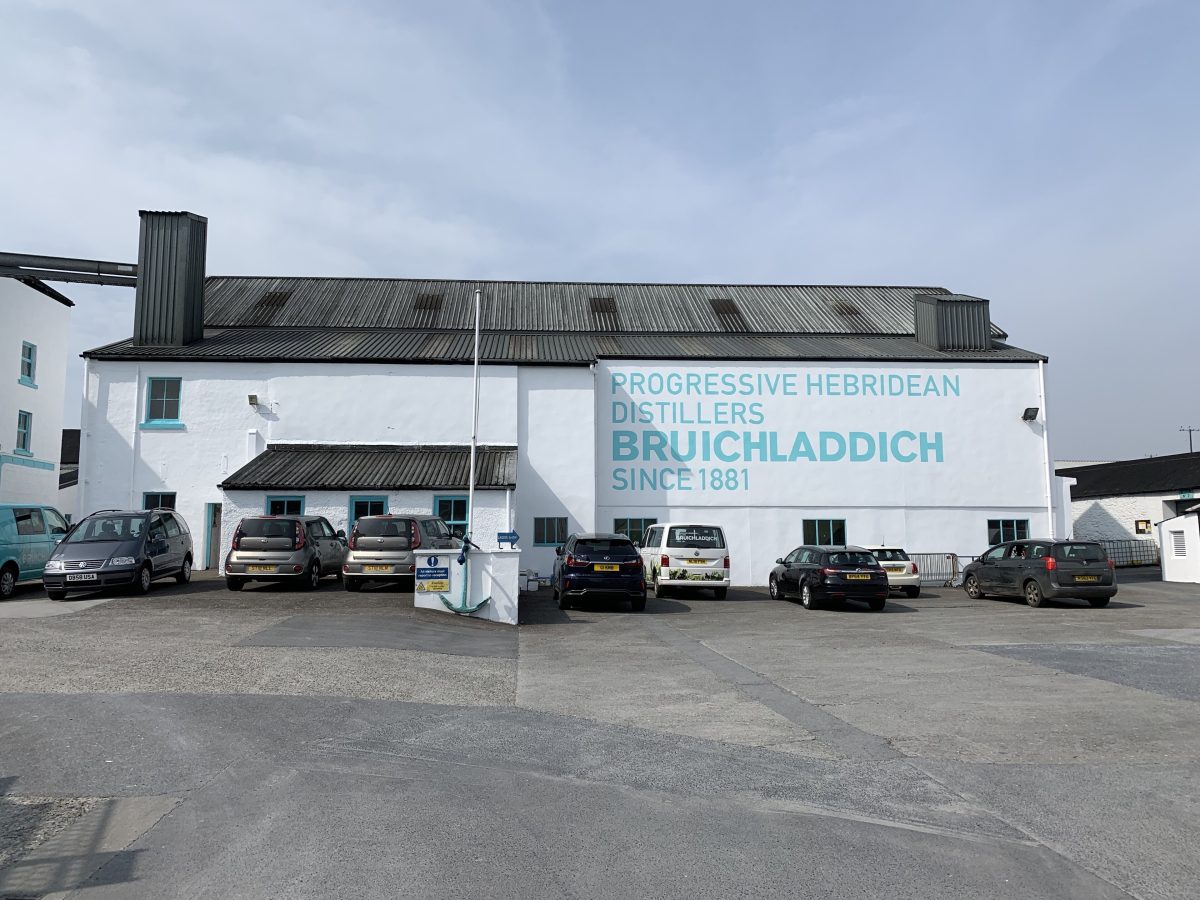
Under its own name, Bunnahabhain mainly bottles unpeated whisky and also makes a peated batch every year. Bruichladdich makes three things side by side in the same building: unpeated whisky under the name Bruichladdich, peated under Port Charlotte and heavily peated under Octomore. One address, three completely different starting points.
The reverse is just as true. Peat is not an island monopoly. Peated malt is used in Speyside, in the Highlands, on Orkney and far beyond Scotland. It is just that on Islay the practice never disappeared, because for centuries there was nothing else to burn. Coal had to come by boat; peat lay behind the house.
What the smoke ultimately does also depends strongly on the cask. The same peated whisky in a spent bourbon cask and in a fresh sherry butt yields two very different bottles. The cask does not mask the smoke, but it puts it in a different context.
Where to start
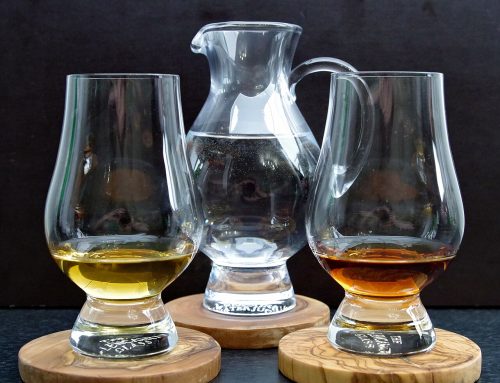
If you want to know what peat does to whisky, it helps not to start with the heaviest. Put a light one and a heavy one side by side instead, and add something unpeated from the same island. Then you will notice the difference between what the smoke does and what the cask does.
Below are four bottles from four different houses on Islay, including an unpeated one. If you would like to search yourself, you can do so in the search engine of the wine & spirits shop. Otherwise, drop by in Bathmen or call 0570 541 278, and we will work it out together.
Keep browsing
Everything we stock from the island is brought together on Islay whisky, with the nine distilleries we carry. The whole Scottish section is on whisky from Scotland, and the starting point for our full range is the whisky page.
For each distillery you will find the background and the range: Laphroaig, Lagavulin, Ardbeg, Bowmore, Bruichladdich, Port Charlotte, Octomore, Bunnahabhain, Caol Ila, Kilchoman and Ardnahoe.
If you want to know how Islay compares with the rest of Scotland, read the five whisky regions of Scotland.