The short answer to this question is on the question page Can you keep spirits in the freezer?. Below you can read the full story behind it.
Of the two hundred and thirty-five vodkas on our shelves in Bathmen, one hundred and three have an alcohol content of exactly 40 percent and forty-three of 37.5 percent. Together that is almost two thirds of the cabinet. For those bottles, the rule is: they do not freeze in an ordinary freezer.
Yet the freezer is not automatically the best place. What cold does to a bottle can be explained well, and it works both ways. Below we set out what happens, when it helps and when you throw something away with it.
Why it does not freeze
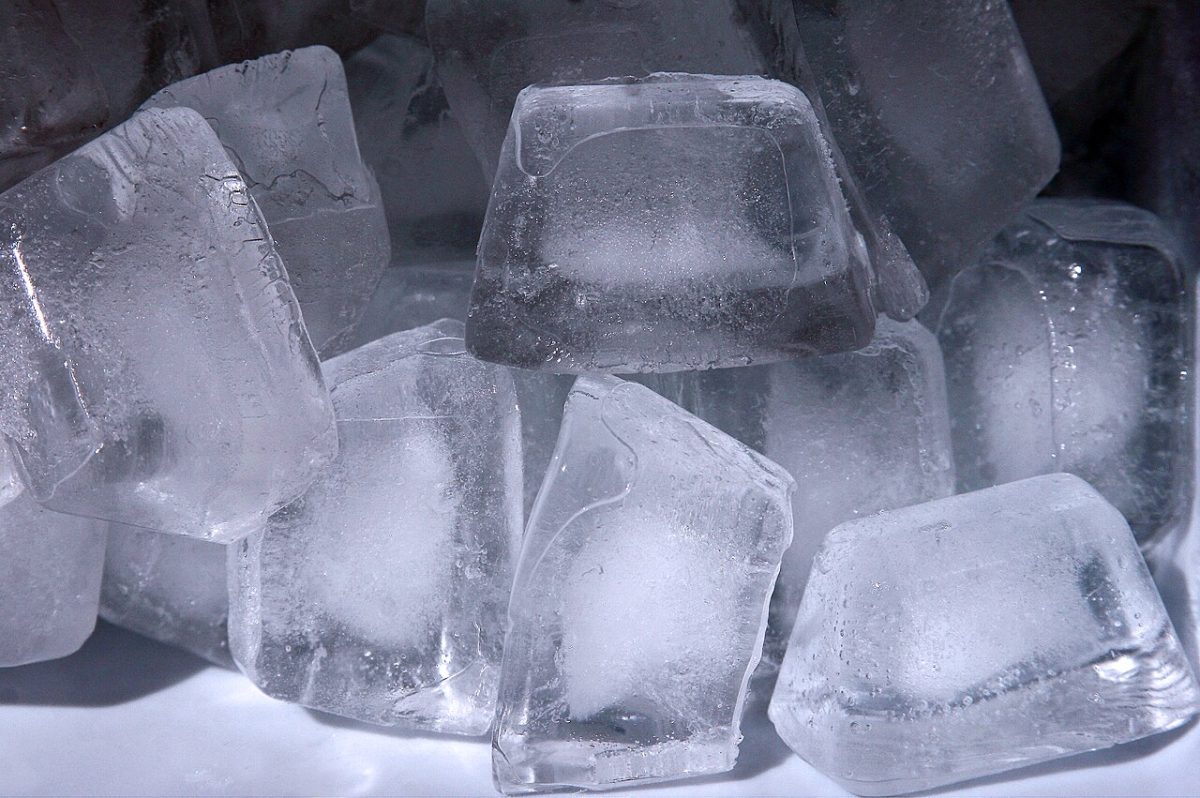
Pure water freezes at zero degrees, pure alcohol only far below minus one hundred degrees. A mixture of the two lies in between, and the more alcohol it contains, the lower the freezing point.
At forty percent alcohol that point lies somewhere around twenty-seven degrees below zero. A household freezer is set by default to eighteen degrees below zero. So there are nine degrees of margin, and that is why the bottle comes out syrupy but liquid.
That syrupiness is real and measurable. Liquid becomes thicker as it gets colder, and at minus eighteen vodka pours noticeably more slowly than at room temperature. That is exactly the effect the freezer is praised for: that heavy, oily fall into the glass.
What cold does to aroma
Aroma arises because volatile compounds evaporate from the liquid and reach your nose. Evaporation takes energy, and cold is the absence of energy. A cold liquid therefore releases much less than a warm one.
At minus eighteen degrees, hardly anything rises from the glass. Your tongue also slows down: at low temperatures the taste buds respond less sharply to sweet and bitter. As a result, you perceive almost nothing but texture and the burn of the alcohol.
That is the heart of the whole story. The freezer takes away the harshness, but also everything underneath it. With a vodka that has little to say, that is a gain. With a vodka the distiller has put effort into, you throw away exactly what you paid for.
The Polish and Russian custom
Serving it ice-cold is not an advertising agency invention. In Poland and Russia it is the normal way: a small straight glass, filled to the brim, emptied in one go, and accompanied by food. Salt, sour, fat and bread. There, the drink belongs with the meal, not beside it.
In that context, cold makes sense. You are not drinking to smell, you are drinking to drink, and the cold makes a large gulp of strong spirit bearable. Anyone who uses vodka that way would do well to chill it.
The Western habit of judging vodka the way you judge a whisky, with a tulip glass and your nose in it, is of much later date. Those two ways of drinking call for different temperatures. There is no single right one.
What you had better not put in the freezer
This is where it gets practical. Of our two hundred and thirty-five bottles, sixty-two are below thirty percent alcohol. These are the flavoured vodkas, the mixed drinks and the sweet variants, and they fall outside the story above.
At twenty percent alcohol, the freezing point is not minus twenty-seven but around minus eight degrees. Such a bottle will indeed turn into a block in a freezer at minus eighteen, and the expansion of freezing liquid can crack glass. So check the percentage on the label before you put it away.
With sweet bottles, something else also plays a role: sugar can crystallise at low temperature and make the drink cloudy. That is not dangerous and it usually clears again, but it is not attractive.
Storing it if you do not chill it
For the average household, a cupboard is a fine place, provided it offers three things: dark, cool and upright. Upright is the most important. Spirits at forty per cent attack cork and the inner lining of a screw cap, and a bottle lying on its side keeps that closure permanently wet.
Light is the second. Direct sunlight on a bottle does two things at once: it warms the contents and it breaks down colour and aroma compounds. That makes a windowsill the worst place in the house, however good the bottle looks there.
An unopened bottle of vodka will keep like this for years without noticeably changing. After opening it slowly deteriorates because air gets into the bottle, but at forty percent that takes a long time. Sweeter and weaker bottles go faster; we wrote about that in how long an opened bottle of liqueur stays good.
Where to start
A workable middle ground: put the bottle in the fridge rather than the freezer. At around six degrees it is cold enough to pour fresh and warm enough to still give off some aroma. If you are mixing, the temperature of the bottle hardly matters, because the ice in the glass takes over.
If you would like to know which bottle from our shelves can stand up to nosing in the glass and which is better suited to a long drink, visit us or call +31 570 541 278.
Keep browsing
The full range is on our vodka page. You can find the selection per brand, for example Belvedere, Finlandia, Absolut and Tito’s. You can filter by alcohol percentage or country in the shop’s search engine.
Why one vodka has more to say than another is explained in potato vodka and grain vodka and in five times distilled and three times filtered. How vodka relates to its neighbours in the cabinet is covered in vodka, gin and jenever.