Colheita port
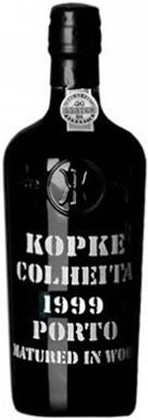
Colheita port is port from a single harvest year that has matured in wood for at least seven years. The label must show both the harvest year and the year of bottling. That sets colheita apart from vintage port, which also comes from a single harvest but matures mainly in the bottle, and from tawny with an age statement, which is blended from several years. The shop on the Brink in Bathmen currently has 22 bottles of colheita port, all from Kopke.
- 22bottles in the shop
- 20%alcohol
What is colheita port?
Colheita is a special category within port, laid down by the IVDP, the institute that supervises the wines of the Douro and port. The wine comes from a single harvest and then matures for a long time in wooden casks. The word colheita is Portuguese for harvest.
The IVDP sets a minimum of seven years in wood, counted from 1 September of the second year after the harvest. The European technical file for the protected designation of origin Porto describes colheita as red or white port from a single harvest, matured in wood for at least seven years. A colheita can therefore also be white.
What is on the label of a colheita?
The label of a colheita must carry two years: the harvest year and the year in which the wine was bottled. That way you can see at a glance how long the port lay in wood before it went into the bottle.
Two bottles with the same harvest year can therefore still differ: a colheita bottled ten years after the harvest has had a shorter wood maturation than a colheita from the same year that only went into the bottle after thirty years. So when comparing bottles, always look at both years. If in doubt, read the label together with us in the shop.
Colheita port at ’t Bockje
A selection from the 22 bottles currently in the shop on the Brink.




In brief
| Origin | Douro, Portugal (protected designation of origin Porto) |
|---|---|
| Harvest | A single vintage |
| Ageing | At least 7 years in wood, counted from 1 September of the second year after the harvest |
| Label | Harvest year and bottling year required |
| Colour | Red or white |
| Supervision | IVDP (Instituto dos Vinhos do Douro e do Porto) |
| In the shop | Kopke, including vintages 1960 to 2013 |
| In the shop | 22 bottles |
What is the difference from vintage port?
Both come from a single harvest year, but the maturation differs. According to the IVDP, vintage port is certified between January and June of the second year after the harvest and may be bottled until 30 July of the third year after the harvest. After that the wine develops slowly further in the bottle, sometimes for decades.
Colheita does the opposite: it stays in wood for at least seven years and is only bottled after that. With vintage, only the harvest year is mandatory on the label; with colheita also the bottling year. Vintage may only be sold from 1 May of the second year after the harvest.
What is the difference with tawny of 10, 20, 30 or 40 years?
Port with an age statement is made by blending wines from different years that have matured in wood. The IVDP recognises the designations 10, 20, 30, 40, 50 and 80 years, plus VVO for wines with more than 80 years of wood ageing. The number on the label indicates the character of the blend, not one particular vintage.
A colheita, by contrast, is not blended across years: all the wine in the bottle comes from the same harvest. Anyone looking for a port from a birth year, wedding year or other anniversary year will therefore end up with a colheita or a vintage, not a tawny with an age statement.
Who is Kopke?
According to the company itself, Kopke was founded in 1638 and is thus the oldest port house. The house calls itself a specialist in colheita and in port with an age statement, both tawny and white, and keeps in its cellars in Vila Nova de Gaia a collection of very old wines maturing in cask.
Kopke is part of a group founded in 1998 as Sogevinus, to bring historic port houses under one management. Since 2025 that group has been called Kopke Group.
Which colheita port is in the shop?
The shop currently has 22 bottles of colheita port, all from Kopke in Portugal. The vintages on the shelf range, among others, from 1960 to 2013. Examples are the Kopke Colheita 1960, the Kopke Colheita Port 1965, 1974, 1975, 1976, 1978 and 1979, and from the eighties 1982, 1983, 1985 and 1987.
From more recent harvests, the Kopke Colheita Port 1991 and 1999 and the Kopke Colheita 2010 are on the shelf. There is also a white colheita: the Kopke 2013 White Colheita Port. Are you looking for a bottle from a particular year, or do you want to know when a colheita was bottled? Feel free to call or drop by ’t Bockje at Brink 2 in Bathmen.
What customers also ask
Is colheita the same as vintage port?
No. Both come from a single harvest year, but colheita ages at least seven years in wood and vintage mainly in bottle.
Does white colheita port exist?
Yes. The rules allow colheita in red and white; in the shop we have the Kopke 2013 White Colheita Port.
Why are there two years on the label?
The vintage year and the bottling year are mandatory, so you can see how long the port lay on wood.
What is the difference from a 20 years old tawny?
A tawny with an age statement is a blend of several years; a colheita comes from a single harvest.
How many colheita ports are in the shop?
Currently 22 bottles, all from Kopke, with harvest years ranging from 1960 to 2013, among others.
Keep browsing
Sources
- Vinhos do Porto: Categorias Especiais, IVDP (Instituto dos Vinhos do Douro e do Porto), ivdp.pt/pt/vinhos/vinhos-do-porto/categorias-especiais/ (accessed 10 October 2026)
- Porto (PDO-PT-A1540): ficheiro técnico, Europese Commissie (eAmbrosia), webgate.ec.europa.eu/eambrosia-api/api/v1/attachments/11232 (accessed 10 October 2026)
- Marca Kopke, Kopke Group, kopkegroup.com/marca-kopke (accessed 10 October 2026)
- Grupo, Kopke Group, kopkegroup.com/grupo (accessed 10 October 2026)
The shop is at Brink 2 in Bathmen. Open Tuesday to Friday from 09.00 to 18.00 and Saturday from 09.00 to 17.00. For advice, call 0570 541 278 or email info@bockje.nl.
Wij verkopen geen alcohol aan personen onder de 18 jaar. NIX18.
 Whisky
 Beer
 Wine
 Spirits
 Aperitifs and specialities
 Alcohol-free
 Glasses and more
 Partnerships